


 Shkruar nga Pamfleti
Some are introducing price controls, tax adjustments and bans on fuel exports, while others are monitoring the situation and preparing policy measures in case the crisis deepens.
As the conflict in the Middle East has shaken global oil markets, raising concerns about inflation and economic pressure on households and businesses, countries in Southeast Europe are taking mixed approaches to prevent a significant increase in fuel prices.
Some are introducing price controls, tax adjustments and bans on fuel exports, while others are monitoring the situation and preparing policy measures in case the crisis deepens, regional media outlet Seenews reports.
To prevent drastic increases in fuel prices at the pump, Slovenia earlier this week decided to lower excise duties on fuel, while Croatia set a ceiling on retail prices of petroleum products and on excise duties on energy products and electricity.
Slovenia's economy minister, Matjaz Han, said last week that he does not expect supply disruptions for at least the next 14 days and that the country has enough oil product reserves for more than 100 days of average consumption.
Croatia, which is not dependent on energy supply routes through the Strait of Hormuz and receives crude oil from Azerbaijan and Kazakhstan, has a developed infrastructure and diverse supply options for energy supply, which increases the stability of the energy system even in the current unstable security situation in the Middle East, the economy ministry said.
Also this week, the Serbian government banned exports of oil, gasoline and crude oil until March 19, when it will reassess the measure. President Aleksandar Vučić has said that the government may also reduce fuel excise taxes in the coming period and that the country has sufficient reserves of both oil and gasoline to meet consumer needs for about 90 days. Serbia imports crude oil mainly from Kazakhstan, but also from Nigeria, among others.
Elsewhere in the region, the Moldovan government last week declared a 60-day state of emergency in the energy sector, including temporary restrictions on the export of petroleum products. Moldova is heavily dependent on imports of gasoline and oil, as almost all gasoline and most oil are imported, with Romania as the main supplier. Moldova has oil reserves for about 12 days, while gasoline supplies last for over 20 days of consumption, Energy Minister Dorin Junghietu told local media on March 4. The government in Chisinau also plans to compensate farmers by partially refunding excise taxes on oil.
Meanwhile, in Romania, the government is considering restarting operations at the Petrotel refinery, which is owned by the US-sanctioned Russian oil group Lukoil, and will be able to refine up to 20% of the country's refined oil, to boost domestic fuel production and curb rising prices.
At the same time, a planned technical overhaul at the Petromidia refinery has been postponed, while the Petrobrazi refinery is operating at full capacity, Energy Minister Bogdan Ivan said on Monday. Last week, Ivan said the government was also considering a reduction in fuel excise duty, but President Nicusor Dan later said the government would not be able to reduce fuel taxes.
Romania has strategic and technical fuel reserves, which together exceed 3 million tons, which can cover domestic consumption for approximately five months. Romania relies on oil imports, as nearly a third of its annual consumption is met by imports, mainly from Turkey and Saudi Arabia, while the country is a net exporter of gasoline, with the largest buyers including Bulgaria, Ukraine and Moldova.
In Bulgaria, which imports most of its crude oil under a long-term fixed-price contract with Azerbaijan, officials have said that available quantities of motor fuels and raw materials for fuel production can meet the country's usual consumption. As of March 10, there are supplies of gasoline, diesel and kerosene for a period of more than 90 days, local media quoted Deputy Finance Minister Stanimir Mihaylov as saying.
In Kosovo, the government has set a cap on fuel trading margins, allowing a maximum of 14 euro cents above the customs clearance price. As of Thursday, this corresponds to a retail price of diesel of 1.54 euros per liter.
North Macedonia, which has one of the lowest fuel prices in the Western Balkans, announced that it may reduce the excise tax on diesel if the price increases further. Currently, a liter of diesel in North Macedonia costs about 1.4 euros.
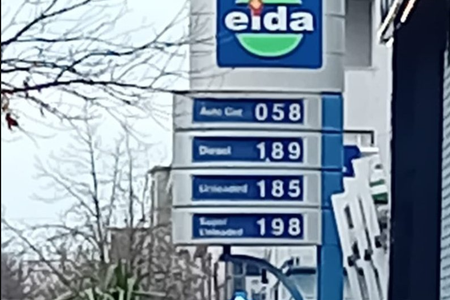
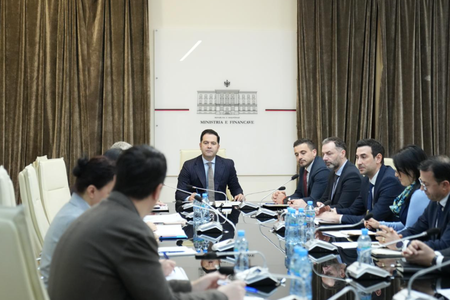
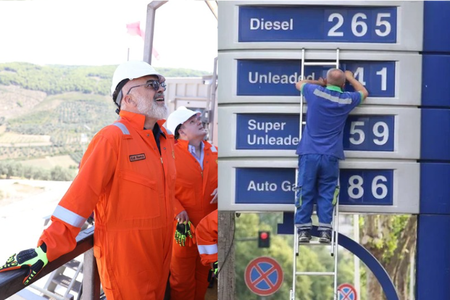
The only government that is making a fuss in the entire region is that of Albania. Currently, Albania is one of the countries with the highest fuel prices in the world, around 2.1 euros per liter of diesel. But despite this, the Albanian government has not taken any measures to mitigate the increase in oil prices, except for propaganda meetings./ Kapitali




Lini një Përgjigje