


 Shkruar nga Pamfleti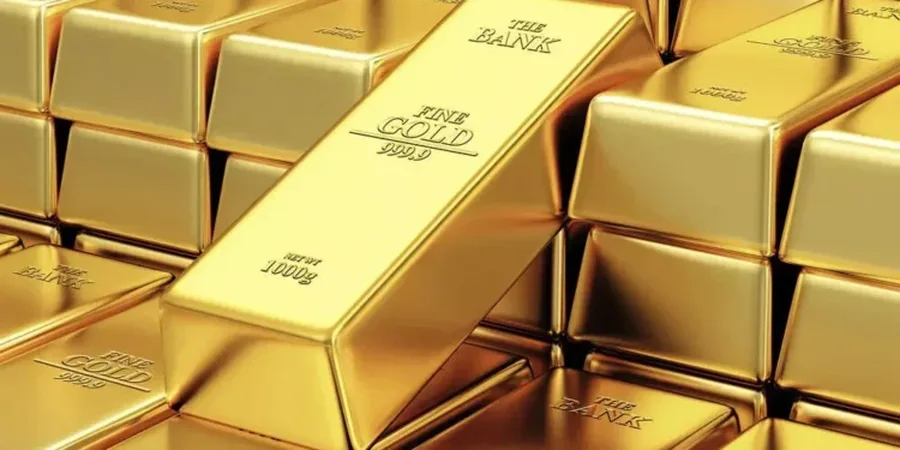
The price of gold has passed $3,550 per ounce this week, hitting historic levels and reinforcing its perception as one of the safest assets in times of uncertainty.
Within a year, gold has risen by almost a third, and on September 5th it reached close to $3,600 per ounce, following the publication of weak data on the US labor market.
This development fueled expectations that the Federal Reserve will cut interest rates in the coming months, causing investors to shift towards gold, which becomes more attractive when yields on bonds and bank deposits fall.
Gold's rise is not simply an immediate reaction to U.S. economic data. It reflects a broader environment of geopolitical and financial uncertainty.
The wars in Ukraine and Gaza, the United States' trade tensions with other countries, and the decline in confidence in financial institutions have increased demand for a physical asset, finite in nature and less vulnerable to monetary policies.
In this context, gold is seen not only as a hedge against inflation, but also as a guarantee against fluctuations in major currencies such as the dollar, sterling or Japanese yen.
An important factor is the role of central banks and exchange-traded funds.
Central banks, especially those in countries with large dollar reserves, have increased their gold purchases as a way to diversify assets and reduce their reliance on US bonds. This has directly contributed to the price increase.
In parallel, exchange-traded funds that track the price of gold have recorded large capital inflows, further amplifying this trend.
The weakening US dollar is another driver. For investors trading in other currencies, gold becomes more affordable when the dollar falls, boosting global demand.
This phenomenon is evident in Asian markets, where recent reports point to record levels in India and strong growth in demand from consumers and institutions.
Declining confidence in fiscal policies in the United Kingdom and Japan has also added to the trend toward gold, as investors seek a hedge against the risk of inflation and weakening currencies.
This situation shows that gold is not explained by a single factor, but by a complex combination: pressures on the Federal Reserve to lower rates, the weakening dollar, political and trade tensions, increased demand from central banks, and its perception as a safe haven.
If the Fed intervenes with rapid rate cuts and geopolitical uncertainty remains high, gold is likely to maintain or even exceed current levels.
Conversely, a sudden strengthening of the dollar or rise in real yields could expose it to corrections, but for now the balance of forces is in favor of growth.
Looking at recent data and global developments, gold's record is not a random phenomenon, but a reflection of an era where uncertainty has driven investors to seek safety in the yellow metal. /Skyweb





Lini një Përgjigje