


 Shkruar nga Pamfleti
Oil at $119 per barrel and geopolitical tensions are keeping euro interest rates high; loan installments are gradually increasing, with a direct effect on family budgets...
The increase in oil prices in international markets, driven by the escalation of the conflict in the Middle East, is producing a chain effect that has already reached Albania.
With Brent touching $119 per barrel, markets are signaling a new reality: more expensive energy, more stable inflation, and more expensive money in the Eurozone.
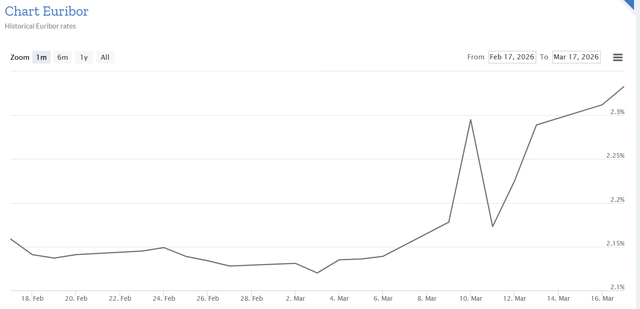
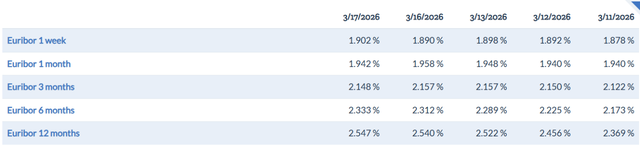
This is the moment when geopolitical developments translate into concrete costs for citizens. Because, in parallel with oil, Euribor, the basic indicator on which euro loan interest rates are based, has also increased.
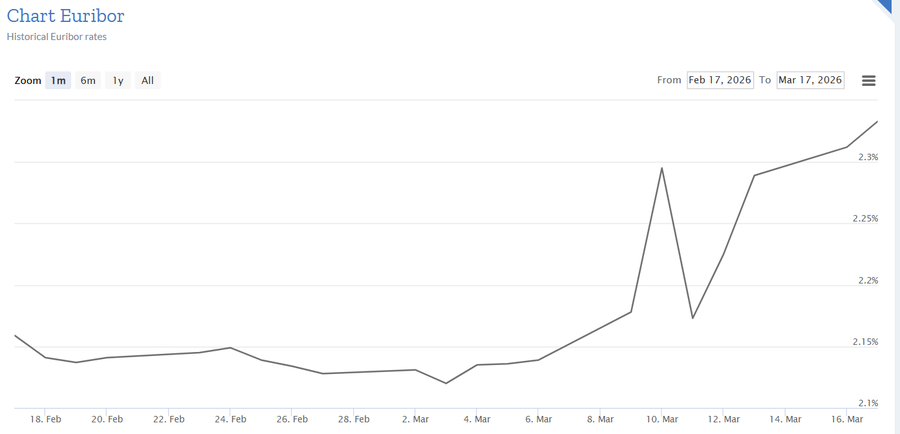
In a few days, the 6-month Euribor has increased from around 2.128% to 2.333%, or nearly 10% in relative terms. It may seem like a small move, but in practice it directly affects monthly loan installments.
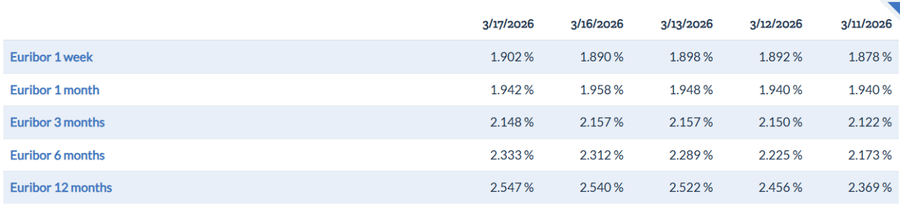
The formula is simple and ruthless: loan interest = Euribor + bank margin. So, any increase in Euribor is automatically passed on to the customer. If a loan has a margin of 2%, the total interest rate increases from 4.128% to 4.333% just from this last move.
But how much does this translate into real money?
For a typical loan:
· 50 thousand euros / 20 years → about 5 euros more per month
· 70 thousand euros / 20 years → about 7–8 euros more per month
· 100 thousand euros / 20–25 years → about 11–12 euros more per month
In themselves, these figures may seem affordable. But the problem is not growth alone. The problem is dynamics. If oil remains high and tensions in the Middle East persist, inflationary pressure in the Eurozone will remain strong. And when inflation does not fall, financial markets do not lower rates; on the contrary, they keep them high or push them further.
It is precisely this climate of uncertainty that is fueling the rise of the Euribor.
For Albania, the risk is twofold. First, as an energy-importing country, it immediately feels the effect of expensive oil on prices, transportation, and the cost of living.
Second, a significant portion of loans to households and businesses remains linked to the euro and to floating rates.
This means that the Albanian citizen faces a double bill: more money for fuel and more money for the bank.
And unlike in previous periods, this time the chances of a quick relief seem limited. An oil price hovering around $119 a barrel shows that the market is pricing in medium-term risk, not just a temporary crisis. Under these conditions, any stabilization takes time – and in the meantime, costs remain high.
In the end, the real effect is not measured by just a few euros more per month. It is measured by the constant pressure on the family budget. Because when the price of energy, food, and credit increases simultaneously, the impact is no longer linear.
In this crisis, the gas pump and the bank counter are speaking the same language: the global crisis is turning into a monthly bill for Albanian citizens./ Pamphlet




Lini një Përgjigje