


 Shkruar nga Pamfleti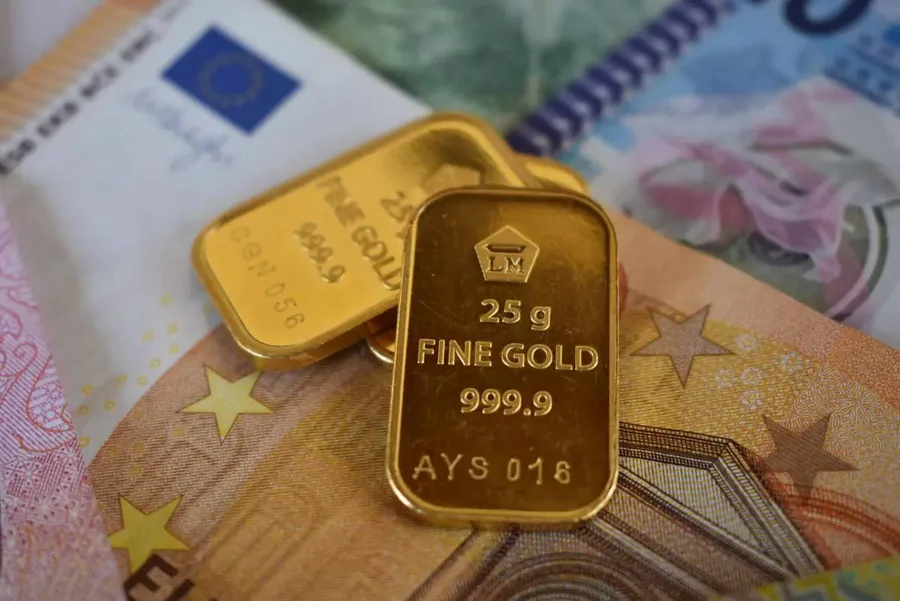
For years, we've told ourselves that government bonds represent a risk-free investment, a solid foundation on which to build portfolios, monetary policy, and financial stability. But today, in some latitudes, this narrative is showing clear cracks...
Gold doesn't respond to trends. When it returns to the spotlight, it always does so for the same reason: because confidence in the instruments that had temporarily left it in oblivion is starting to erode.
It is not a matter of panic, but of caution. And today, caution has once again come at a price. Over the past two years, the yellow metal has experienced periods of intense volatility, with sudden moves that have disoriented less attentive investors and confirmed, instead, the choices of central banks and more structured investors.
But gold, which last week hit $5,600 an ounce before falling back to just under $5,000, has not returned to prominence by chance or as the result of a speculative-fueled fad. It has returned because something, in the relationship between markets, sovereign debt and confidence, has gone deeply wrong.
For years, we told ourselves that government bonds represented a risk-free investment, a solid foundation on which to build portfolios, monetary policy, and financial stability. But today, in some latitudes, that narrative is showing clear cracks. Yields are rising, but safety is diminishing. Debt is rising, but credibility is not.
And when trust becomes too scarce, the market seeks investments that do not depend on political promises or increasingly fragile fiscal balances. It is in this void that the yellow metal has regained importance, not as a speculative instrument, but as an indicator of a systemic distrust affecting advanced economies and global markets.
Silver is also moving alongside gold, with different dynamics, but with a similar logic: more volatile, more exposed to the industrial component, but increasingly perceived as a monetary alternative in a world that is reconsidering the value of real reserves.
The violent fluctuations of recent weeks have caused great excitement and have also provided arguments for those who consider precious metals to be volatile assets.
But short-term volatility doesn't change the fundamental picture: gold and silver are rising because they are decoupled from the risk of default, from government discretionary decisions, and from the progressive erosion of confidence in currencies.
Central banks know this and are demonstrating it with significant purchases, not to chase the price but to reduce exposure to the dollar and US government bonds, which are increasingly affected by political, fiscal and geopolitical dynamics. This is a signal that speaks louder than many academic analyses.
If the institutions that print money choose assets that do not pay interest but do not pose counterparty risk, this means that the paradigm has been structurally shifted. In other words, gold is no longer just a passive reserve, but a declaration of financial autonomy.
For the private investor, the argument is less ideological and more concrete. The gold pound or the traditional gold bar is neither a shortcut to easy profits nor an absolute hedge against all risks. The price is volatile, can correct and can disappoint those who follow the market's highs. But unlike stocks and bonds, it cannot fail, cannot be devalued by decree and does not depend on the fiscal sustainability of a single country or the credibility of a central bank. Two years ago, no one would have bet on these price levels, let alone imagined a doubling scenario. However, without evoking catastrophe or systemic collapse, it is legitimate to note that, if the process of reserve diversification, the decline in confidence in sovereign debt and the fragmentation of the global monetary order were to continue, gold still has room to grow over time: it is difficult to say where it might end up.
Its value is not increasing because the economy is doing badly, but because uncertainty has become structural. Gold does not generate income, that is true, but today, income without confidence has little value. /Adapted from Il Giornale /






Lini një Përgjigje