


 Shkruar nga Pamfleti
Taxes play a significant role in the structure of oil prices. For a month, experts, politicians, associations and farmers have been urging the government to lower taxes to protect citizens from high fuel prices, which skyrocketed immediately after the outbreak of conflict in the Middle East.
The intervention that did not happen in 2022, when the war in Ukraine began, was implemented this year. The excise tax is reduced by 20% when the price of diesel exceeds 220 lek per liter and when gasoline becomes more expensive than 200 lek per liter.
But why is the state stingy with taxes?
“Remove the excise tax until the war is over,” demanded farmers and livestock farmers in a protest on April 7 in front of the Ministry of Agriculture. In fact, the excise tax can be called the “golden tax” for the state budget, as it is one of the main suppliers of the treasury.
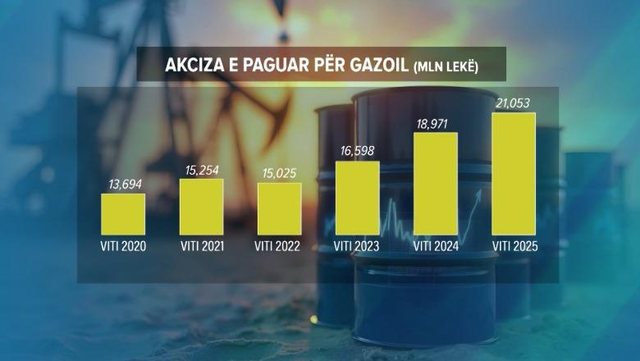
On each liter of diesel or gasoline, the excise tax is 39.2 lek. Official figures provided by Report TV from the General Directorate of Customs show that since 2020, 252.1 billion lek, or approximately 2.6 billion euros, have been collected from fuel excise tax.
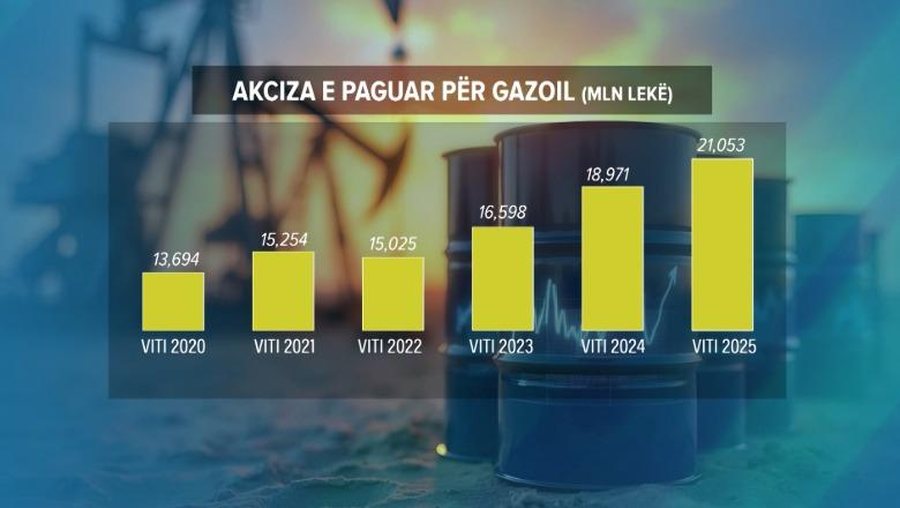
While last year alone, 43.6 billion or 454 million euros were collected from fuel excise taxes.
According to data, 100.5 billion lek or more than 1 billion euros have been collected from excise duty on oil alone (which is an even more widely used product than gasoline and gas) since 2020, while the record was recorded last year at 219 million euros.
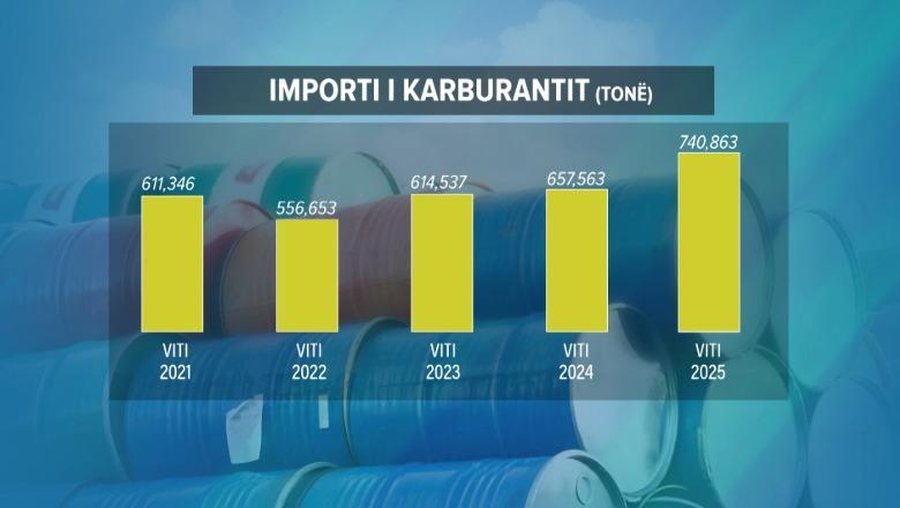
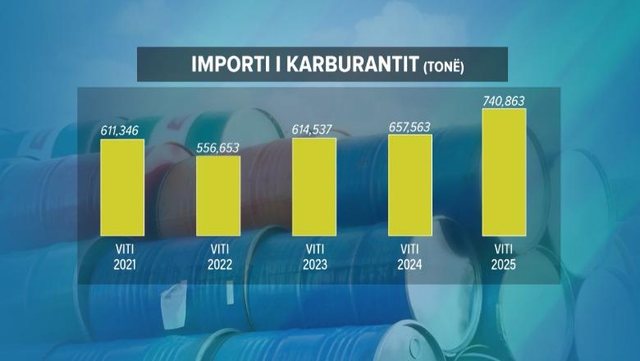
Revenues from excise duties are also increasing due to increased fuel imports. Last year alone, the country imported 740,000 tons of fuel worth 667 million euros.
After excise duty, its sister in value for the price of fuel is the circulation tax, the second for the greatest impact on inflation. In fixed value it is 27 lek per liter.
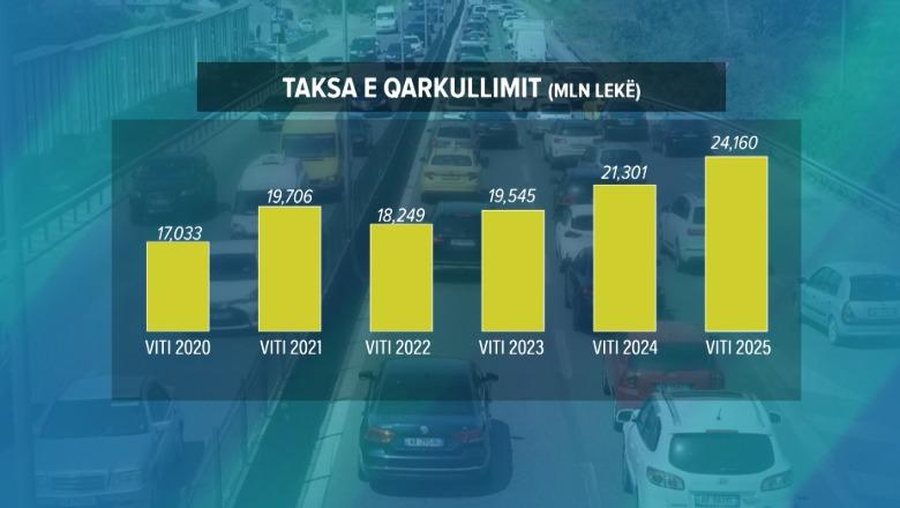
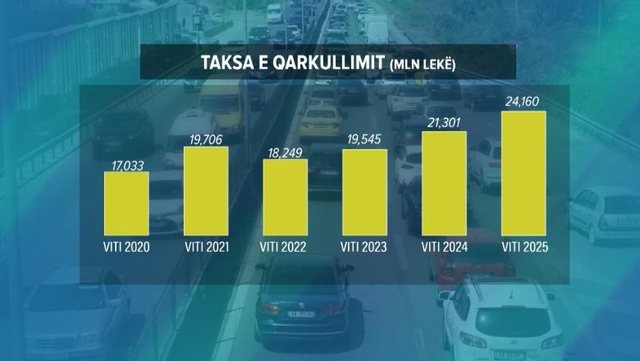
The state budget has collected 119.9 billion lek or 1.2 billion euros since 2020, just from the circulation tax paid by every driver every time they buy fuel.
During 2025, according to data from the Tax Directorate, 24.1 billion lek (251 million euros) were collected from this tax, or about 13.42% more than in 2024. The government stated that this tax 'will not be affected' because, if it is removed from oil, it will go to car taxes, and it will cost citizens more.
In addition, there is also a 3 lek per liter carbon tax, from which 2.9 billion lek or 31 million euros were collected last year.
And finally, a 20% VAT is added to each liter, so the more expensive the oil/gasoline, the more Value Added Tax is paid. At the 220 lekë price of oil that the Transparency Board set on April 8, VAT is 44 lekë per liter.
Currently, the country has entered the Transparency Board regime, which sets prices for the wholesale and retail trade of oil and gasoline, due to their high cost. / Shqiptarja.com



Lini një Përgjigje