


 Shkruar nga Gjergj Zefi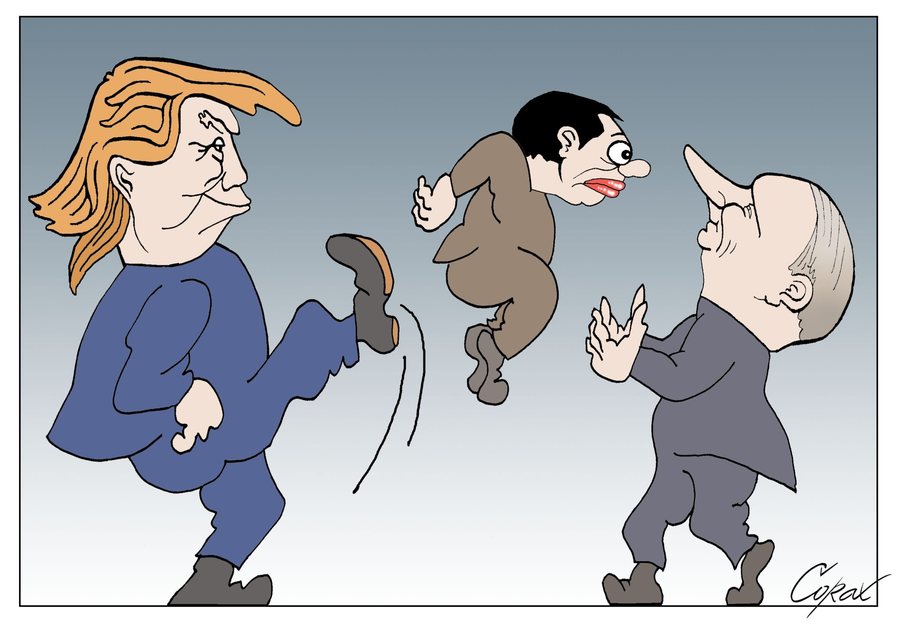
Panicked Serbian president seeks US bailout, but slips into contradictions that expose deep political crisis in Belgrade
In just 48 hours, Serbian President Aleksandar Vučić has made two statements that have put him in the weakest diplomatic position of the last decade.
Initially, he accused the protesters in Belgrade of being in direct contact with US embassy employees, a statement that resonates with the old anti-Western rhetoric that Serbia uses whenever it falls into internal crises.
And just a few hours later, the President comes out publicly and says that “someone from the outside” does not want Serbia to have better relations with the US administration, indirectly blaming the West for sabotaging ties with Donald Trump. This double-dealing shows more about his internal troubles than any real geopolitical strategy.
Vučić today does not have a foreign policy, he only has a survival tactic. And this survival is increasingly relying on an overused narrative, where the US appears as the internal enemy, the organizer of the protests, the conductor of instability. This is the same rhetoric that authoritarian regimes use when they fail to control the political flow in the country: “it’s the foreigners’ fault.” But the contradiction is obvious; how can the US embassy be both a saboteur of stability and at the same time the party with which Vučić seeks better relations?
These statements are a warning sign for a leader who is losing ground. Both were made for a domestic audience, in an attempt to avoid the blow that is coming from students, the opposition and civil society. But the message that was also heard in Washington; was not at all clear.
In fact, the only message Washington received was: the Serbian president is unstable in rhetoric, without a clear strategic compass, and is trying to instrumentalize American diplomacy to cover up the domestic crisis.
For Albania and Albanian actors in the region, this is an opportunity to understand the real dynamics of Belgrade: Vučić is no longer a factor of stability, but uncertain about every step he takes. A Serbia that tries to use the US as an alibi is weaker than a Serbia that directly confronts the West. This creates space for smart Albanian diplomacy, to strengthen alliances with the US and to expose Belgrade's dual policy in international forums.
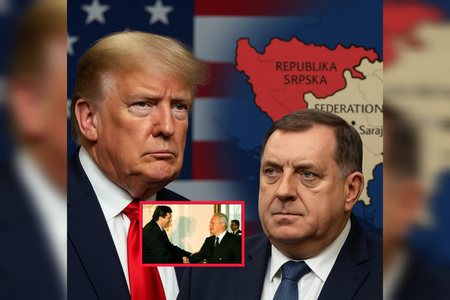
Vučić is sitting on the old 'stool' today, in the corridors of the White House, not to negotiate, but to survive. And this is more a Balkan tragedy than a strategic move. / Pamphlet


Lini një Përgjigje