


 Shkruar nga Ana Pisonero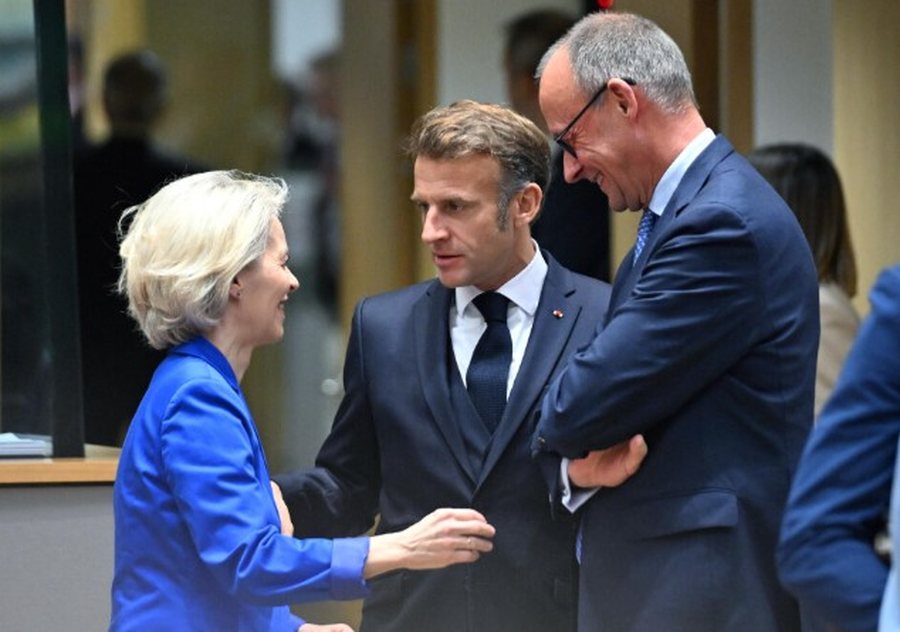
The debate over proposals by some founding states of the European Union for safeguards and transitional measures in the enlargement process highlights a clash between the need for institutional guarantees and the risk of creating additional obstacles to candidate countries.
The measures proposed in the "non-paper" of France, Germany, the Netherlands, Belgium and Luxembourg on safeguard and transitional mechanisms for the admission of candidate countries seem to me as if the newcomers are being forced to shoulder the burden of the EU's old political grievances.
First, the proposal to expand the economic security and resistance to foreign interference clauses may have an understandable logic in principle, but only if the EU is willing to clearly define which external actors this protection is aimed at.
While Russia is widely seen as a clear threat, there is no unified stance on China or some traditional partners, making this approach ambiguous and potentially selective.
Second, the idea of extending transitional measures for opening labor markets and prolonging restrictions as much as possible creates a bleak narrative for candidate countries.
This ignores the reality of high brain drain from the Western Balkans and the extreme challenges faced by countries like Ukraine, which cannot be treated as a source of risk to EU labor markets.
Even more problematic is the connection of this issue to the housing crisis in some member states, indirectly implying that candidate countries may be the cause of the EU's internal structural problems.
Third, the proposed monitoring mechanism raises concerns, as it is reminiscent of the Cooperation and Verification Mechanism (CVM) that was applied to Bulgaria and Romania upon accession.
Such an approach implies a continuing doubt about the ability of countries to meet EU standards, reviving the idea that some states are not fully ready even after accession. Until now, the prevailing approach has been that only fully prepared countries should join, without the need for extended post-accession mechanisms.
Fourth, the question of the protection of EU values as provided for in Article 2 of the Treaty on European Union and the non-regression clauses raises other dilemmas, as these values are already covered by the existing EU budget conditionality mechanisms, which apply equally to all member states, without distinction between old and new.
Fifth, the proposal for a new Article 7 procedure with a 4/5 majority for the suspension of voting rights raises serious questions about the institutional balance. If such a mechanism is intended to strengthen EU decision-making, it remains unclear why it should be limited to new member states and not to all states equally.
It also remains unclear how long these restrictions will last and whether they would be sustainable in practice.
Sixth, the issue of Schengen membership is not new, as this process has historically not been automatic, as the cases of Bulgaria and Romania show. In this context, inclusion in the European Public Prosecutor's Office (EPPO) as a precondition may have a functional logic, as it increases integration into the rule of law mechanisms.
Ultimately, all of these proposals give the impression that they are more aimed at addressing the internal political concerns of the current member states than at advancing a fair and balanced enlargement process. They also leave unanswered the question of whether these measures truly strengthen the European Union or simply reflect its internal tensions.
Note: Ana Pisonero is a journalist on EU affairs, with 20 years of experience and former spokesperson for the European Commission on Neighbourhood and Enlargement and international partnerships./ Adapted from "Pamphlet" by "dtt-net.com"





Lini një Përgjigje