


 Shkruar nga Pamfleti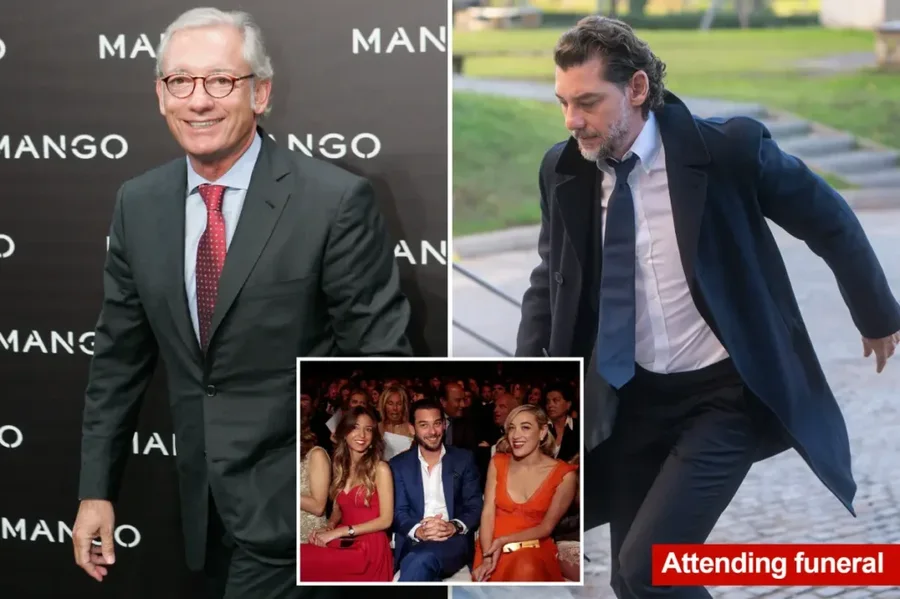
The son of the founder of the famous fashion chain "Mango", Jonathan Andic, has become a suspect in the investigation into the death of his father, Isak Andic, who died last December after falling from a cliff in Montserrat, near Barcelona.
Initially, the incident was described as an accident, but Spanish media outlets "El País" and "La Vanguardia" report that the investigation is now being treated as a possible murder, as the boy's testimony has been described as "unstable."
The Andic family has stated that it is cooperating with authorities and is convinced of Jonathan's innocence.
Isak Andic, one of the most well-known figures in the Spanish fashion industry, founded the Mango brand in 1984 and turned it into one of the largest clothing chains in Europe.
From Istanbul to Catalonia
Born in 1953 in Istanbul, into a Sephardic Jewish family (the name “Seferad” is the old biblical name in Hebrew for Spain) with roots in Thessaloniki, Andic grew up among the rolls of cloth and the voices of the market.
In the 1960s, the family moved to Catalonia, seeking stability and a new beginning. Little Isaac didn't speak Spanish well, but he understood something deeper, the language of commerce and aesthetics.
He started by selling shirts on the streets of Barcelona. There he learned how people dressed when they worked, how they walked when they wanted to, how they looked when they wore something that suited them. This observation became the DNA of Mango, which he founded in 1984 with his brother Nachman. His deepest desire was to express a Mediterranean identity, that is, clean lines, self-confidence without being obvious.
Mango grew quickly, from a small boutique in Barcelona to a global network with more than 2,500 stores in 110 countries.
But Andic himself remained invisible. He did not give interviews, did not appear at fashion festivals, did not allow photographers into his office.
Those who worked with him say he preferred to enter stores quietly, hold the cloth in his hands, ask an employee if the shelf looked "clean."
He was obsessed with details, but not with luxury.
In the eyes of the Spanish, he was the rival of Amancio Ortega, the founder of Zara.
Forbes estimated his fortune at $4.5 billion. But he himself lived far from the limelight, dividing his time between Barcelona and his country home.
December 14, 2024 began quietly. Isaac and his son, Jonathan, went for a walk in Collbató, at the foot of Montserrat.
It was a road they both knew. No one knows exactly what happened that morning.
Hours later, the Mango founder was found dead after falling from a 100-meter cliff. His son called authorities. Initial reports said it was a "tragic accident."
Police gathered evidence, including that of Andic's partner, Estefania Knut, a well-known golfer. Nothing seemed to point to criminal activity.
But something was wrong.
In the months that followed, the Mossos d'Esquadra continued their investigation discreetly. Jonathan's statements seemed inconsistent. The father's mobile phone revealed contradictions in the pursuit routes.
The police did not reach a conclusion, but suspicions had already been dispelled.
In October 2025, the case was reopened as a possible murder.
Jonathan Andic, vice president of Mango and his father's only companion that day, is under official investigation.
The family states that they strongly believe in his innocence and are fully cooperating with authorities.
The judge of the Court of First Instance in Martorell maintains strict confidentiality, no information is leaked.
Family and inheritance
After Andic's death, Mango entered a period of restructuring.
Chief executive Tony Ruith took over as chairman of the board, the first non-family member to hold this senior position.
Jonathan was appointed vice president, while his sisters, Judith and Sarah, took on roles at parent company MNG.
The family remained silent. No interviews, no public appearances, just a simple statement of faith in justice.
This silence feels almost like a tribute to Isaac himself. For he too believed that power does not need a voice, but rather consistency.
The Man Behind the Brand
His friends describe him as a man of deep humility and almost mathematical thinking.
A close associate once said, “Isaac could look at a store window and tell if the company was doing well.” He
he loved clean lines, neutral shades, and the idea that fashion should belong to people, not designers.
Success never intoxicated him. He didn't seek fame, nor photos with models. He was more of a craftsman than a star.
Mango was for him a "family of people who work with respect for detail."
Perhaps that's why his death caused such a deep shock. Because it happened away from the spotlight, as he had always lived, but it left behind questions that didn't suit him.
The case remains secret. The Mossos continue to analyze data, phone conversations, geographical traces.
There is no tangible evidence, only inconsistencies, silence and the shadow of a name that has marked modern Spanish entrepreneurship.
In Catalonia, Isak Andic is still treated with respect, as the man who learned in Spain to sell style with soul.
But his story now has two sides. That of the visionary who highlighted Mediterranean simplicity, and that of the father who disappeared into a mountain, leaving behind a mystery that no one knows if it will ever be solved.
And perhaps, somewhere there, between the light and the silence, lies his truth.








Lini një Përgjigje