


 Shkruar nga Pamfleti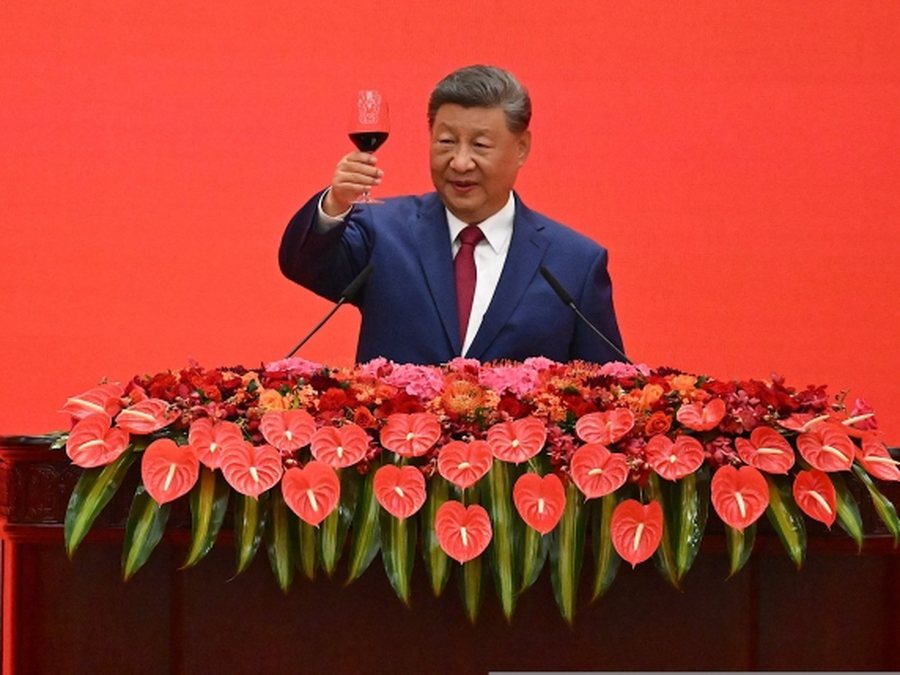
China holds the decisive vote on the war in Ukraine: by respecting the embargo on Russian oil, it can force Putin to stop the aggression due to lack of funds. Will it do so?
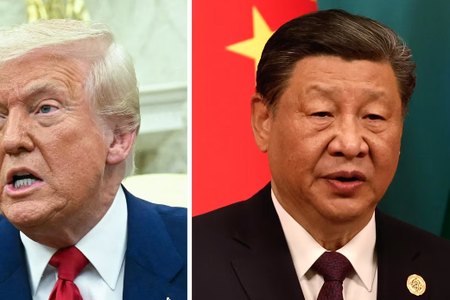
Never mind China's youth unemployment or the fact that young people in their 20s no longer want to work twelve-hour days, six days a week like their fathers. Never mind the real estate crisis and consumer paralysis. Not this week. Xi Jinping should approach his summit with Donald Trump in Malaysia full of confidence in his own strength.
Chinese protectionism
In an international system marked by the fiercest trade wars in a century, Chinese exports have continued to grow this year through September: up 6% compared with the same months in 2024, according to Beijing's customs. Under the weight of tariffs and political tensions with the White House, sales to the United States have fallen by 17%.
But for China, this is compensated by the fact that it has diverted its products to the European Union (plus 8.2% of exports, with Italy and Germany hit hard). And it is also compensated by the boom in exports to Asia itself, with the Philippines and Vietnam first. In the rest of the world, Beijing has continued to practice a protectionism different from Trump's only because it is not announced, but visible in the numbers: minus 4% purchases from the European Union, minus 8% from Italy alone.
The US imports more
In comparison, it is the United States that has yet to find its balance, after the huge shock of the tariffs imposed by Trump. By July, American exports in 2025 are essentially stagnant, excluding inflation, while imports have even increased by two hundred billion dollars as companies have filled warehouses for fear of tariff increases. However, market dynamics do not operate behind these numbers.
Xi's new strategy
It is politics, understood as simple power relations. The Wall Street Journal wrote a few days ago that Xi, faced with Trump's return, has commissioned a task force to develop a new concept for how to negotiate with the White House. Part of it were his chief of staff Cai Qi, economic chief He Lifeng and party ideologue Wang Huning. Their advice: not to limit himself to reacting to Trump, but to offer concessions on what Beijing considers less important and to present even more serious threats than Trump's own on the issues that are more important to Xi.
TikTok and chips
Thus, the Chinese leader has accepted the sale of TikTok’s Chinese operations in the United States to American shareholders and will once again import soybeans from the Midwest. But when the White House resumed talking about controls on semiconductor supplies, he reacted even more harshly: on October 9, his Commerce Department announced a restriction on the export of refined rare earth metals, which are used in smartphones, computers, cars, missiles and much more.
Rare mineral monopoly
This was enough to push Trump towards compromise. Rare earth metals are found all over the world. If Beijing controls 90% of that market, it is because it accepts on its territory the highly polluting processes needed to refine them. The United States or Europe can break this monopoly only after ten years or so, long enough to develop the appropriate knowledge and machinery. Not before.
The Russian issue
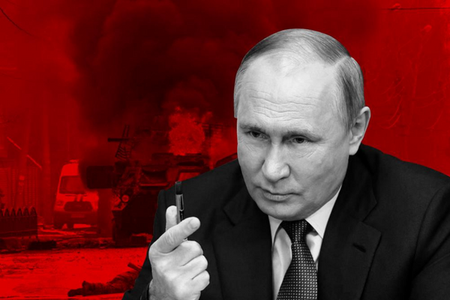
That's why Xi Jinping goes to Thursday's meeting with Trump convinced that he has found the keys to the White House. Trump's own sanctions on Moscow's major oil companies, Rosneft and Lukoil, only serve to strengthen his conviction. With them, Xi, more than ever before, holds the decisive vote on the war in Ukraine: by respecting the embargo on Russian oil, he can force Vladimir Putin to stop the aggression due to lack of funds.
Exchange with Taiwan
But will it do it? With Iran, which has been under current oil sanctions since 2012, China has already shown itself willing to ignore Western restrictions and capable of running a parallel industrial network: it buys 90% of the vast Iranian barrel exports. But even with Ukraine, Xi could ultimately set his own price for complying with American sanctions: he wants the United States to declare its official "opposition" to Taiwan's independence. It matters little, for Xi, that perhaps even Trump himself would not be so brazen as to exchange Kiev's salvation for Taipei's punishment./ Corriere della sera



Lini një Përgjigje