


 Shkruar nga Pamfleti
Despite his injuries and his absence from the public eye, Mojtaba Khamenei continues to have influence over Iran's military strategy and negotiations with the US, while the Iranian regime remains fragmented and under strong military and economic pressure.
US intelligence estimates that Iran's new supreme leader, Mojtaba Khamenei, is playing a significant role in shaping war strategy alongside senior Iranian officials, although his real authority within the fragmented regime remains unclear, according to sources familiar with US intelligence assessments.
According to the report, Khamenei is helping to direct how Tehran is managing negotiations with the United States to end the conflict.
Mojtaba Khamenei has not been seen in public since the attack early in the war that left him seriously wounded and killed his father, Iran's former supreme leader, along with some of the country's top military leaders. This has fueled speculation about his health and current role in the Iranian leadership.
The Trump administration continues to seek a diplomatic solution to the conflict as the ceasefire enters its second month. According to US intelligence, Iran is still struggling to recover from the US bombing campaign, although it has retained significant military capabilities and the ability to withstand several more months of US blockade.
Khamenei was declared the new supreme leader just days after the attack that injured him, but the US intelligence community has yet to visually confirm his whereabouts.

According to one source, part of the uncertainty is related to the fact that Khamenei does not use electronic devices for communication. He communicates only through face-to-face meetings or messages sent by trusted couriers.
Sources add that he continues to remain in isolation while receiving treatment for his injuries, including severe burns to his face, arm, torso and legs.
On the other hand, Mazaher Hosseini, the chief of protocol in the office of the Iranian supreme leader, stated on Friday that Khamenei "is in good health" and that his wounds are healing.
"Thank God, he is in good health. The enemy is spreading rumors and false claims. He will speak when the right moment comes ," Hosseini said during a public statement in Iran.
Iranian President Masoud Pezeshkian said earlier this week that he had held a two-and-a-half-hour meeting with Khamenei, marking the first reported meeting between the supreme leader and a senior Iranian official since the start of the war.
US intelligence: Iranian military capabilities not destroyed
American intelligence reports estimate that the war has significantly damaged the Iranian military, but has not destroyed it.
It was previously said that about half of Iran's missile launchers had survived the US strikes. A more recent report raises that estimate to about two-thirds, partly because the ceasefire has given Iran time to recover equipment covered by previous bombings.
A separate CIA report estimates that Iran could withstand up to four more months of the US blockade without complete economic collapse.
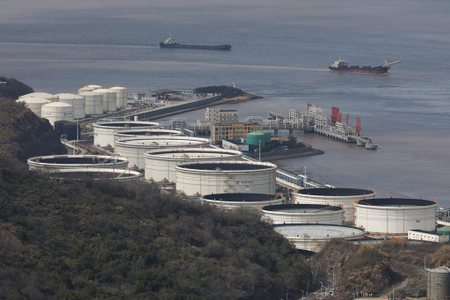
Meanwhile, sporadic clashes between American and Iranian forces have continued despite the ceasefire, while traffic in the Strait of Hormuz has been reduced to almost a minimum, with both sides claiming control of the strategic sea route.
A senior US intelligence official also said that the US blockade is causing "severe and ongoing damage" to the Iranian economy.
The government in Iran appears increasingly fragmented
According to American sources, day-to-day operations in Iran are being run primarily by senior Islamic Revolutionary Guard Corps officials and the speaker of Parliament, Mohammad Bagher Ghalibaf.
"There is no indication that Khamenei is giving ongoing orders, but there is also no evidence that he is not ," said a source familiar with US assessments.
US Secretary of State Marco Rubio said on Friday that the Iranian political system "remains deeply fragmented and dysfunctional," which could prevent an agreement from being reached.
According to American assessments, even the elimination of the former supreme leader was not expected to bring about the fall of the Iranian regime, as his successors are also considered hard-line figures.
President Donald Trump has repeatedly stated that Iran has entered a phase of "regime change" and has described current Iranian negotiators as "more reasonable" compared to previous leaders.
Analyst Ali Vaez from the International Crisis Group said that the Iranian system is using the figure of Mojtaba Khamenei to give formal approval to strategic decisions, while negotiators are protecting themselves from internal criticism by attributing key decisions to him./ Adapted from "Pamphlet" by "CNN".


Lini një Përgjigje