


 Shkruar nga Pamfleti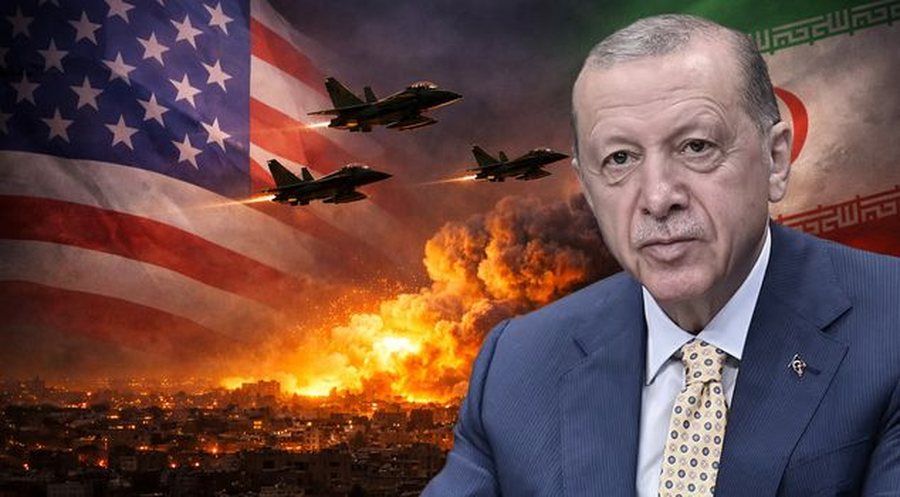
Turkey is trying to take advantage of the consequences of the war in Iran in order to strengthen its economy.
As The Economist reports, the war is leaving behind economic ruins, costing Iran $600 billion in damages in the past four months, according to the International Monetary Fund (IMF), while up to 7% of the workforce has lost its jobs. At the same time, the economies of the wealthiest Gulf countries have shrunk, and the conflict could shave two percentage points off GDP growth in the Middle East as a whole this year.
For Turkey, a large economy nestled between the volatile region and Europe, the Gulf conflict has proven a double-edged sword. High oil prices pushed monthly inflation above 4% in April, only the second time in a year.
Meanwhile, the central bank has spent more than half of its foreign exchange reserves to prop up the Turkish lira. However, the problems in the neighboring region also create opportunities. “The Gulf has lost a significant part of its business activity in recent months and we believe we can absorb some of it,” says a Turkish finance ministry official.
Transforming Turkey into a trade hub
Istanbul, and Turkey as a whole, is already developing into a commercial hub connecting Central Asia, the Middle East and Europe. It may not have the glitz of the Gulf, but it is bustling with life. Shoppers browsing the boutiques of Istanbul's upscale Nisantasi district say they would be in Dubai in other circumstances.
On the other side of the Bosphorus, the country's third-largest container terminal is operating at almost full capacity.
Port workers report that cargo volume has tripled since the closure of the Strait of Hormuz, adding that Turkish ports had never handled such a large volume of cargo in the spring.
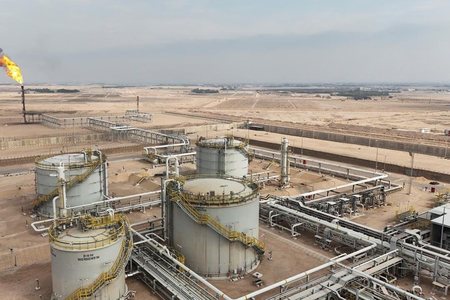
At the same time, the amount of fossil fuels transported through pipelines that pass through Turkey and connect Europe to its energy suppliers is also increasing. Flows through the Kirkuk-Ceyhan oil pipeline from Iraq are expected to triple by August compared to April.
Ankara sees new investment opportunities
Turkey is seeking much more. Iran’s control of the Strait of Hormuz has revived plans for at least three new rail and road corridors connecting the Middle East with Europe. Turkish authorities estimate that these projects could attract billions of dollars in foreign investment. The Hejaz Railway, for example, is planned to transport crude oil as well as passengers from Saudi Arabia.
At the same time, government officials estimate that more visitors, like those currently shopping in Istanbul, will soon arrive in the country, boosting sectors such as tourism and entertainment.
At the same time, the Turkish defense industry, which has been significantly strengthened in recent years through state subsidies, exported about the same volume of weapons systems as Germany in 2025. According to two Turkish officials, since February three Gulf countries have begun negotiations on arms purchase agreements.
The goal is to attract banks and investors.
Another major challenge for Turkey is attracting investors fleeing the Gulf. The Istanbul Financial Center (IFC), a modern complex of glass skyscrapers set to open in 2023 to house international banks and financial services companies, was until last February exclusively home to banks and state regulators.
IFC President Ahmet Ihsan Erdem and Turkish Finance Minister Mehmet Simsek say about 40 Gulf banks and consulting firms are considering opening offices in the center. In May, the government announced generous tax breaks for foreign investors, with additional incentives for those setting up businesses in the IFC.
This effort is reinforced by the fact that, under the leadership of Mehmet Simsek and Central Bank Governor Fatih Karahan, the country's macroeconomic management is now considered more rational than in previous years, when President Recep Tayyip Erdogan argued, among other things, that higher interest rates cause rather than limit inflation.
In 2025, the Turkish economy recorded a growth of 3.6%, while annual inflation fell by 24 percentage points to 35%. Since February, the growth of tourism and freight transport helped limit the immediate impact of high energy prices, while the April ceasefire led to monthly inflation of just 1.7% in May.
Remaining Challenges
Despite the positive signs, Mehmet Simsek and Fatih Karahan still face significant challenges. The war has damaged both the state budget and Turkey's balance of payments. Fuel tax cuts, which helped lower energy costs, could cost 0.6% of GDP.
At the same time, the country’s foreign exchange reserves fell from $79 billion in January to just $18 billion in April, as the central bank sold dollars to prop up the lira. Although reserves have now stabilized, further intervention without first replenishing them could lead to a further loss of confidence in the central bank, a new surge in inflation and, ultimately, the imposition of capital controls.
Some Western financial figures are expressing fears of a return to the fiscal and monetary policies of the past, especially after reports of a rift between Mehmet Simsek and President Erdogan. Already, since the start of the war with Iran, foreign investors have withdrawn at least $10 billion from Turkey.
At the same time, many investors leaving the Gulf are choosing other destinations. Hedge fund managers leaving Dubai are mostly heading to Miami and Milan rather than Istanbul. High-net-worth business executives seeking quality schools for their children are opting for London or Geneva.
According to conversations with a dozen young residents IFC spoke to, most companies employ fewer than 50 people in Istanbul. Meanwhile, few of the foreign visitors who shop in Nisantasi say they plan to return, and a boom in the logistics and shipping sectors, which account for less than a tenth of the Turkish economy, is not enough on its own to change the picture.
The war in the Middle East offers Turkey a significant opportunity to shake off its reputation as a chronically troubled economy. But it will take much more than instability in its neighborhood to transform it into a true economic miracle.


Lini një Përgjigje