


 Shkruar nga Pamfleti
Erdogan still wants room for maneuver among the great powers, but the economic crisis, defense needs, and weakening Russian influence are pushing Ankara back toward NATO.
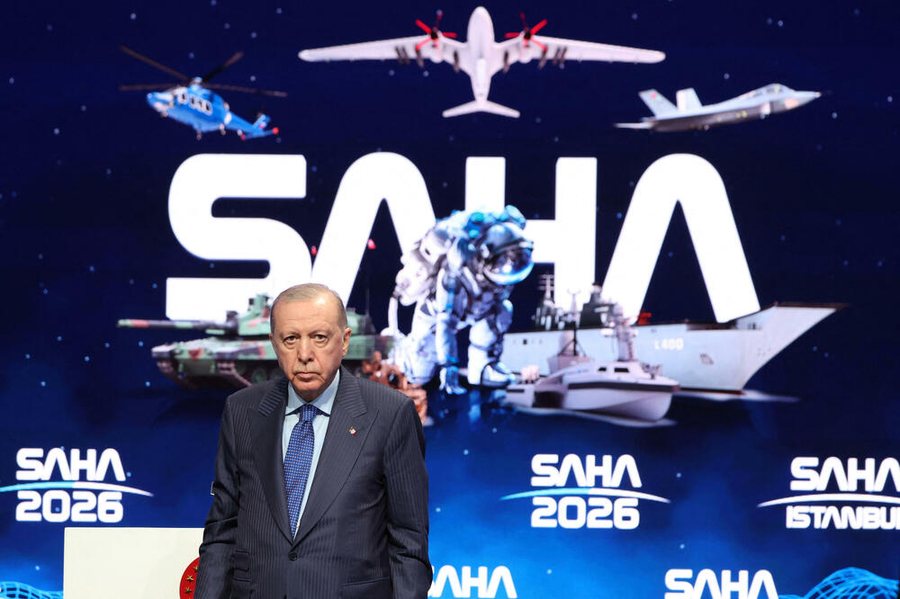
For more than 25 years, whenever relations between Turkey and the United States or Europe have deteriorated, analysts have raised the alarm that the West is "losing" Turkey. This first happened in 2003, when the Turkish parliament refused to allow American forces to use Turkish territory for the invasion of Iraq. The same situation was repeated in 2010, when Ankara voted against strengthening United Nations sanctions on Iran.
Concerns were further heightened in 2017 when Turkey purchased the Russian S-400 air defense system. The decision was interpreted as a signal that NATO's second-largest military power was moving closer to the Alliance's main adversary.
During the second half of the 20th century, secular leaders had firmly anchored Turkey in the Western camp. The country joined the Council of Europe in 1949, NATO in 1952, and signed an association agreement with the European Economic Community in 1963.
However, after the Justice and Development Party (AKP) came to power in 2002, many Western observers feared that President Recep Tayyip Erdogan, due to his party's historical ties to Islamist movements, would pull Turkey away from the Euro-Atlantic axis.
In many ways, Erdogan has tried to realize this orientation. Starting in the mid-2010s, under the concept of "strategic autonomy," Ankara strengthened economic, energy, and security relations with Russia, while at times pursuing policies that caused strong clashes with its NATO allies.
Today, however, the situation is changing.
Ahead of the NATO summit, which Turkey will host in July, Turkish officials have repeatedly sent messages of support for the Alliance. Foreign Minister Hakan Fidan has called transatlantic relations a strategic necessity for Turkey and described the summit as a historic opportunity to reaffirm NATO unity.
This shift is not just a matter of rhetoric. In recent years, Ankara has gradually distanced itself from Moscow, reducing its dependence on Russian energy and limiting economic and military cooperation with the Kremlin. This new course has paved the way for closer cooperation with Western allies and reflects the growing conviction of the Turkish political elite that, after years of insisting on "strategic autonomy," Turkey's long-term interests are best served in partnership with the West.
Partnership with Russia
Turkey's rapprochement with Russia began after the 2015 crisis, when Ankara shot down a Russian warplane near the Syrian border. After Moscow's harsh reaction and the lack of full support from NATO, President Erdogan decided to normalize relations with Vladimir Putin. After the coup attempt in 2016, Putin's quick support further strengthened this rapprochement.
Turkey purchased the Russian S-400 system, causing tensions with the US and NATO. As a result, Washington imposed sanctions on Ankara and excluded it from the F-35 aircraft program.
After the Russian invasion of Ukraine in 2022, Turkey condemned the aggression and supported Ukraine with drones, but did not join Western sanctions against Russia. On the contrary, economic and energy relations between the two countries expanded significantly.
Changing course
The economic crisis, high inflation, the collapse of the Turkish lira, and the devastating earthquake of 2023 forced Erdogan to reconsider foreign policy. To restore investor confidence and stabilize the economy, Turkey began to improve relations with the United States and the European Union.
Ankara lifted its veto on Sweden's NATO membership, restricted exports to Russia, reduced financial cooperation with Russian companies, and began to reduce dependence on Russian energy by increasing imports of liquefied gas from the US and supplies from other countries.
Return to NATO
Developments in Syria and the weakening of Russian influence have given Turkey more space to cooperate with Western allies. Ankara is modernizing its military with Western technology, cooperating with France and Italy on the SAMP/T missile system, and strengthening its role in Black Sea security.
At the same time, Turkey has begun to distance itself from strategic projects with Russia, while seeking cooperation with the US and South Korea on the construction of a second nuclear power plant.
According to the analysis of Foreign Affairs, Turkey has not given up on the goal of maintaining strategic autonomy, but has realized that its economic and security interests are better protected in cooperation with the US and Europe. The experience of recent years has shown that Turkey's economy, defense industry and security remain closely linked to the West, while the partnership with Russia cannot replace the alliance with NATO. In this sense, Ankara is gradually returning to the Euro-Atlantic axis, while maintaining space for a more independent foreign policy.





Lini një Përgjigje