


 Shkruar nga Pamfleti
Iran and the US are lowering expectations for reaching an agreement to end the war. The Strait of Hormuz, the nuclear program and the unblocking of Iranian funds continue to remain the most difficult issues in the negotiations.
Iran and the United States played down expectations Monday for immediate progress in efforts to end their three-month war, with US Secretary of State Marco Rubio saying Washington would either reach a good deal with Tehran or pursue "other paths."
The top US diplomat, speaking to reporters in New Delhi, said the US will give diplomacy every chance to succeed before considering "other alternatives." The statement came after President Donald Trump said on Sunday that he had asked US officials not to rush to close a deal with Iran.
Rubio said there is a "pretty consistent theme" on the table regarding Iran's ability to reopen the Strait of Hormuz and begin serious, time-limited negotiations on the nuclear issue.
"We hope we can achieve this," he declared.
On the other hand, Iranian Foreign Ministry spokesman Esmail Baghaei said that agreement has been reached on some issues, but this does not mean that the parties are close to signing an agreement.
According to him, the possible memorandum of understanding contains 14 points and focuses on ending the war and the US naval blockade of the Strait of Hormuz. In return, Iran will take measures to guarantee safe passage through this strategic sea route.
Baghaei explained that at this stage the talks do not include the nuclear issue, which is expected to be negotiated within 60 days if a framework agreement is reached.
President Trump has repeatedly stated that his primary objective is to prevent Iran from developing nuclear weapons using highly enriched uranium. Tehran has repeatedly denied that it intends to build such weapons.
A day earlier, Trump wrote on the Truth Social platform that the US blockade of Iranian ships in the Strait of Hormuz "will remain in full force until an agreement is reached, ratified and signed."
The most difficult points of negotiations
Trump had raised expectations of an imminent deal on Saturday when he declared that Washington and Tehran had "negotiated very closely" a memorandum of understanding for a peace agreement that would lead to the reopening of Hormuz.
Baghaei said the current draft does not contain concrete details for the administration of the strait, through which about a fifth of the world's oil and liquefied natural gas passes.
According to him, Iran will not impose transit fees on ships using the Strait of Hormuz. However, there will be fees for services such as navigation and environmental protection measures, based on a protocol that is expected to be agreed with Oman, which shares the other coastline of this waterway.
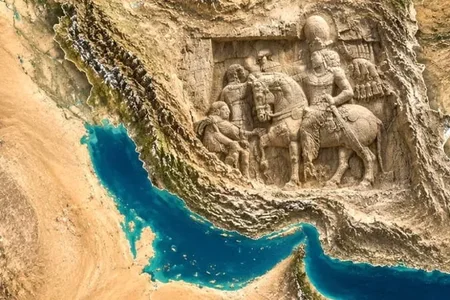
The Strait of Hormuz has been virtually closed since the war began on February 28. Currently, only a limited number of ships pass through it, compared to about 125 to 140 ships per day before the conflict.
Its closure has caused a sharp increase in oil prices and an energy crisis that has affected the costs of fuel, fertilizers and food.
However, oil prices fell 5% on Monday, touching their lowest level in two weeks, as optimism grew that the US and Iran could move closer to a peace deal.
Despite this, the two sides continue to have deep disagreements on key issues, including Iran's nuclear ambitions, Israel's war in Lebanon against Tehran-backed Hezbollah, and Iranian demands for the lifting of sanctions and the unblocking of tens of billions of dollars in oil revenues frozen in foreign banks.
Iranian sources told Reuters that "workable formulas" could be found in the coming stages to resolve the dispute over its highly enriched uranium stockpile. One option being discussed is the dilution of the material under the supervision of the UN nuclear agency.
Fragile ceasefire
Trump, whose popularity has been damaged by the war's impact on US energy prices and by Congressional efforts to limit his military powers, has repeatedly stressed the possibility of a deal to end the conflict launched by the US and Israel.
A fragile ceasefire has been in place since early April.
The US president also responded to his critics about the way he is managing negotiations and his willingness to compromise with Iran.
"If I make a deal with Iran, it will be a good and fair deal. Don't listen to the losers who criticize something they know nothing about," Trump wrote on Sunday.
American and Israeli attacks on Iran have caused thousands of casualties before they were halted in early April. Israel has also killed thousands and forced hundreds of thousands from their homes in Lebanon, where it has launched military operations against Hezbollah.
On the other hand, Iranian attacks on Israel and neighboring Gulf states have caused dozens of casualties. / Adapted from "Newsbomb.gr"



Lini një Përgjigje