


 Shkruar nga Pamfleti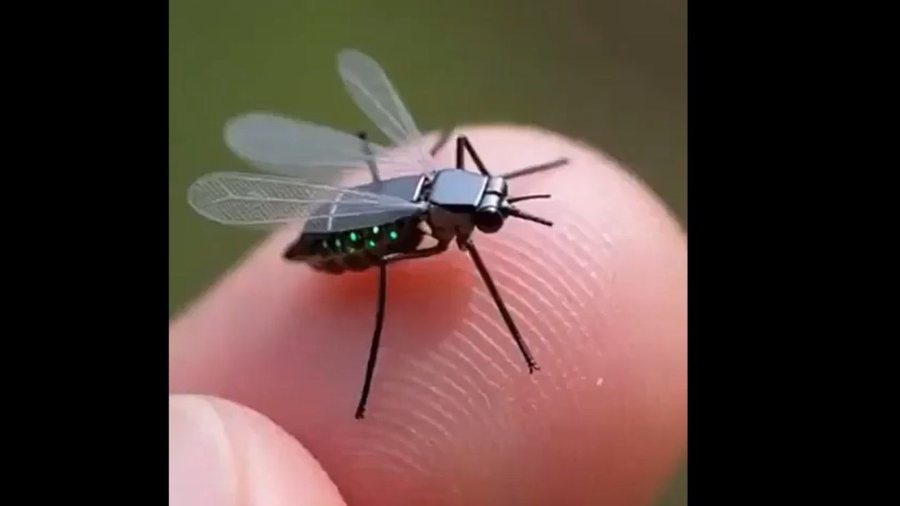
Chinese researchers have developed a microscopic drone that mimics the flight of a fly and is equipped with a camera, microphone and advanced sensors, although its autonomy still remains limited...
A new development in Chinese technology is attracting the attention of the international research community. Researchers at the National University of Defense Technology in China have built an experimental drone with dimensions similar to those of a real fly.
The device has a body just 2 centimeters long and rests on four extremely thin legs, comparable in thickness to a strand of hair. Despite its small dimensions, engineers have integrated into it a microcamera, a highly sensitive microphone and specialized sensors that can record images, sounds and electronic signals.
Unlike traditional drones with rotating propellers, this model uses wings that move in pulses and reproduce the natural movement of insects. This technology makes the device much harder to distinguish from noise, allowing it to move discreetly.
According to the developers, the drone can be controlled via a Bluetooth connection from a smartphone, which makes its use relatively simple in situations that require quick reaction.
China has unveiled a micro-drone the size of a mosquito
— NEXTA (@nexta_tv) June 17, 2026
The device weighs less than 0.3 grams and imitates insect flight — its wings beat up to 500 times per second. It can carry miniature sensors for reconnaissance and surveillance.
In theory, such devices could be used for… pic.twitter.com/hGBsUL6ywU
Experts estimate that such technologies could be used for reconnaissance missions, monitoring in confined spaces, or operations in high-security environments, where conventional equipment faces limitations.
However, the project is still in the laboratory prototype stage due to technical limitations. The biggest problem is related to the power supply, as the batteries available at this scale only provide 1 to 3 minutes of flight.
Specialists emphasize that the device is still sensitive to external conditions, including light winds, while the very low weight does not allow the installation of the most advanced telemetry systems.
However, rapid advances in materials and battery technology could significantly expand the capabilities of these systems in the future. Such developments are expected to open up new discussions about security and privacy in the age of microscopic technologies.








Lini një Përgjigje