


 Shkruar nga Pamfleti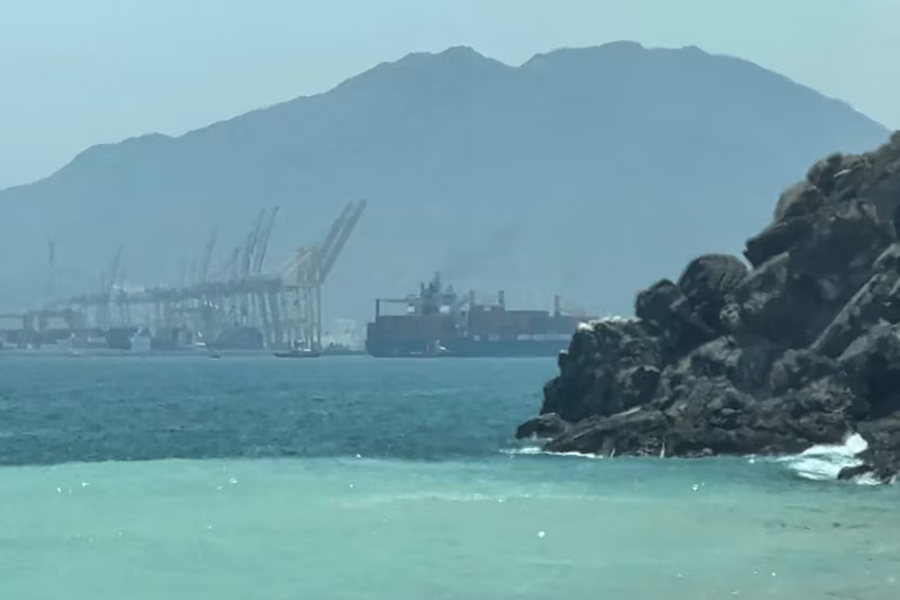
DP World is considering building a new multi-purpose port and container terminal in Fujairah, on the east coast of the United Arab Emirates. The project aims to reduce dependence on the main Jebel Ali port in Dubai and create an alternative trade corridor that bypasses the Strait of Hormuz, one of the world's most sensitive shipping lanes.
According to sources familiar with the project, the company is in talks with authorities to develop new infrastructure in Fujairah. DP World has not confirmed details, but has said it is working on diversification plans to cope with disruptions caused by regional crises.
The project represents a significant strategic shift for Dubai, as Jebel Ali has been the foundation of its success as a global trade and logistics hub for decades. However, the Emirati government is seeking to protect the economy from risks related to tensions with Iran and uncertainty in the Strait of Hormuz.
The new port would allow containers to arrive in the Gulf of Oman without passing through Hormuz and then be transported by land to Dubai, Abu Dhabi and other Gulf countries.
The need for this alternative became more apparent after the conflict with Iran. According to sources, since the beginning of the war, Iran has launched about 3,000 drones and missiles towards the United Arab Emirates. During the same period, activity at the Jebel Ali port fell by 90–95% after Iran closed the Strait of Hormuz in response to US-Israeli attacks. A fire at Jebel Ali, which authorities linked to debris from an intercepted missile, added to security concerns.
DP World is still discussing the structure and financing of the project with authorities, while a company official said the new facility could be completed in about 18 months. The initial investment is expected to reach hundreds of millions of dollars and can be further expanded depending on the needs for additional capacity.
Officials stress that the Fujairah development is not intended to replace Jebel Ali. The region's largest container port, which handled 15.6 million standard equivalent units (TEUs) last year, will remain the Emirates' main logistics hub thanks to its free economic zone and infrastructure developed over the years.
However, experts warn that the impact of the crisis could be long-lasting. Lars Jensen, CEO of Vespucci Maritime, estimates that the consequences for Jebel Ali could be significant and permanent. Moody's also predicts a drop in DP World's profits, from $6.6 billion in 2025 to about $5.9 billion this year, as a result of the conflict.
Since the outbreak of the war, DP World has diverted some shipments to the ports of Fujairah and Khor Fakkan, which are already facing congestion. At the same time, Gulftainer has announced a $2 billion investment to expand its terminal in Khor Fakkan, reflecting the new orientation of the logistics sector towards the east coast.
Fujairah is already strategically important to the Emirates, serving as an export point for some of Abu Dhabi's oil through pipelines that bypass the Strait of Hormuz. DP World's new plans show that regional conflict has forced governments and companies to reassess infrastructure and trade corridors, seeking safer alternatives to one of the world's most important sea lanes.





Lini një Përgjigje