


 Shkruar nga Pamfleti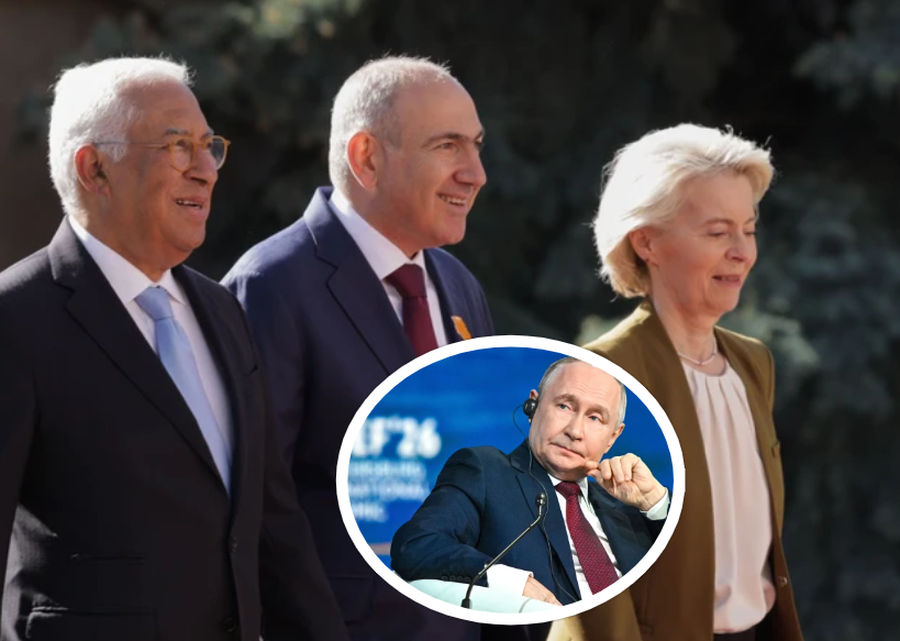
Putin risks losing his traditional ally in the South Caucasus, while Prime Minister Nikol Pashinyan seeks a new mandate for the course towards Europe and the peace agreement with Azerbaijan...
Armenia faces an election this Sunday that could determine not only its political future but also the geopolitical balance in the entire South Caucasus. Russian President Vladimir Putin is watching developments in Yerevan with concern, as there is a real possibility that Moscow could lose a large part of its traditional influence over the country.
The European Union has openly sided with Prime Minister Nikol Pashinyan’s government ahead of parliamentary elections. In early May, the EU offered Pashinyan a significant political platform through the EU-Armenia summit in Yerevan. Then, on Thursday, Brussels announced a €50 million aid package and trade facilitation measures to cushion the blow of trade restrictions that Russia has imposed on Armenia in recent weeks.
At first glance, this election looks like a decision between East and West. Armenia remains a member of the Russian-led Eurasian Economic Union, where most of its exports go. However, Pashinyan and his party, the Civic Contract, are clearly oriented towards the West. Last year, the Armenian parliament passed a law declaring European integration a state objective.
The Russian regime has reacted in its own way to this development. In early May, Vladimir Putin reminded Armenians of the fate of Ukraine, declaring that its tragedy had begun with its efforts to get closer to the European Union. Since then, Moscow has demonstrated how dependent Armenia remains on the Russian economy. Under the pretext of health risks, Russia has banned the import of almost all Armenian agricultural products. At the same time, it has hinted that it may increase the price of the gas it supplies to the country several times.
However, the main themes of the campaign are not Russia and the West, but peace and security.
After more than 30 years of conflict, there is a serious possibility of peace between Armenia and Azerbaijan. In August 2025, Pashinyan and Azerbaijani President Ilham Aliyev solemnly declared at the White House, in the presence of Donald Trump, the intention to sign a peace agreement that has now been fully negotiated.
Kjo marrëveshje mbetet shumë e debatueshme në Armeni, pasi është rezultat i humbjeve ushtarake dhe tragjedive njerëzore. Azerbajxhani rimori kontrollin e Nagorno-Karabakut gjatë dy luftërave të viteve 2020 dhe 2023. Rajoni, i cili ndodhet brenda territorit të Azerbajxhanit, por historikisht ishte i banuar nga armenë, kishte qenë nën kontroll armen që nga vitet 1990. Mbi 100 mijë armenë u detyruan të largohen nga shtëpitë e tyre.
Përveç kësaj, në shtator 2022, Azerbajxhani pushtoi disa lartësi strategjike dhe rrugë brenda territorit të njohur ndërkombëtarisht si armen. Në këtë pozicion të dobët negociues, Pashinian ka bërë lëshime të mëdha.
Megjithatë, për një kryeministër me një bilanc të tillë, ai gëzon një mbështetje të konsiderueshme. Sipas të gjitha sondazheve serioze, partia e tij pritet të dalë me diferencë forca më e madhe politike. Pashinian paraqitet si garant i ruajtjes së paqes së brishtë dhe e etiketon opozitën si “partia e luftës”.
Në këtë pikë hyn në lojë dimensioni gjeopolitik.
Rusia nuk ka marrë pjesë në procesin e paqes. Armenia dhe Azerbajxhani kanë negociuar pa ndërmjetës. Një element qendror i marrëveshjes është krijimi i një korridori që do të lidhë Azerbajxhanin me enklavën e tij të Nahçivanit përmes territorit armen. Ky korridor pritet të menaxhohet nga kompani amerikane dhe mund të marrë emrin “Trump Route for International Peace and Prosperity” (TRIPP), Rruga Trump për Paqen dhe Prosperitetin Ndërkombëtar.
Nëse procesi i paqes rezulton i suksesshëm, Rusia rrezikon të humbasë ndikimin e saj tradicional në Kaukazin Jugor.
Për më shumë se tre dekada, Moska është paraqitur si mbrojtësja kryesore e armenëve dhe shumica e popullsisë e ka perceptuar si të tillë. Por kur konflikti me Azerbajxhanin arriti kulmin, Rusia nuk ndërhyri për t’i ndihmuar. Si pasojë, Armenia pezulloi në vitin 2024 pjesëmarrjen në Organizatën e Traktatit të Sigurisë Kolektive (OTSK), aleanca ushtarake e udhëhequr nga Moska, dhe që atëherë ka forcuar marrëdhëniet me Perëndimin.
Marrëdhëniet mes Pashinianit dhe Kremlinit kishin qenë problematike edhe më herët. Kryeministri armen erdhi në pushtet në vitin 2018 përmes një lëvizjeje popullore që rrëzoi një regjim të konsideruar nga kritikët si të korruptuar, autoritar dhe pro-rus. Një skenar i tillë vazhdon të përbëjë makth për Kremlinin.
Megjithatë, Rusia e pranoi me hezitim Pashinianin, pasi ai fillimisht nuk ndërmori hapa për ta shkëputur Armeninë nga orbita ruse.
Forcat e lidhura me regjimin e vjetër dhe me Moskën u përpoqën disa herë të shfrytëzonin zemërimin publik pas humbjeve ndaj Azerbajxhanit për të rrëzuar Pashinianin. Përpjekjet dështuan, sepse shumica e qytetarëve i konsiderojnë këto forca të diskredituara.
Sot, partitë opozitare nuk e kundërshtojnë më hapur marrëveshjen e paqes, por kërkojnë ndryshime që mund ta bëjnë të pavlefshëm të gjithë procesin. Për shkak të rënies së reputacionit të Rusisë në Armeni, ato shmangin gjithashtu etiketimin si forca pro-ruse.
However, their ties to Moscow remain strong. This is especially evident in the “Strong Armenia” party, the largest of the three opposition forces that have a real chance of entering parliament. The party was founded last year by Russian-Armenian oligarch Samvel Karapetyan. The vast majority of his business is located in Russia, which makes him dependent on the will of the Kremlin.
Pro-Russian forces accuse Pashinyan of building an authoritarian regime and persecuting political opponents. Karapetyan, who holds Armenian, Russian and Cypriot citizenship, is under house arrest. The authorities accuse him of attempting a coup, although the basis for the accusation is considered by critics to be weak. Meanwhile, investigations are underway against several other opposition figures, and several arrests have been made in recent days.
The justice department's accusations of vote-buying seem credible. However, the way the authorities are acting resembles practices known from authoritarian states. This creates a complex challenge for the European Union, which must be careful that its geopolitical interests in Armenia do not conflict with the democratic values it claims to defend. /Adapted from Pamphlet by FAZ/




Lini një Përgjigje