


 Shkruar nga Pamfleti
A deadly virus that can be confused with the flu has claimed dozens of lives in Europe this year as it approaches the United Kingdom.
West Nile virus has infected over 600 people across the continent in just 9 months, new figures show, writes The Sun.
The threat feels closer than ever after the virus was detected in a mosquito on British soil for the first time.
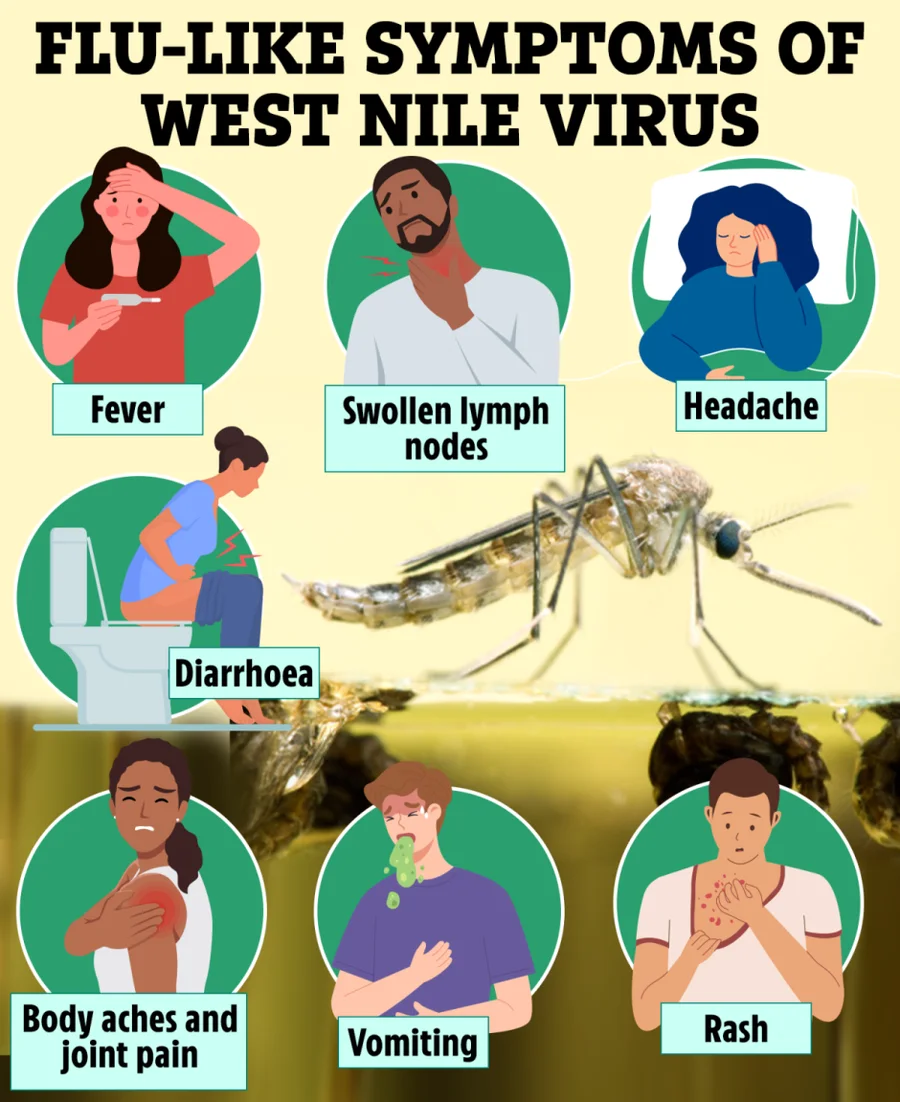
For most people, the virus will not cause any symptoms at all, but some may experience flu-like aches, headaches, and fever.
However, 1 in 150 cases can be severe, causing life-threatening illness, such as paralysis or even death.
Scientists identified fragments of the virus in the genetic material of mosquitoes in the UK for the first time in 2023, but only announced the discovery earlier this summer.
The warming climate has meant that different types of mosquitoes and the viruses they carry are able to survive in the British Isles, raising fears that deadly diseases like malaria could one day spread.
The virus is now commonly found throughout Africa, Asia and the Americas, and has spread in recent years to the northernmost and western parts of Europe.
Since January 2025, 9 European countries have reported 652 cases of West Nile virus leading to 38 deaths, according to infection data from the European Centre for Disease Control (ECDC).
The majority of infections were in Italy (500), followed by Greece (69), Serbia (33), France (20), Romania (15), Hungary (6), Spain (5), Albania (3) and Bulgaria (1).
Infection rates so far in 2025 are higher than the average for the past decade, figures recorded up to September 10 suggest.
But they remain below the increases seen in 2018, 2022 and 2024, years when more than 1,000 infections were recorded up to this point.
But ECDC health chiefs warn that this year's number could rise further as reporting is often delayed.
Cases of West Nile virus have been reported for the first time this year in the Italian provinces of Latina and Frosinone, as well as in Sicily, Calabria, Tuscany and Liguria.
In France, the first infections were detected in Seine-Saint-Denis, Puy-de-Dôme and Vaucluse, while Romania recorded its first case in Salaj County.
In a statement issued on World Mosquito Day last month, the ECDC said the outbreaks demonstrate the need for a robust and coordinated response to protect public health.
“As the landscape of mosquito-borne diseases evolves, more people in Europe will be at risk in the future,” said Dr. Céline Gossner, Head of the Section for Emerging, Foodborne and Vector-borne Diseases at ECDC.








Lini një Përgjigje