


 Shkruar nga Pamfleti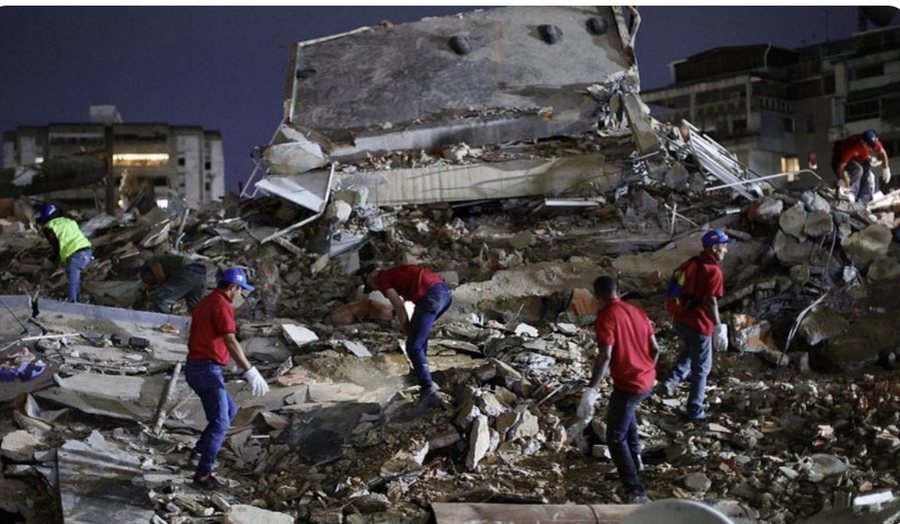
The strong earthquakes recently recorded in Venezuela, Japan, and California have raised questions about the possibility of a connection between them and the impact they may have on other seismic zones, including Albania.
To explain this phenomenon, seismologist Edmond Dushi spoke this Friday, July 26, on the "Aldo Morning Show", in a live broadcast from Tokyo, Japan.
He said that the occurrence of three strong earthquakes in such a close period of time is an unusual coincidence, but not a phenomenon that can be directly linked from a geological point of view.
"It's a very strange coincidence. There is a very large distance in tectonic terms between these regions and these plates that have participated in the release of this energy are completely different from each other... Since they are located on different tectonic plates, consequently the mechanism of their generation is different. Each of the foci has a different nature, geometry and release of energy from each other," he said.
According to Dushi, seismology recognizes the possibility that a large earthquake can influence the activation of another earthquake, but this occurs mainly in nearby areas and not over large geographical distances.
"Somewhere near the area where an earthquake occurred, we have a tectonic fault, which is close to its limit and is preparing for an earthquake to occur very soon. The energy released by the earthquake in another area can trigger this earthquake to occur prematurely. This is known in seismology as dynamic triggering. At close distances this is more effective, which means in small areas or in close proximity to each other, these earthquakes can have a great impact," said Dushi.
Dushi was in Japan when a magnitude 6.9 earthquake struck the country. He said the tremors were felt, but the situation did not cause panic or damage, due to high construction standards and a culture of earthquake preparedness.
"We counted the seismic waves one by one but there was no effect and there was no damage of any kind because they build very well here and it is mainly this part that protects them. Life is completely normal here, they continue to work normally. They did not instruct us at all to leave the premises. The composure they show implies that they are very educated in this regard," he said.
The seismologist underlined that earthquakes are inevitable natural phenomena and that the best way to reduce their consequences is through quality construction and compliance with anti-seismic standards.
Regarding Albania, Dushi said that the country has known seismic activity, but tectonic faults are more limited and tremors are usually more moderate. However, he stressed that seismic risk requires constant attention and serious preparation.








Lini një Përgjigje