


 Shkruar nga Pamfleti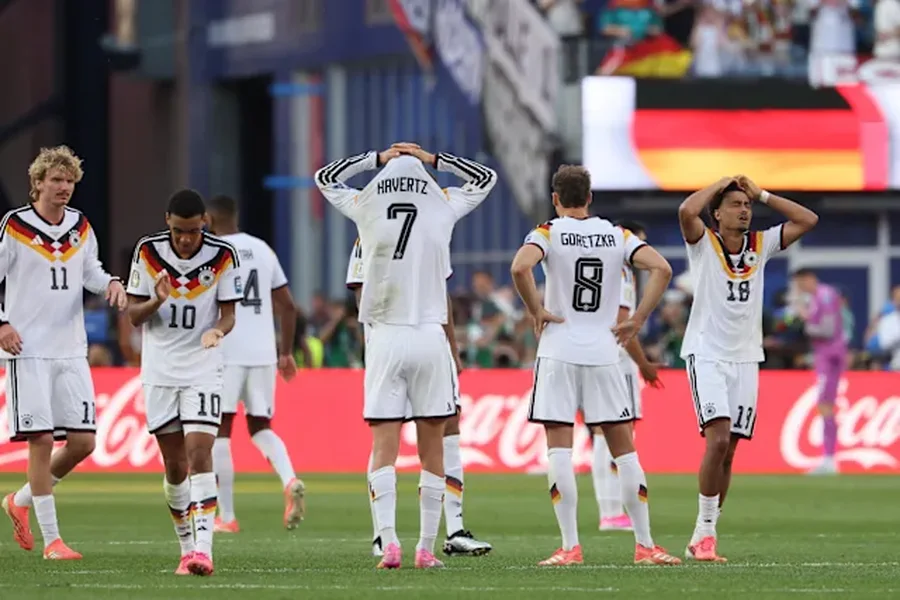
It used to be said that "football is a game where 11 against 11 are played and in the end Germany wins". Germany was also considered the "locomotive of Europe", the economy that pulled the entire continent forward. Today, this picture seems to be a thing of the past.
Germany is no longer the country that dominated the European economy and regularly reached the final stages of the World and European Championships. Today, it is perceived as an insecure, tired society searching for its identity. The elimination at the World Cup, which is taking place in the United States, has only made this reality more apparent.
The crisis is not limited to football. It affects the German economy, politics and society. For this reason, Germany's decline attracts attention, as it is the largest country in the European Union, with the strongest economy and a model that for years was considered an example of integration and stability.
The pinnacle of success was the 2014 World Cup in Brazil. Germany won the title with a young, dynamic and multi-ethnic team, where players of Turkish, Arab and African origin played an important role. The team also won the admiration of Brazilian fans, not only for its beautiful football, but also for the way it approached the local community during the tournament.
But after that triumph, everything changed. Germany failed in subsequent World Cups and failed to shine even at the European Championships held at home. According to the author, the country has lost not only its sporting results, but also its self-confidence.
Even in everyday life, the change is noticeable. The Mitte area in Berlin, once a symbol of a modern and vibrant capital, now has closed or empty bars. The optimistic atmosphere that followed German reunification seems to have faded.
Politically, the country has gone from a long period of stability to a phase of uncertainty. After Helmut Kohl, Gerhard Schröder and Angela Merkel, Germany has not found a strong leader. Olaf Scholz failed to meet expectations, while the current chancellor, Friedrich Merz, faces major challenges. At the same time, the far-right AfD party is gaining more and more support in some regions of the country.
The German economy is also struggling. The automotive industry, once the pride of the country, is losing ground to Asian competition and changing consumer habits, especially among the younger generation, who are increasingly using private vehicles. According to the author, Germany looks like an "analog country in a digital world."
This state of affairs, according to the analysis, was also reflected in the performance of the German national team at the World Cup. The team appeared without the energy, identity and determination that had characterized it for decades. Even the retirement from football of legendary goalkeeper Manuel Neuer is seen as a symbol of the end of an era.
However, the author believes that Germany has the capacity to bounce back. It remains Europe's largest economy and one of the world's leading powers. The challenge will be to rise again without falling into political extremism.
The article also focuses on the Netherlands, another big name in European football, which was eliminated after a disappointing performance against Morocco. According to the author, even the "Oranje", once a symbol of Johan Cruyff's total and revolutionary football, is no longer able to restore its former glory.
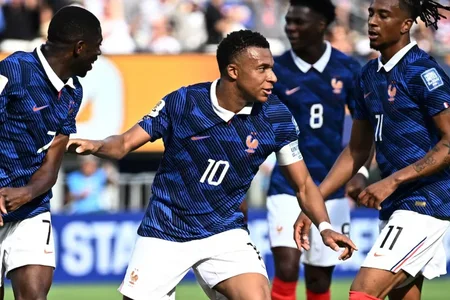
In conclusion, the analysis notes that, while Germany and the Netherlands are going through a period of decline, national teams such as Spain, France and Portugal continue to strengthen thanks to the younger generations of immigrant origin. This, according to the author, proves that sport often moves ahead of politics, at a time when support for parties that oppose immigration is growing in many European countries./ Corriere della Sera



Lini një Përgjigje