


 Shkruar nga Pamfleti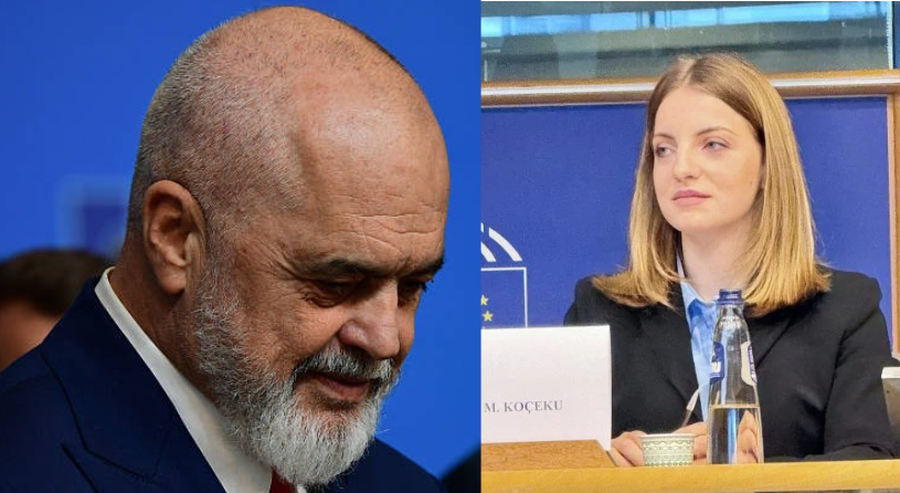
As protests against planned construction in protected natural areas in Albania continue, independent MP Marjana Koçeku declares that the European Union should stop treating Prime Minister Edi Rama as the sole representative of the country's European voice.
In an interview with Euractiv, Koçeku, who left the Socialist Party last month, emphasizes that Albania cannot be identified only with the prime minister.
"Rama is not Albania," she says.
According to Koçek, the decision to leave the Socialist Party came after she came to the conclusion that she could no longer be part of a political force that, according to her, is pursuing policies to the detriment of the environment.
"I could no longer belong to a group that not only does not support environmental protection, but drafts policies that harm it. Yes, I have also supported initiatives by opposition colleagues, because I consider this my civic right," she declares.
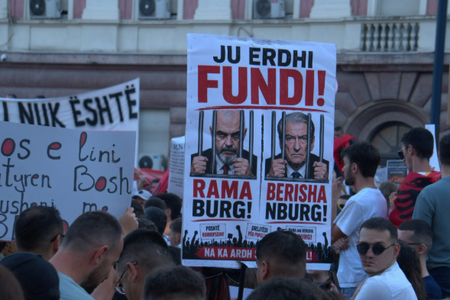
For more than a month, citizens in Albania have been protesting against the government's handling of proposed luxury tourism projects near the protected Vjosa-Narta ecosystem. Among the projects mentioned are investments linked to Jared Kushner, the son-in-law of US President Donald Trump.
When the protests reached Tirana, they were already known as the "Flamingo Revolution," a reference to the flamingos that inhabit this protected area.
For Koçek, this designation symbolizes a deeper change in the way the younger generation views power, political representation, and Albania's European future.
"We believe in European values, but that doesn't mean we support our prime minister or government," she says.
"Rama no longer has legitimacy"
The MP considers the protest as an expression of a long-standing crisis of political legitimacy and the dissatisfaction of citizens, who feel excluded from decision-making that affects the public interest.
According to her, many decisions are made through non-transparent procedures, with unclear permissions, private interests and limited public consultations.
"There is no longer any legitimacy, neither for the government nor for the traditional opposition. Both have shown that they only work for a narrow group of interests," Koçek declares.
Clash with the government narrative
On the other hand, Prime Minister Edi Rama has described the protests as exaggerated by political opponents, influencers and activists on social networks, describing them as "digital hysteria" and an "imaginary revolution".
Koçek opposes this position.
"He is using the media to create the belief that, if we protest, we are damaging the European integration process and the trust of the European Union. But it is clear that our politicians have lost touch with reality," she says.
Asked whether the protests may have damaged Albania's European aspirations, Koçek questions the very way the EU views the enlargement process.
According to her, the European Union has often focused the integration process on institutional reforms, official reports, and relations with governments, risking equating the state with society and the leader with the country itself.
"The EU must create direct connections with citizens, because European integration should not be just a bureaucratic process," she says.
Koçek adds that it is citizens who can show whether the reforms are really felt in everyday life.
The MP recalls that she entered the Assembly in 2025, at the age of 24. She had previously founded the Neomalsore movement, focused on sustainable development and communities in northern Albania.
She studied International Relations and Political Science in Italy and, like many young Albanians, had considered building her career there.
However, the offer to join the Socialist Party seemed like an opportunity to contribute to politics and set an example, especially since she came from a region that, according to her, has been historically underrepresented and where women and young people have had fewer opportunities.
But, according to Koçek, over time he faced problems related to the internal functioning of the party and the lack of transparency.
She says that the way political parties function also reflects the way the state itself is built and run.
"Young people are more European than the political elite"
Koçek says that her departure from the Socialist Party was a gradual process, which accelerated during the protests.
"People will continue to rise up and they will not forget," she declares, adding that the protests should force the government to seriously reflect on how it passes laws and the interests they serve.
According to her, the younger Albanian generation is more politically aware and closer to European values than the current political elite.
"The new generation is much more politically cultured and much more European than the political elite. This is the Albania that I want Brussels to see ," concludes Koçek.



Kta tipa e shesin lëkurën e ariut para se ta vrasin…