


 Shkruar nga Pamfleti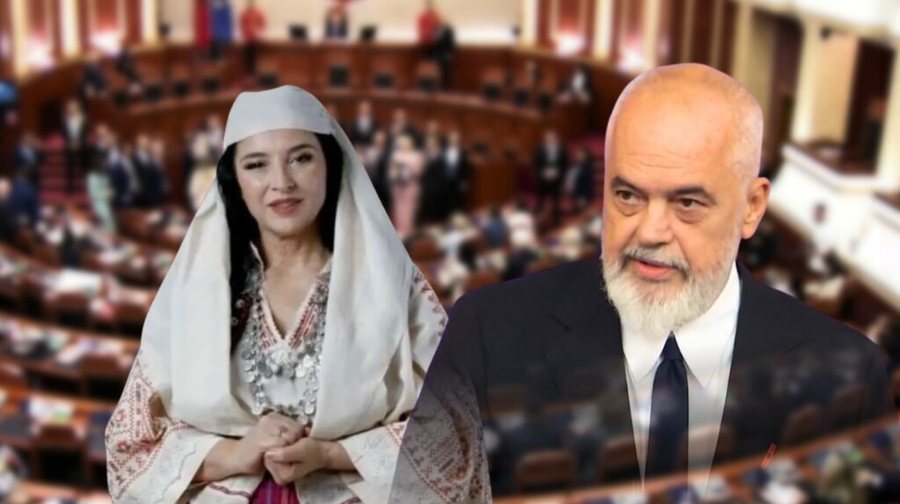
If Albania's experiment produces cleaner, faster, and more transparent procurement outcomes, Diella could serve as a global case study...
In September 2025, Albania stunned the world by appointing Diella, an artificial intelligence system, to a cabinet-level role overseeing public procurement. The unprecedented move marked the first time a government had officially entrusted an artificial intelligence with ministerial responsibility, sparking fascination, skepticism, and a global debate about the future of governance.
The appointment is not just a gimmick. Albania has long struggled with corruption in public procurement, a sector plagued by favoritism, patronage, and opaque tendering processes that undermine trust and complicate its ambitions for European Union membership.
By assigning oversight to Diella, the government aims to reduce human bias, enforce procurement rules more consistently, and signal a genuine commitment to reform.
This move also builds on previous digital initiatives. Since January 2025, Diella has been integrated into Albania’s e-government platform, processing documents and guiding citizens through digital services. Expanding its responsibilities to public procurement is a natural extension and a bold experiment.
Essentially, the idea behind Diella is that automation can bring fairness and transparency to processes traditionally susceptible to manipulation.
The system is designed to evaluate bids using standard criteria, identify irregularities, and maintain digital records that can later be audited.
Unlike a human minister, Diella does not face political pressure or fatigue and can operate 24 hours a day.
However, critics note that AI is not immune to flaws. If the system is trained or programmed with biased criteria, it can reproduce or even hide the very corruption it aims to eliminate. For this reason, transparency in its design, safeguards against manipulation, and appeal mechanisms remain essential.
The question naturally arises: why not pursue traditional reforms instead?
The answer lies partly in speed and capacity. Legal and institutional reforms take time and often face resistance from entrenched interests.
In contrast, a technological solution provides a faster and more visible response. It also helps fill gaps in resources, as algorithms can handle large volumes of data and detect patterns far beyond human capacity.
However, technology cannot replace accountability. Human oversight and responsibility remain central to ensuring that citizens maintain trust in decisions that directly affect them.
Other nations are following suit. If Albania's experiment produces cleaner, faster, and more transparent procurement outcomes, Diella could serve as a global case study.
International organizations may also see the initiative as a benchmark for governance reform. However, the constitutional and legal frameworks of most countries make it difficult to directly apply Albania’s model, as ministers are typically required to be human officials accountable under the law.
In this sense, Diella's ministerial title is more symbolic than literal, and its true value may lie in demonstrating how AI can support rather than replace public decision-making.
Whether other governments should adopt such a model is a matter of caution.
AI can play an important supporting role in detecting anomalies and enforcing rules consistently. But full adoption without safeguards risks creating new problems of obscurity and lack of accountability.
For AI in government to succeed, several conditions are non-negotiable: decision-making must be transparent and auditable, ultimate authority must remain with accountable human officials, and the system must be subject to independent technical audits. Without these safeguards, an AI “minister” risks being either a scapegoat for human failures or a facade hiding ongoing corruption.
Albania's decision to raise the Sun is as much about political symbolism as it is about technological reform. It positions the country as a digital pioneer, while simultaneously testing the limits of trust in artificial intelligence as a tool of governance.
Whether the experiment succeeds or fails, it will shape the global debate about how far technology should extend into public institutions.
For now, Diella should not be seen as a ready-made solution, but as a living experiment; one that could open up new possibilities for clean governance or serve as a cautionary tale for tempted nations that place too much trust in algorithms. /Adapted from Hubnews/





Diella eshte si ballkani hapur, si uji 24 ore, si shendetesia falas, si nafta ne shpirag e shume te tjera. Flluska vetem flluska. Nuk di sa kohe ky popull do ushqehet akoma me demagogji. Sic do jete dhe Shqiperia ne europe ne 2030. Sot shqiptaret paguajne me shtrent se cdo vend tjeter ne EU dhe se zvicra naften, qe njekohesisht eshte me cilesine me te dobet. Kjo eshte e verteta.
Ore populli nuk ka cfare ben se e kane tulatur. Po thuaj si na genjejne dhe nderkombetaret se vijne marrin thesin e tyre si McGonigal (qe thes te vogel mori kur e mendon sa volum qarkullon ne Shqiperi) dhe madje e lajne e pastrojne mire e mire... shkurt iu leverdis si puna e Piramidave ne '97 Ceshtja eshte... a nuk lodhen duke aktruar?! I sheh me super pasuri e sikur nuk ngopen, nuk kenaqen... kjo te ben sh habi. betonizo e nderto super vila super shpira po prape
Diella èshtè edhe si 'Satelitèt' made in albania tè Edvinit qè do "ruanin Pyjet nga ZJARRËVËNËSIT" , satelitèt e LESHIT 5 MILION EURO ????????????????????????????????????????