


 Shkruar nga Pamfleti
They arrived from Albania on tourist visas, a little over 20 years old, with no criminal record and no criminal history behind them. They would land in Rome and then someone would transport them to L'Aquila. Apartments on the outskirts of the city or in the surrounding municipalities, rental cars, a few mobile phones and SIM cards that were constantly changed. They would only stay a few weeks: just enough to sell cocaine and disappear.
When the carabinieri stopped them, the scenario always seemed the same: ten or twelve doses with them, small amounts of drugs, no criminal record, and phones that didn't really lead to their identity. Almost invisible guys.
But behind this continuous chain of arrests and checks, according to the Anti-Mafia Directorate in L'Aquila, was hidden an organized system that over the past few years had built a veritable cocaine trafficking network between the capital of Abruzzo and the surrounding areas.
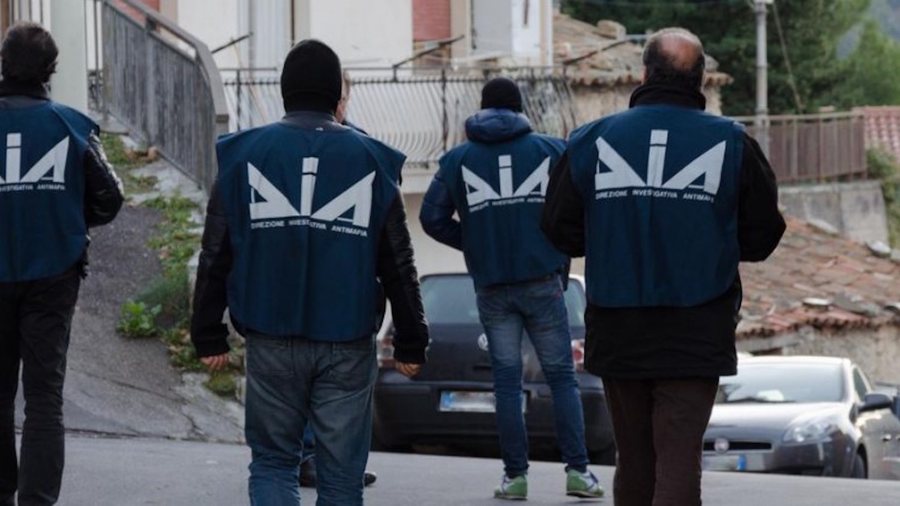
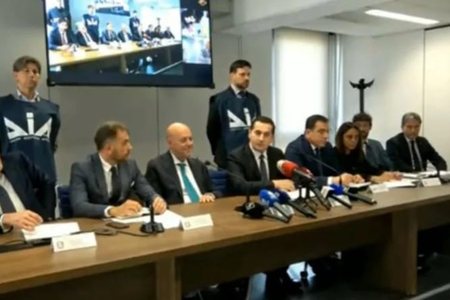
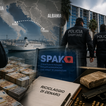
It is about the "Coca Delivery" operation, carried out in the early hours of this morning by order of the Anti-Mafia Prosecutor's Office of L'Aquila. The Carabinieri of the Operational and Radiomobile Unit of the L'Aquila Company, supported by the territorial units, a team of the 16th Helicopter Unit of Rieti, two anti-drug dog units from Chieti and two operational teams of the "Lazio" and "Campania" regiments, executed 25 personal security measures and 11 detentions.
There are 40 people under investigation, almost all Albanian citizens. The charges include criminal organization for drug trafficking, possession and distribution of cocaine.
The investigation, coordinated by prosecutor Roberta D'Avolio under the direction of district attorney Alberto Sgambati, began in January 2025 precisely from that feeling of constant repetition: the same profiles, the same movements, the same boys who appeared and disappeared within a few days.
" We didn't stop at individual arrests. We tried to understand what was behind this constant replacement of people ," explained Major Massimo Canale, commander of the Carabinieri Company in L'Aquila.
And piece by piece, investigators began to reconstruct the mechanism.
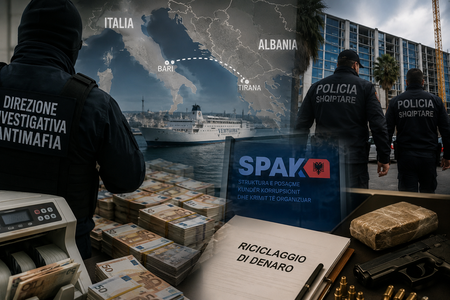
According to the Prosecution, there were three separate criminal groups, autonomous but connected to each other and especially linked to an operational structure in Albania, which managed recruitment, drug supply and the constant replacement of distributors.
The young people were brought to Italy on regular tourist visas. Once they arrived, they received full logistical support: rental cars, mobile phones, SIM cards, and temporary housing.
The selection of boys without criminal records was part of the system itself.
" They were young people who could have arrived the day before and without any criminal record. The risk was that each episode would remain simply a minor arrest for drug distribution ," prosecutor D'Avolio declared during the press conference.
But investigators began to connect dozens of proceedings that at first glance seemed isolated.
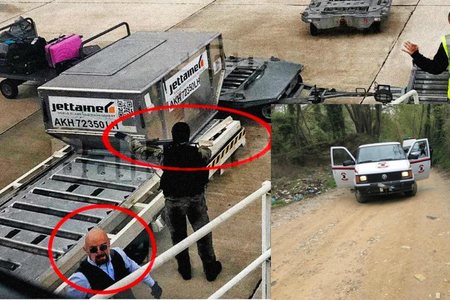
The cars used by the dealers were constantly changed. Telephone numbers had a very short lifespan. Cocaine was hidden in forest areas, fields and the suburbs around L'Aquila. Dealers moved around with small doses precisely to avoid more serious legal consequences in the event of a control.
The rest of the drugs were occasionally retrieved from the places where they had been hidden.
A mobile and flexible structure, built to make it as difficult as possible to identify the highest levels of the organization.
When one of the distributors was arrested or simply caught the attention of the police, he would disappear. He would return to Albania and be replaced almost immediately by another newly arrived guy.
To rebuild the entire system, the carabinieri worked for more than a year with pursuits, observations, hidden cameras and constant monitoring of movements in the suburbs and rural areas of the L'Aquila territory.
" The ability of the investigators was precisely to bring together many episodes that seemed unrelated ," emphasized prosecutor Alberto Sgambati, who particularly thanked Colonel Salvatore Del Campo, provincial commander of the Carabinieri in L'Aquila, prosecutor Roberta D'Avolio and all the military personnel involved in the investigation.
During the investigation, the Carabinieri made 16 arrests in flagrante delicto and seized about one kilogram of cocaine. Investigators believe that at least 3,200 doses were documented to have been sold, for an estimated financial turnover of around 125,000 euros.
Over a hundred drug users have been identified and referred to the relevant prefectures.
According to the Prosecutor's Office, the groups operated mainly in L'Aquila and surrounding municipalities, but also had links to Tuscany and Veneto.
" This operation does not solve the drug problem. But it represents a significant blow to the criminal organizations that operated sustainably in the territory ," D'Avolio declared.


Italia mezi po e menaxhonte vet situaten e saj i linte ca ndoshta dhe vete, po te donte te bente fushata ndergjegjesimi me filma e seriale se spo marrim vesh tani qe u be e madhe se po i iken leku vet jasht u kujtun, pse i lan shqiptaret dhe emigrantet pa I ruajtur meqe te vetit nuk i kapnin dot tani qe u saldua fort dhe u be aliazh po ulerasin e na fusin ankthin ne cfaredolloj forme si tu leverdisi atyre