


 Shkruar nga Ilir Çumani
When the names of historical figures are placed on streets, institutions, or schools, it is not simply a matter of personal honor, but an act of public education.
The history of Albania is loaded with very important events and dates that have left indelible marks, many of which have left wounds that are not easily healed. They are proof of the character of a nation and at the same time a reflection of the way a nation chooses to remember or forget itself.
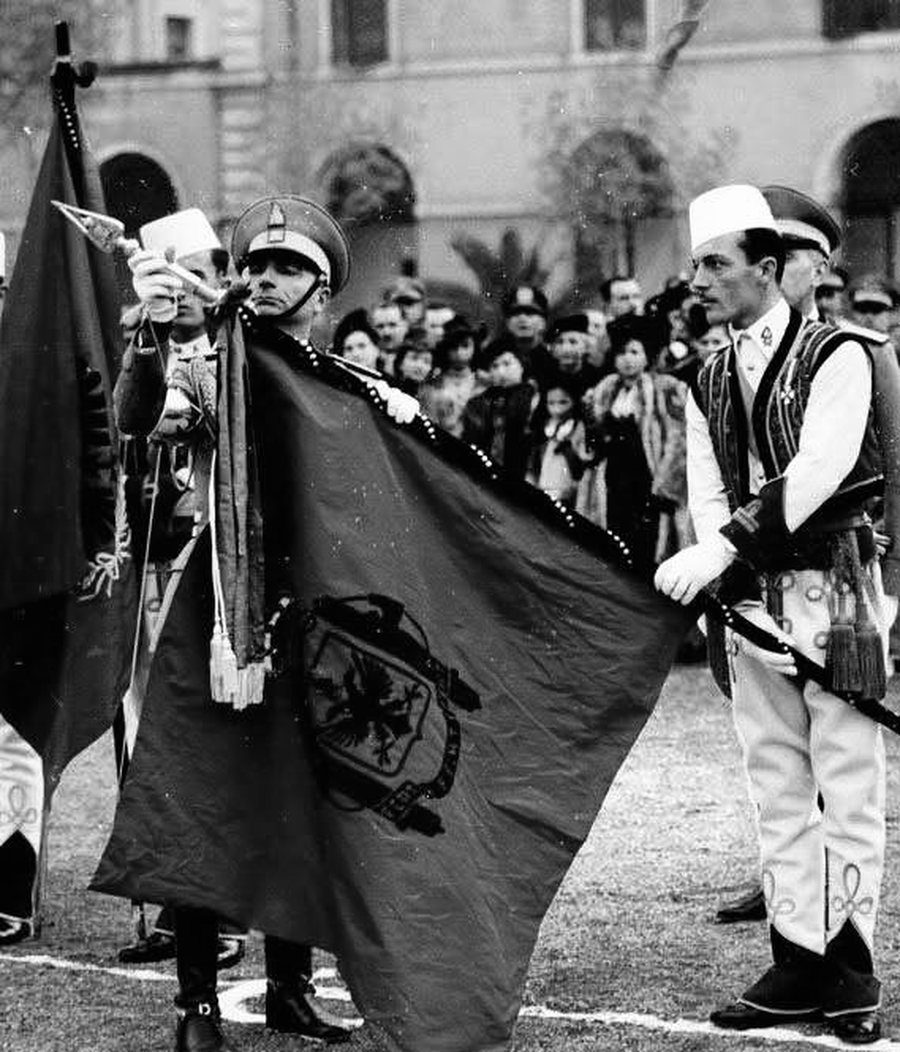
One of these dates is April 7, 1939 — the day when Albania was invaded by fascist Italy and when one of the heaviest shadows of modern history fell over Albanian sovereignty.
The invasion was not only a military act, but a symbolic act of political and moral submission. In a few hours, not only the territory was affected, but also the dignity of the Albanian state, which was still fragile, young and in search of its institutional consolidation. For this reason, April 7 is not only a historical date, but a test of national character.
What makes this date even more significant is not only the landing of the Italian troops, but also the subsequent episode, when an Albanian delegation in Rome handed over the crown of the Albanian Kingdom to the King of Italy, Victor Emmanuel III. This act represents one of the most dramatic moments of compromise of the Albanian political elite of the time.
That delegation included figures such as Shefqet Vërlaci, Mustafa Kruja, Eqrem bej Vlora, Xhafer Ypi, Anton Harapi, Fejzi Alizoti, and others. History knows these names not only as individuals, but as representatives of a political choice that remains the subject of intense historical and moral debate even today.
This episode should not be seen only as a formal diplomatic act, but rather as a symbolic act of transferring sovereignty — a gesture that in the collective memory remains linked to the idea of state surrender.
However, the real drama does not end in 1939, but in how a society confronts its past.
After 1992, a complex process of historical reassessment began in Albania. This process was necessary because communist historiography had often been ideological and exclusionary. In many cases, the reassessment turned into relativization. Instead of building a balanced culture of historical memory, a new confusion of interpretations was often created.
When the names of historical figures are placed on streets, institutions, or schools, it is not simply a matter of personal homage, but an act of public education. It is a statement about the values that a society chooses to transmit to younger generations, because public memory is not neutral. It is a moral choice.
In this sense, the question is not only historical, but also anthropological, related to identity: what do we choose to remember and why?
A society that fails to build a sincere relationship with its past risks living in a permanent state of tension between memory and oblivion, because it creates a dangerous paradox: heroes are relativized, while historical compromises are justified.
This does not mean that history should be read in black and white. History is complex. Historical figures must be recognized in their context, their circumstances, and the limitations of their time. But it is equally true that the sovereignty of a country is not a relative category, but the foundation on which the dignity of a nation is built.
Therefore, April 7th is not only a commemorative date, but also a test of conscience.
It's a question that every generation asks: how will we read our history — as a burden to hide or as a lesson to understand?
A nation is not weakened when it faces its truths, but only when it ceases to seek the truth.






7 Prilli 1939 është dita e pushtimit të Shqipërisë nga Italia fashiste. Gjyshja ime ndjesë pastë sa herë që shtohej një tavolinë e bollshme dhe e shijshme thonte: "Po hamë si në kohën e italisë"
Hahaha...ne kohen kur hante qeni petulla,thoshte edhe gjyshja ime,drite paste. Sa te gezuar do te ishim tashti ne se do te ishim sebashku ALBITALIA-ITALALBA. Edhe emrin nga ato e kemi ALBA-NIA. Fatkeqsisht Italia nuk ka me ne prioritet sot e kesaj dite. E po ishte komunizmi qe e PORDHI SHQIPNINE.