


 Shkruar nga Pamfleti
From tensions in Iran to artificial intelligence and private credit, new factors dominate the economic agenda
The usual ritual of the spring meetings of the International Monetary Fund and the World Bank remains unchanged: the arrival in the US this Monday of delegates from 191 countries for the six-month balance of the global economy and a pre-determined calendar.
On April 14, the publication of the “World Economic Outlook”, the IMF’s forecast document, is expected, where a slowdown in global growth is expected; on April 16, meetings of the Finance Ministers and Central Bank Governors of the G7 and then the G20 will take place; on April 17, the Monetary Committee will meet, and on the 18th, the World Bank’s Development Committee. After that, the delegations will leave.
However, beyond this familiar ritual, the topics affecting economic development have never been so numerous and complex. War, rising oil prices and inflation, as well as concerns about the labor market remain in the spotlight, but according to estimates, they pale in comparison to two new risks that are expected to dominate these meetings and that are particularly worrying for bankers and financial institutions.
The first risk is related to the possible distortions of financial systems from the use of artificial intelligence. Specifically, the new model “Claude Mythos” of the company Anthropic has been made available on a limited basis to several large American companies to identify weaknesses in their systems. However, the main concern is that the same mechanism could reveal vulnerabilities in financial systems, in payments and transfers, paving the way for large-scale fraud or even paralysis of financial systems. This issue has been discussed in recent days by US Treasury Secretary Scott Bessent and Federal Reserve Chairman Jerome Powell with bankers in Washington, and is expected to be expanded globally during these meetings.
The second risk relates to the private credit sector and the possibility of a liquidity crisis that could spread to the private equity sector. Although some large banks have reduced exposure to riskier loans, these risks have shifted to other, more vulnerable actors. A deterioration in this sector could have direct consequences for companies and subsequently for economies as a whole.
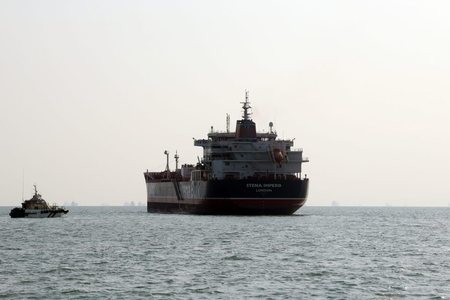
Against this uncertain backdrop, the war in Iran remains an important but familiar factor. After the failure of efforts for dialogue between the US and Iran, markets have returned to the dynamics of rising oil prices and inflation. Oil has once again crossed the threshold of $100 per barrel, with rapid increases over the weekend and prices fluctuating between $102 and $107.
The scenarios remain unclear: in the event of escalation and a prolonged blockade of the Strait of Hormuz by the US, prices could reach up to $150 per barrel. The main concern is not only the price level, but the duration of the crisis and its impact on inflation and interest rates, which are already under pressure.
Although mechanisms for dealing with inflation are well-known, such as raising interest rates, these measures are expected to have a dampening effect on global economic growth. The negative impact is expected to be more pronounced in Europe and Asia than in the United States, requiring coordinated international measures.
In conclusion, while war and energy prices remain serious challenges, the greatest uncertainties relate to new and still unclear factors such as artificial intelligence and the stability of the non-traditional financial sector. The meetings in Washington are expected to serve as a platform for coordination and prevention, at a time when the global economy faces multiple and interconnected risks. / Adapted from "Corriere Della Sera"





Lini një Përgjigje