


 Shkruar nga Gjergj Zefi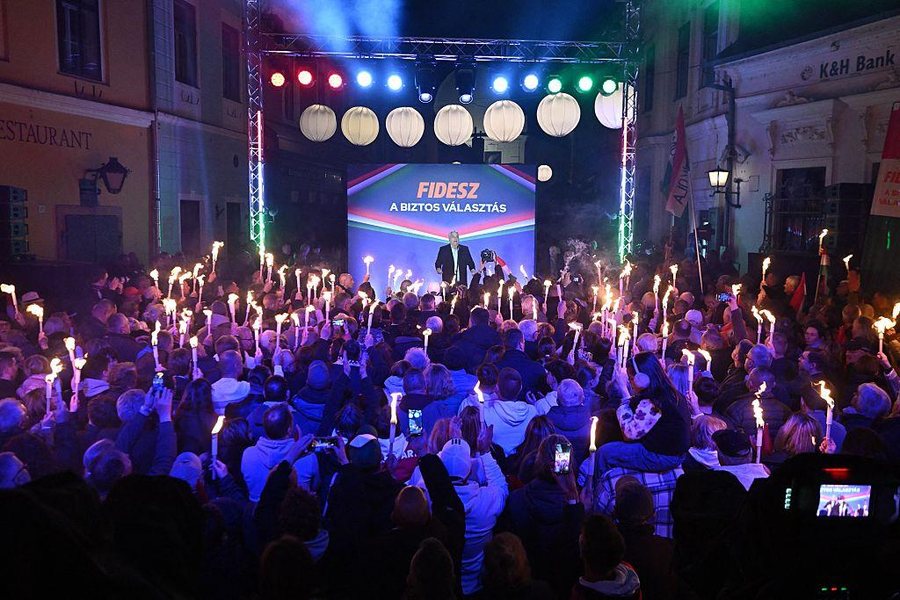
The April 12 elections are not simply a contest for power in Budapest, but a test of Europe's direction, the limits of populist sovereignty, and the European Union's ability to return one of its own members to the track of democratic credibility...
Hungary is entering one of the most politically charged moments since Viktor Orbán returned to power in 2010. This time, the weight of the election is not measured solely by the question of whether Fidesz will retain power or whether Péter Magyar will upset the current balance.
The real question is deeper: is Europe facing the beginning of the end of the Orbánist model, or simply a reconfiguration of it? International analysts describe this climate as a moment when “things look different,” and read the Hungarian vote as an event with direct international, not just domestic, consequences.
After four consecutive terms, the regime built by Orbán is no longer seen as an invincible machine. The signs of wear and tear are obvious: voter fatigue, economic stagnation, the weakening of public services, and growing dissatisfaction with nepotism and clientelism. An increasing number of Hungarians no longer see progress, but stagnation, even deterioration, especially in healthcare, education, and infrastructure. This is an important indicator: populist regimes can survive for a long time on the narrative, but they fall when the narrative no longer covers everyday life.
And yet, Hungary is not just a story of domestic political consumption. It has become a strategic node between the four major axes of the European crisis: Brussels, Washington, Moscow and Kiev. That is why the Hungarian elections are being followed so closely.
Whoever wins in Budapest will affect not only the country's domestic politics, but also Hungary's positioning in relation to the war in Ukraine, the European security architecture, and the tense relationship with the European Union.
Orbán has carefully constructed a dual profile: at home as a guarantor of national stability, abroad as a symbol of nationalist sovereignty that challenges the liberal European establishment. For years, this formula has worked for him. He has been able to present himself as a defender of identity, as an obstacle to migration, as a critic of sanctions against Russia and as a voice against what he has called the hypocrisy of Brussels. But the very success of this formula has isolated Hungary within the European family. The blocking of billions of euros in EU funds due to concerns over the rule of law and corruption is more concrete proof that the conflict with Europe has long since passed the symbolic level.
Në këtë kuptim, zgjedhjet e 12 prillit janë edhe një referendum mbi vetë marrëdhënien e Hungarisë me Europën. Jo sepse hungarezët po zgjedhin mes “Brukselit” dhe “kombit”, siç përpiqet ta paraqesë propaganda e Fidesz-it, por sepse po vendosin nëse vendi i tyre do të vazhdojë të jetë një anëtar i vështirë, bllokues dhe i dyshimtë brenda BE-së, apo do të përpiqet të rikthejë një minimum besueshmërie institucionale. Këtu qëndron edhe interesi europian: jo te ndërrimi i emrave, por te pyetja nëse Budapesti do të mbetet një nyje e mosbesimit strategjik në zemër të Unionit.
Ngjitja e Péter Magyar është produkt i këtij momenti, por jo domosdoshmërisht zgjidhja e plotë e tij. Tisza nuk po fiton vetëm se është opozitë, por sepse po paraqitet si kanal i një pakënaqësie të gjerë, që kapërcen kufijtë klasikë partiakë. Magyar ka hyrë në skenë si ish-njeri i sistemit, jo si figurë jashtë tij. Kjo i jep avantazh sepse njeh mekanizmin nga brenda, por edhe kufizim, sepse nuk mund të shitet lehtë si alternativë e pastër morale. Forca e tij, për momentin, buron më shumë nga lodhja me Orbánin sesa nga kristalizimi i një projekti të plotë pas-Orbán.
Kjo është pika ku duhen shmangur iluzionet naive. Edhe një fitore e opozitës nuk do të thotë automatikisht çmontim i menjëhershëm i modelit që Orbán ka ngritur për 16 vjet.
Sistemi hungarez nuk është më thjesht një shumicë parlamentare; është një rrjet ndikimi mbi administratën, median, ekonominë, gjyqësorin dhe narrativën kombëtare. Prandaj rënia elektorale e Fidesz-it, nëse ndodh, do të ishte vetëm fillimi i një faze të re përplasjeje, jo fundi i saj. Në terma diplomatikë, ndryshimi i qeverisë mund të prodhojë lehtësim; ndryshimi i sistemit kërkon kohë, legjitimitet dhe aftësi shtetformuese.
Një tjetër element që e bën këtë votim ndërkombëtarisht të rëndësishëm është Ukraina. Orbán e ka përdorur luftën si instrument elektoral, duke ushqyer frikën se çdo afrim me vijën e Brukselit apo të Kievit do ta tërhiqte Hungarinë drejt rrezikut. Edhe Tisza po ecën me kujdes në këtë terren, duke mos premtuar mbështetje ushtarake për Ukrainën dhe duke mbajtur distancë ndaj një përshpejtimi të anëtarësimit të saj në BE. Kjo tregon që: edhe pas Orbánit, Hungaria nuk do të kthehet brenda natës në një aktor plotësisht linear dhe të parashikueshëm. Ndryshimi i kursit mund të vijë, por do të jetë i kushtëzuar nga ndjeshmëritë e brendshme hungareze.
Po aq i rëndësishëm është edhe faktori amerikan.
Vizita e JD Vance në Hungari, vetëm pak ditë para zgjedhjeve, është lexuar si mbështetje politike për Orbánin dhe si shenjë se Budapesti mbetet simbolikisht i rëndësishëm për të djathtën populiste transatlantike. Kjo e ngre edhe më shumë peshën e zgjedhjeve: një humbje e Orbánit nuk do të ishte thjesht rotacion kombëtar, por edhe goditje simbolike për rrjetin ideologjik që e ka përdorur Hungarinë si vitrinë të “demokracisë joliberale”. Nga ky këndvështrim, rezultati në Budapest do të lexohet edhe në Uashington, jo vetëm në Bruksel.
However, analytical caution remains necessary. Polls show Tisza ahead, and some projections even point to a very strong lead, but the history of Hungarian elections has shown that Fidesz is often underestimated less than is thought. Analysts note difficulties in understanding the rural, poor and peripheral electorate, which continues to be an important reservoir for the current government. This means that despite the atmosphere of change, the opposition's victory should not be treated as a fait accompli. In Hungary, as in many captured systems, the political climate and the electoral result do not always move at the same speed.
On a broader European scale, what happens in Hungary will serve as a signal for the Balkans as well. Not because the models are identical, but because the dilemma is familiar: can a government that controls institutions, deforms pluralism, and feeds on permanent conflict with the "external enemy" survive for long, when the economy stagnates and society is exhausted?
Hungary is testing whether social fatigue can translate into political change even when the playing field is skewed. This is a lesson that transcends its borders.
Therefore, with its eyes on Hungary, Europe is not just waiting for an election result. It is waiting to understand whether a model that has been presented for years as an alternative to European liberalism is entering a phase of strategic consumption, or whether it will once again find a way to reproduce itself through fear, polarization, and institutional control.
If Orbán wins, he will read this as a mandate to deepen his course. If he loses, Europe will face an equally difficult task: how to help Hungary recover without humiliating it, how to uphold the rule of law without appearing to be administering the sovereignty of a member state.
To put it bluntly: Hungary tomorrow is not just a Hungarian issue today. It is the mirror through which Europe sees how strong its institutions still are, how attractive its political idea remains, and how dangerous the vacuum becomes when democracy is replaced by a regime that promises security but produces isolation. On April 12, Budapest votes for itself. But the result will be read by the entire continent./ Pamphlet





Arti filmik Hollywoodian Arti Pornografik Hungarian = Lere lere cdo te veje.