


 Shkruar nga Pamfleti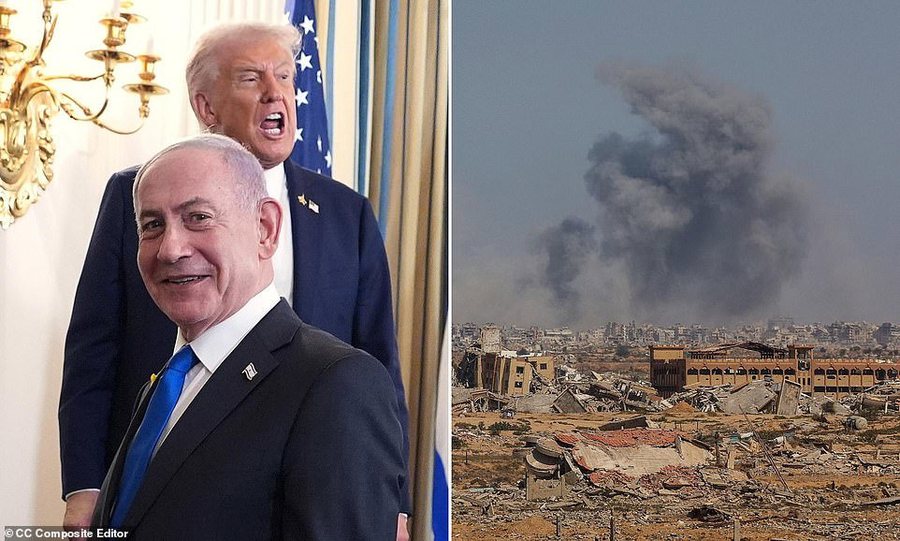
What will happen next with Hamas? According to the plan of US President Donald Trump, the militias in the Palestinian Gaza Strip should be completely disarmed. But this has not yet been achieved. According to Israeli media, such as the Jerusalem Post, the militant-Islamic organization conducts violent battles against rival groups. As a result, at least 32 people have been killed. Videos are circulating on social networks, showing how Hamas executes or tortures those accused of collaborating with Israel. The Hamas group is classified in Germany, the European Union, the US and other countries as a terrorist organization.
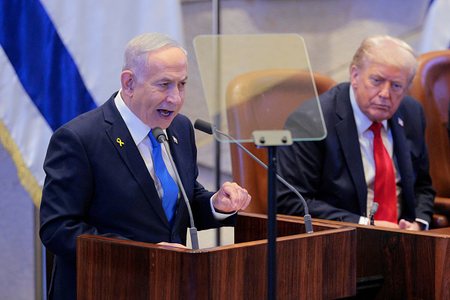
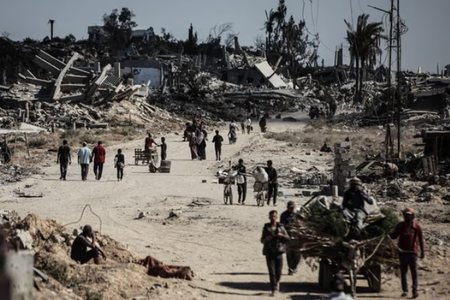
Whether Hamas will be disarmed is uncertain. US President Trump spoke in a contradictory manner. "Virtually the entire region has approved the plan for the immediate demilitarization of Gaza, for the disarmament of Hamas and for the security of Israel to no longer be threatened in any way," he said in his speech to the Knesset, the Israeli parliament. During his flight to Israel, Trump said that his government had allowed Hamas to temporarily rearm. Hamas is trying to restore order after months of war.
"A clear message"
That Hamas is showing its presence and sending armed forces to Gaza City shortly after the Israeli withdrawal is a clear message, says Simon Wolfgang Fuchs, an Islamologist at the Hebrew University of Jerusalem. "Hamas is clearly sending a signal that it has not disappeared from the Gaza Strip, that this organization is once again claiming to play a role there."
The road to disarming Hamas will be a long one, suggests an analysis by the US think tank Atlantic Council. As long as Hamas continues to exist - whether as an armed group or a political movement - there is a great risk that it will regain influence in the Gaza Strip to pursue its own interests, the analysis says. And that is exactly what seems to be happening now.
Weapons as a guarantee of existence
Hamas actually sees its armament as a guarantee of its existence, militarily, politically and symbolically, says Simon Engelkes, director of the German Konrad-Adenauer-Stiftung office in Ramallah. "Without concrete political compensation, Hamas is unlikely to agree to disarmament. US President Trump's 'security guarantees' that the war in the Gaza Strip will not continue as a result of the ceasefire agreement are currently insufficient."
Although Hamas' military structures may have been significantly weakened by the war, its networks and visible presence in Gaza have remained functional. "This ensures its ability to survive politically in the short and medium term."
Who is responsible for security in the Gaza Strip?
The complete disarmament of Hamas may also be difficult because until October 7, 2023, the day of the attack on Israel, the security of the Gaza Strip was in Hamas' hands. After Hamas took over the government in the territory in 2007, this organization was responsible for the police and internal security as well as for justice.
It is unclear who will organize these tasks in the future. Egypt and Jordan have announced that they are preparing to commit around 5,000 police officers in the future according to current plans. However, these structures should also include the police authorities of the Palestinian autonomous administration.
This could be the problem, says Islamologist Fuchs. "It is very likely that Israel will veto these local forces." Because the government in Jerusalem does not want to allow the Palestinian Authority authorities to have any role in Gaza. The Israeli government aims to prevent any such force from having any connection with the government in Ramallah. "So it is completely unclear how this issue will be agreed upon and in which hands the relevant security services will fall."
Warning of further threat
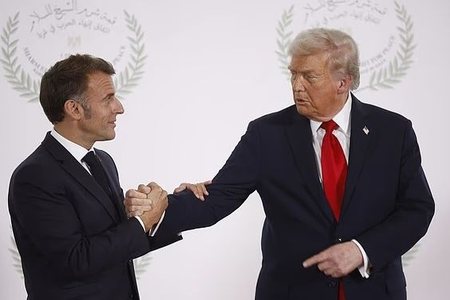
Hamas should not be responsible for security, as many countries have demanded. French President Emmanuel Macron warned of a continuing threat from Hamas militants. "A terrorist group with thousands of fighters, tunnels and such weapons cannot be destroyed overnight," Macron said after signing the ceasefire agreement in Sharm El Sheikh, Egypt. British Prime Minister Keir Starmer also said his country was ready to help disarm Hamas. The German government is against a further political presence of Hamas.
So the real showdown is expected from now on, says Simon Engelkes. "This is not just about the issue of weapons, but also about political control and legitimacy: Who will speak about Gaza in the future and with what authority?"
Possible dangers in Europe too
Ignoring Hamas' interests could be risky, the head of the Federal Intelligence Service (BND), Martin Jäger, warned in the Bundestag: If Hamas is not included in the transitional administration in Gaza, or is expelled from Gaza, there is a "very real risk" that it will become active outside Gaza. "This would of course affect the Arab world, but certainly also the whole of Europe."
In the long term, observers say, everything will depend on whether the Palestinians are allowed to live in dignity. If that doesn't happen, violence could erupt again at some point./DW


Lini një Përgjigje