


 Shkruar nga Pamfleti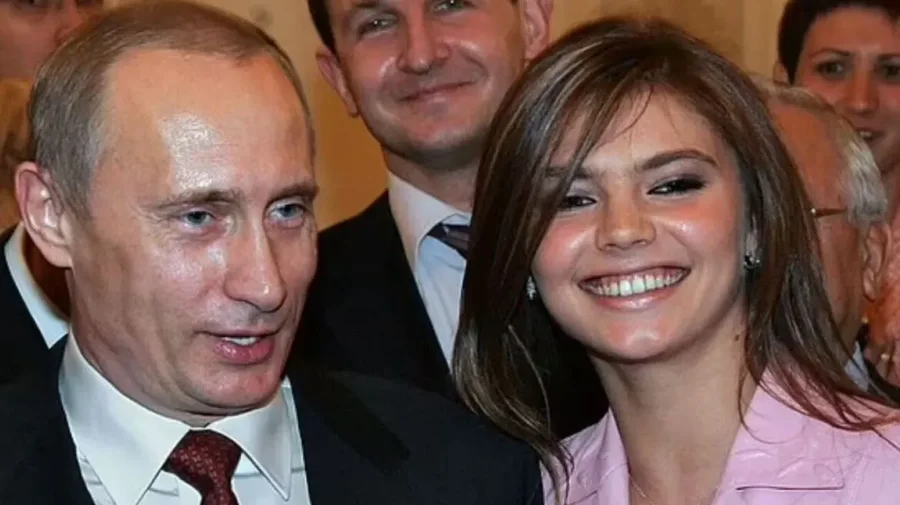
Putin paid up to 7,000 euros a month for a British nanny, the boys learned English and German...
According to an investigation by RFE/RL's Systema unit, the Russian president paid high sums of money to foreign nannies and educators, while the staff had to adhere to strict rules, including a ban on discussing LGBTQ+ issues.
A new investigation published by the investigative unit Systema of Radio Free Europe/Radio Liberty (RFE/RL) sheds light on little-known aspects of Russian President Vladimir Putin's private life and how his young sons have been raised.
According to documents obtained by journalists, Putin hired at least 20 foreign nannies, educators and teachers from countries including Ireland, Austria, Germany, New Zealand and South Africa to care for and educate his children. The employees were reportedly paid substantial salaries while operating under strict security and surveillance conditions.
The Russian president has been officially divorced from his wife Lyudmila Putina since 2014. However, allegations have been circulating in Russia for years that he is having an affair with former Olympic rhythmic gymnastics champion Alina Kabaeva.
According to the report, the couple has two sons, Ivan, 11, and Vladimir Junior, about six or seven. The children spend most of their time in a high-security residence near Lake Valdai, northwest of Moscow.
Ban on discussions on LGBTQ+ issues
The documents show that educators had clear instructions to avoid any discussion of gender identity, sexual orientation, or issues related to the LGBTQ+ community.
Employment contracts stated that employees should not impose their religious, political, or ideological beliefs and could not discuss topics related to sex education without the employer's prior approval.
According to the investigation, four to six people cared for each of the children simultaneously or in shifts.
Intensive education in foreign languages
Although Russian authorities have discussed limiting the teaching of foreign languages in schools, the documents suggest that Putin's sons have been educated intensively in English and German.
Minutes of a 2019 meeting show that Ivan, from the age of four, was required to live in a fully English-language environment, with the goal of speaking the language “like an educated European.” Similar requirements reportedly existed for learning German.
High wages and strict isolation
The investigation reveals that some British nannies were earning up to 6,000 pounds a month, or around 7,000 euros, many times more than the average salary in Russia.
However, working conditions were limited. A British-Irish educator, identified as Jane M., was not allowed to visit public places during her free time. An internal communication stated that staff had to order necessary items, which were then purchased and disinfected by security personnel.
A British English teacher requested two months of unpaid leave in 2023, citing professional fatigue and the difficulties of living in isolation.
Employees were also required to compile daily reports on children's activities.
Family life away from the public eye
The documents also include personal details from the family's life. In a 2018 Christmas card, Ivan addressed Putin and Kabaeva with the words: "Dear Mom and Dad, with lots of love from Vanya."
The report also mentions that the children have ponies, rabbits and a St. Bernard dog, while spending most of their time isolated from their peers.
A former employee, who spoke to Systema on condition of anonymity, said that the boys "play mostly alone or with adults" and that their parents usually only see them late at night.
Putin's grown daughters
In addition to two young sons, Putin also has two grown daughters from his marriage to Lyudmila: Maria Vorontsova, an endocrinologist, and Katerina Tikhonova, engaged in the technology sector.
The Russian president has never publicly acknowledged them as his daughters and on one occasion referred to them simply as "these women."
The Systema investigation is based on electronic correspondence and employment contracts covering the period 2017–2026 and offers a rare insight into the Russian leader's private life, which has traditionally been kept out of the public eye. / Pamphlet



Lini një Përgjigje