


 Shkruar nga Pamfleti
Historian Niall Ferguson has commented on important economic and diplomatic events in the world.
His articles in newspapers and on television always cause great debate and controversy. This interview is based on “The Destructor in Chief,” an article about Donald Trump published in the Wall Street Journal in which the British historian recognizes many of the American president’s merits, while not taking his side.
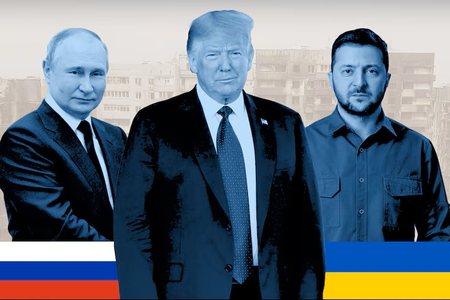
How do you assess the peace plan for Ukraine, especially in light of the changes made since the Geneva talks?
“The best is the enemy of the good. Contrary to what the media has been saying, the plan is a reasonable basis for negotiations. Journalists are complaining, as they did with the 20-point plan for Gaza. But wars do not end with editorials, but with a victory or a compromise. This plan affirms Ukraine’s sovereignty, offers Kiev a US-backed security guarantee, and envisages the reconstruction of the country. Of course, territorial concessions and amnesty for war crimes are difficult to accept, but if one wants to take back the territories occupied by Putin, one must win the war. And realistically, Ukraine has never been able to defeat Russia. Critics must admit that President Trump is taking some risks. I do not believe it is in the interest of the Ukrainian people to prolong the war for another year. I hope Zelensky will use his eloquence to explain why the time is now. Ukrainians have fought heroically for their independence. It is time to consolidate what have achieved through diplomacy."
You argue that Trump is good for Europe. But Trump hates Europeans.
“It’s a mutual feeling. Trump, with his shockwaves, is forcing Europeans to stop seeking strategic autonomy and finally do something serious to achieve it. Europe is the big loser of this era, but not only or not so much because of Trump, but because of China, which is destroying the European economy. It was predictable. Unfortunately, the EU has not yet given an adequate response.”
In your opinion, what would be the appropriate European response?
“Rearmament of Germany, but not the one we are seeing, which will only benefit Rheinmetall and a few others with contracts for weapons systems valid for the 1990s. Instead, we should mobilize the entire German economy to produce millions of drones that would change the strategic balance in Europe. The problem of the Europeans is not Trump, but themselves. I see Europe in a state of illusion, secretly hoping that, once Trump leaves office, a Democratic president will come who will turn back the clock of history. But that will not happen.”
In your essay for the Wall Street Journal, you praise Trump's "creative destruction." Why?
“We have to ask ourselves whether everything would have been better if Kamala Harris had been elected, and I find it hard to believe that. First, on foreign policy, the problems Trump faced were largely the result of the Biden administration’s mistakes in Ukraine, Gaza, and the Middle East more generally. Economically, the consequences of the tariffs on the American and global economy have been less severe than expected. Third and final point, I am not saying that Trump’s radical choices have no costs, which are likely to become more apparent next year. But I also think that the need for disruptive action has long been apparent in American politics.”
What are you talking about?
“The problems for which Trump was elected twice are profound. No one can claim that the first 25 years of the century have not demonstrated this: globalization, which has benefited China far more, the failures of American foreign action after 9/11 in Afghanistan, Iraq, Syria and Iran. Trump was not elected because he was the solution to the problems created by Biden, but because of the deep dissatisfaction of the American public with the status quo. And rightly so.”
Let's start with tariffs: they have certainly benefited the US in the short term, but they certainly have not benefited the rest of the world economy, and this reduces global trade.
“Trump’s argument is that the trade deals of the first quarter of a century were bad for the United States, which is not unreasonable when you consider China, India, Brazil, and the European Union, whose protectionist agricultural policies are unsustainable for America. I mean, American voters don’t care if tariffs hurt the rest of the world. However, I was skeptical when “Tariff Liberation Day” was announced in April; I thought it risked triggering a financial crisis. I’m not a supporter of free trade in the style of Adam Smith. But the world didn’t have free trade before Trump; instead, there was an unfair system where the assumption was that the US was the ultimate consumer for exporting economies, including China and Germany. We can’t say that the problem Trump presents is not legitimate. And his appeal in America was that he challenged the pro-globalization, pro-free trade consensus that had consolidated since the end of the Cold War, finding a "A listening ear, especially in those parts of America that saw millions of industrial jobs destroyed after China's entry into the WTO, a real disaster for the US. Beijing has never respected its obligations within the World Trade Organization."
But will Trump's approach work?
“Nuk e di. Nuk mendoj se do të shohim një riindustrializim të madh në SHBA. Dhe mendoj se do të ketë një kosto për konsumatorët. Gjithashtu mendoj se do të jetë shumë e vështirë të çlirohemi plotësisht nga varësia nga Kina; do të duhen më shumë se tre vjet për të zgjidhur këtë problem. Dhe Trump ka qenë i vetmi që nga viti 2015-16 që ka ofruar zgjidhje radikale”.
Një nga çështjet më të diskutueshme është nëse Trump përbën apo jo një kërcënim për demokracinë amerikane dhe po përpiqet të shkatërrojë themelet e sistemit kushtetues. Nuk dukeni shumë i shqetësuar. Pse?
“Trump nuk është i pari. Presidentët gjithmonë kanë kërkuar të zgjerojnë fushëveprimin e pushtetit të tyre ekzekutiv. Kjo ka qenë e vërtetë të paktën që nga koha e Franklin D. Roosevelt. Shfrytëzimi i gjyqësorit u drejtua nga demokratët kundër Trump në vitin 2021, jo gjithmonë mbi baza të forta. Biden fali të birin. Sa i përket Obamës, ai përdori gjerësisht urdhra ekzekutivë për të cilët Trump tani po kritikohet. Dhe pas 11 shtatorit, me Aktin Patriot, George ë. Bush zgjeroi në mënyrë dramatike pushtetet e presidencës. Është një histori e vjetër. Ajo që është e re është se shtypi liberal papritmas e zbuloi atë dhe po tërbohet kundër kësaj dinamike; ata nuk e bënë këtë me Obamën dhe Bidenin. Trump sigurisht që nuk është një vëzhgues i zellshëm i Kushtetutës, por ai nuk ka shprehur ndonjë qëllim të qartë për ta ndryshuar atë”.
Pra, nuk shihni ndonjë rrezik?
“Nëse ka një rrezik, ai duhet të jetë i nënkuptuar ose sekret. Pyetja kryesore është nëse sistemi mund t’i rezistojë një tjetër përpjekjeje nga një president për ta përmbysur atë në avantazhin e tij. Përgjigja ime është po. Në fund të fundit, ai nuk u përpoq të kërkojë si të pavlefshëm rezultatet e fundit në Nju Jork, Nju Xhersi dhe Virxhinia. Në gjykatat e zakonshme, ka mbi 400 çështje kundër Administratës, të cilat ndoshta do të fitojnë vetëm disa. Nuk e dimë se si do të vendosë Gjykata Supreme për tarifat, por nuk duket shumë miqësore ndaj Shtëpisë së Bardhë. Më duket e pamundur që një krizë dramatike të jetë duke u zhvilluar në qeverinë amerikane. Ku është kriza? Në faktin se ai po ndërton një sallë vallëzimi të çuditshme në Krahun Lindor të Shtëpisë së Bardhë? Më duket se alarmi për demokracinë është i shkëputur nga realiteti politik dhe ligjor. Është historia e vjetër e degës ekzekutive që përpiqet të zgjerojë pushtetin e saj, e një Kongresi që bën pak për ta ndaluar atë dhe e gjykatave që bëjnë shumë për ta përmbajtur atë. Për më tepër, do të thoja se demokratët kanë një shans prej 75% për të rimarrë Dhomën e Përfaqësuesve brenda një viti në zgjedhjet e mesit të mandatit. Nëse kjo ndodh, do të shihni që Kushtetuta është plotësisht funksionale, sepse mendoj se ata do të nisin menjëherë procedurat e shkarkimit të Trump. Por pse nuk më pyetni për korrupsionin?”.
Në kuptimin që Trump e ka normalizuar atë?
“The amount of illegal financial gain the Trump Organization is making is outrageous. The corruption is on a massive scale, unseen in more than a century. The open corruption is shocking: cryptocurrencies, construction deals in the Gulf, the use of Trump Resorts as the sole government supplier. He is giving Democrats a lot of impeachment material. That is Trump’s real problem. And it will explode sooner or later, I am sure.”
Why does Trump have such a submissive relationship with Putin? He bullies everyone but him.
“Trump has been as cold and harsh with Xi Jinping as he is with Putin. He is not a particularly sophisticated foreign policy operator because he does a lot in public, while discretion is an essential ingredient in achieving one’s goals. That is why the Russians always seem to win so far. However, there are successes in Trump’s foreign policy: The Middle East is a much better place than it was three years ago or a year ago. Not perfect, of course. The US 20-point plan has also been approved by the UN, and the Abraham Accords are being relaunched. We should give him the credit he deserves. Trump’s Middle East policy was successful in his first term, then it was destroyed by Biden, and now it is being reorganized. He still has three years left: he is trying to end the war in Ukraine and resolve issues with China, challenges that are even more complex, but not impossible. Part of the problem with his critics "It's that they don't recognize the keys to Trump's success in the Middle East: the blending of public and private interests that the Gulf Arabs fully understand because it's their way of doing things. The House of Trump has the same relationship to the American economy that the House of Saud has to the Saudi one. They speak the same language. With Putin it's more difficult."
The renewed US interest in Latin America has led to talk of a new “Donroe Doctrine,” a 2.0 version of the old Monroe Doctrine, which restored South America as the United States’ backyard, keeping European powers out.
“I was the first to talk about a Donroe Doctrine, a term that is now widely used by others. I think it is a good thing. For a quarter of a century, the United States has not had a policy for South America, even somewhat embarrassed by what happened in the past. But the result of this absence has been a great opportunity for Russia and China. If a brutal dictator like Nicolás Maduro falls in Venezuela, we should celebrate; it will be a victory for the entire region.”
Note: Ferguson is one of the leading historians of contemporary economics. Of Scottish origin, author of seminal books such as “The Rise of Money: A Financial History of the World,” he has taught at Oxford, Stanford, and Harvard.



Lini një Përgjigje