


 Shkruar nga Pamfleti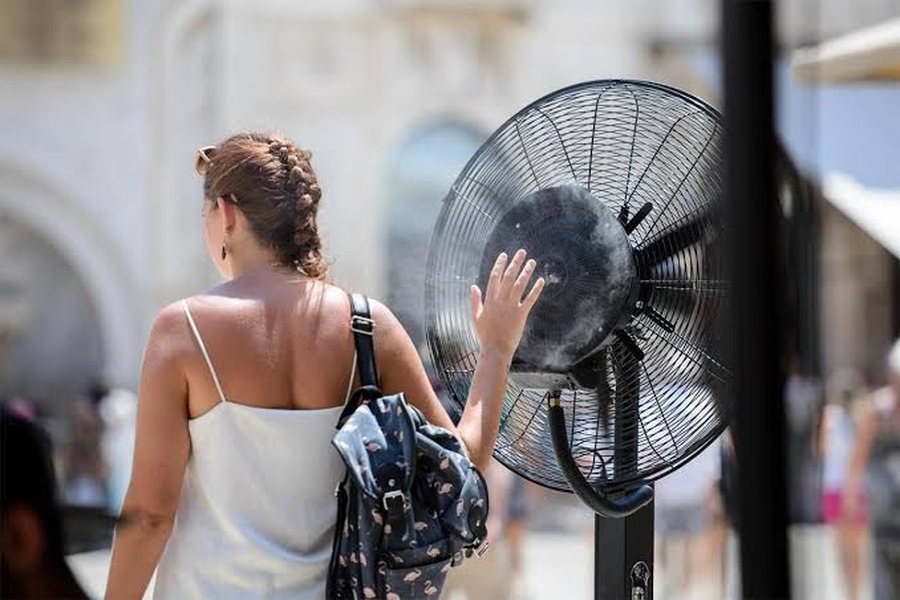
Europe is experiencing another day of extreme temperatures as a heatwave continues to sweep across much of the continent. New all-time highs were set in several places on Saturday as hot air masses moved north and east, affecting millions of people.
Germany has recorded its highest temperature ever, with the thermometer reaching 41.5 degrees Celsius, according to preliminary data from the German Meteorological Service. The record was recorded in Möckern-Drewitz, surpassing the 41.3 degrees Celsius set just a day earlier in Saarbrücken.
Denmark also experienced its hottest day since meteorological measurements began in 1874. The Danish Meteorological Institute said temperatures reached 36.6 degrees Celsius north of Odense, setting a new national record. Temperature records were also set in the Czech Republic, while Slovakia confirmed its hottest night on record, with temperatures not dropping below 26.3 degrees.
According to data, about 150 million people in Europe are experiencing temperatures exceeding 35 degrees Celsius. The World Meteorological Organization has warned that this heat wave will have significant impacts on human health and ecosystems. The phenomenon, which began in the Iberian Peninsula, has been linked to the deaths of hundreds of people over the past week.
In France, temperatures above 40 degrees have caused numerous consequences. Dozens of people, mainly elderly and young, have lost their lives, while authorities have been forced to suspend rail traffic in some areas, limit energy production, close schools and suspend outdoor activities.
The effects of the extreme heat are being felt across the continent. Some cultural monuments have been closed to visitors, agriculture has suffered damage, while hospitals in some countries are facing an increased influx of patients. According to Reuters, temperatures have reached up to 18 degrees Celsius above the seasonal average, as a result of an atmospheric phenomenon known as the "omega blockade", which keeps hot air trapped over the same area for long periods.
Meanwhile, demand for fans and cooling equipment has increased significantly across Europe. Asian air conditioner manufacturers report strong sales growth, while experts point out that most homes in Northern Europe are designed to retain heat during the winter and not to cope with such high temperatures.
Meteorologists predict that the heat wave will begin to weaken over the weekend, while strong storms are expected in some parts of the continent on Sunday.








Lini një Përgjigje