


 Shkruar nga Vincenzo Musacchio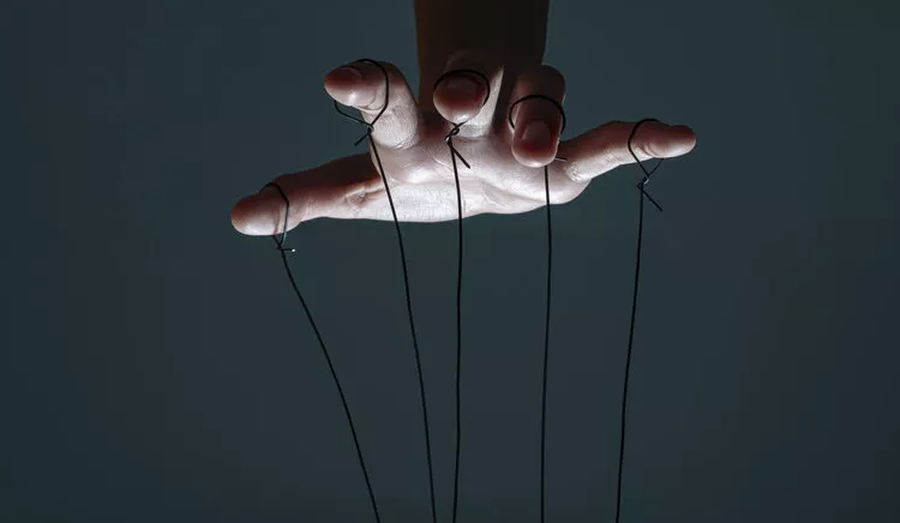
When you start digging into secret clients, immoral state-mafia pacts, money flows that lead to dubious companies or tax havens, the system immediately reacts defensively: barriers of "guaranteeism" are raised and the work of magistrates is attacked...
"We must go beyond the third level and strike at the most refined minds." "The moment has come to identify the true axis of mafia power: no longer (and not only) the armed wings, but the 'white ties' and the salons where the economic and political destinies of the country are decided."
There is a weakness that Italy has carried for decades. An optical illusion that is both soothing and toxic: thinking of the mafia as a phenomenon of shepherds, fugitives hiding in underground bunkers, and ruthless killers with a strong local dialect.
Yes, this is the military mafia. But the real mafia, the one that survives regime changes, economic crises, and historic police operations, is different.
thing. It is the mafia that does not shoot, but acts silently. It is the mafia of puppets.
To properly and seriously investigate those who lead criminal organizations means to stop looking at the finger and start looking at the Moon. It means to accept an uncomfortable truth: Cosa Nostra, 'Ndrangheta and Camorra are not foreign bodies to our society, but chambers directly linked to legitimate power.
Today's big bosses no longer need to impose fear with their weapons. They show up with degrees in economics and finance, master's degrees abroad, and a diversified investment portfolio.
The real mafia power lies in what we experts call the "gray zone": a dense network of professionals, bankers, middlemen, public officials, and cooperating politicians.
Without this network, the mafia would be just an ordinary criminal gang, destined to disappear under the blows of the state. While through this network, it transforms into an entrenched system.
It becomes capable of recycling billions of euros of illegal origin into legal financial markets; seizing public funds and large tenders before they are announced; and conditioning the vote in entire territories, turning citizens into subordinates and candidates into debtors.
Today, mafia bosses and politicians exchange favors in a frightening alignment of interests. When justice tries to raise the level of investigations to hit the foundations of this "gray area", the climate changes immediately. Until the material executor of a murder or the drug courier is arrested, the applause is general.
But when you start digging into the secret clients, the amoral state-mafia pacts, the money flows that lead to dubious companies in the north of the country or to tax havens, then the system's protective reflex is activated.
Barriers of "guaranteeism" are being raised, the work of magistrates is being attacked, accusing them of "political theorems," and legal rubber walls are being erected. Because revealing the leaders behind the scenes means opening the "Pandora's Box" of institutional complicity.
It means accepting that parts of the state have coexisted with the same monster they publicly swore to fight. If Giovanni Falcone once said "follow the money and you will find the mafia", today this maxim needs to be updated.
Mafia money moves at the speed of a click, hidden in cryptocurrencies and dispersed into thousands of shell companies between Delaware and Luxembourg.
The investigation into those who run the mafia requires a cultural and technological revolution.
The intuition of a single investigator is no longer enough, but international groups are needed capable of reading global financial flows and decoding the connections between deviant freemasonry, speculative finance, and organized crime.
As long as we are content with showing off our handcuffs in front of the cameras, we will only have won superficial battles. The mafia is defeated only when we have the courage to cut the puppet strings.
To do this, the state must be willing to look itself in the mirror and strike even its own dark areas. Without any exceptions, and above all without fear that sometimes the puppeteer can sit in the highest chairs of power./ Pamphlet from "Huffington Post Italia"



Lini një Përgjigje