


 Shkruar nga Pamfleti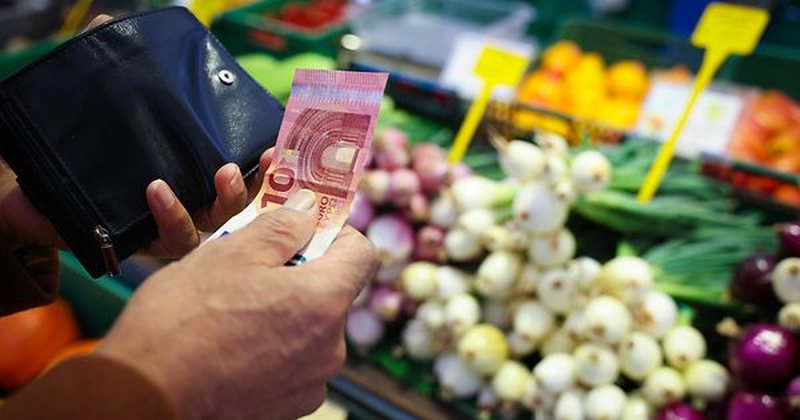
The European integration process has been presented as a success story, with particular emphasis on accelerating the closure of integration chapters. On the administrative level, Albania is making progress in aligning with European Union standards. But European integration is not just about harmonizing legislation. It is also about harmonizing living standards. For citizens, integration is measured by real wage power and the cost of the daily basket.
Prices have increased much faster than incomes:
In 2016, the overall price level in Albania was around 45% of the EU average.
In 2024 it reached 64%. So, within eight years prices have approached the EU by 19 percentage points.
In the same period, real income per capita has gone from 16% to just 21% of the EU average.
The increase is only 5 percentage points.
This means that prices have increased almost four times faster than incomes.
Today, Albania has prices at 64% of the EU, but incomes at only 21%. The difference of 43 percentage points is the highest in the region. Serbia has 61% price level and 34% income; Montenegro 59% prices and 41% income. Albania is among the most expensive in the Balkans, but with the lowest relative incomes.
Foods: almost at EU level
The situation becomes even more significant when analyzing food. In 2024, the “Food” category in Albania is 99.6% of the EU average. So, food is paid at almost the same prices as the EU. In some categories Albania is above the EU average:
Milk, dairy products and eggs: 132.5%
Sugar, sweets and desserts: 124.7%
Non-alcoholic beverages: 118.3%
In other categories the difference is very small compared to average prices in the EU:
Meat: 94.8%
Fish: 95.4%
Fruit: 94.8%
Oils and fats: 98.6%
Vegetables: 85.1%
Bread and cereals: 82.1%
These are basic products, not luxury goods. When most food prices are above or close to the EU average, while wages are 21% of the EU average, the pressure on families is clear.
Budget structure amplifies pressure
A clear indicator of the level of well-being is the way families distribute their income. According to the Household Budget Survey (INSTAT), in 2024 about 39.6% of the budget of Albanian families goes to food and non-alcoholic beverages. In the EU-27 this share is 13–15%.
This means that Albanian families spend almost three times the European average on basic products. In this structure, any price increase has an immediate and multiplying effect on welfare. In an economy where 40% of income goes to food, any price increase has an immediate and direct effect on welfare.
Formal integration and real integration
Closing chapters is a technical process. But real integration is measured by the ability of citizens to afford to live with dignity. If prices approach Europe much faster than wages, then we have a formal approximation, but not a real approximation of the standard of living.
The high difference between prices and incomes, combined with the high weight of food in the budget, creates:
Weakening of real purchasing power
Limitation of household savings and investments
Pressure on the middle class
Increase in economic emigration as the only alternative for improving welfare
In this context, European integration cannot be measured only by the number of closed chapters, but also by the real standard of living of citizens. Albania is approaching the EU in the institutional plan and in terms of prices. But in terms of real welfare, the gap remains deep. Food is almost at the EU level, even above the EU in some categories, while incomes remain one fifth of the European standard. European integration cannot be just an administrative process. It must be a concrete improvement in the lives of citizens.
Europe starts with a realistic standard of living./Monitor



Lini një Përgjigje