


 Shkruar nga Pamfleti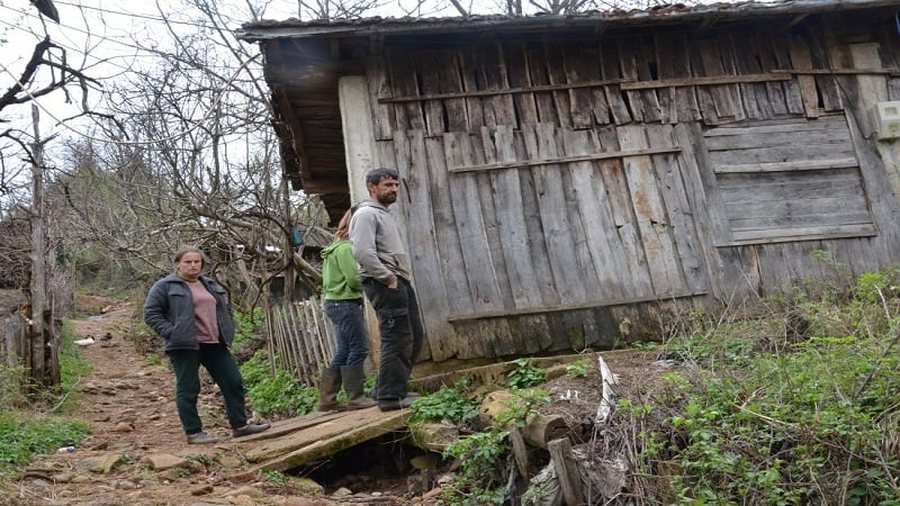
Albania has a strong contrast between poverty in rural areas, which is much higher than urban areas, unlike the European Union, where the difference between rural and urban areas is negligible.
More than half of residents in Albanian villages (54%) suffer from the risk of poverty and social exclusion, according to data published by Eurostat, the highest level in Europe.
This means that 54% of the population in the village meet at least one of these three criteria:
-They are in the range of monetary poverty if a person's income is lower than 60% of the national average.
-They have severe material or social deprivation, the person is unable to afford basic expenses such as heating, paying bills, buying food, clothes, vacations, etc.
-They live in families with very low work intensity when adults in a family work very little or not at all during the year.
Eurostat has published data for EU countries for 2024, while the latest information from Albania is for 2022 (see chart). In the European Union, the poverty and social exclusion indicator in rural areas is much lower than in Albania, at only 21.4%.
In rural areas of North Macedonia and Serbia, the indicator is around 32-33%, while data for Kosovo, Bosnia and Herzegovina and Montenegro is missing.
Strong rural-urban difference
In urban areas, the poverty and social exclusion indicator in Albania was 37.6%, almost 14 percentage points lower than in rural areas. Despite the difference with the countryside, compared to the EU and regional averages, the population living in cities still has a higher level of poverty.
The European Union average for urban areas is 21%, down from 21.4% for rural areas, indicating that wealth is evenly distributed across the region.
Even in comparison with the region, Albania lags behind. North Macedonia has the indicator of 25.9%. Serbia has the lowest, at 14.7%.
National average
Nationally, 40.5% of the population is at risk of poverty or social exclusion by 2024, according to data recently published by INSTAT. Although the risk of poverty and social exclusion has decreased compared to previous years (from 44.5%) in 2022, comparative Eurostat data shows that Albania has the highest level in Europe and double the EU average of 21%.
In the region, Serbia has the lowest poverty and social exclusion, with 24.3%, followed by North Macedonia (30%, with 2023 data) and Montenegro with 34.1% (2022 data). Information is missing for Kosovo and Bosnia and Herzegovina./Monitor





Lini një Përgjigje