


 Shkruar nga Pamfleti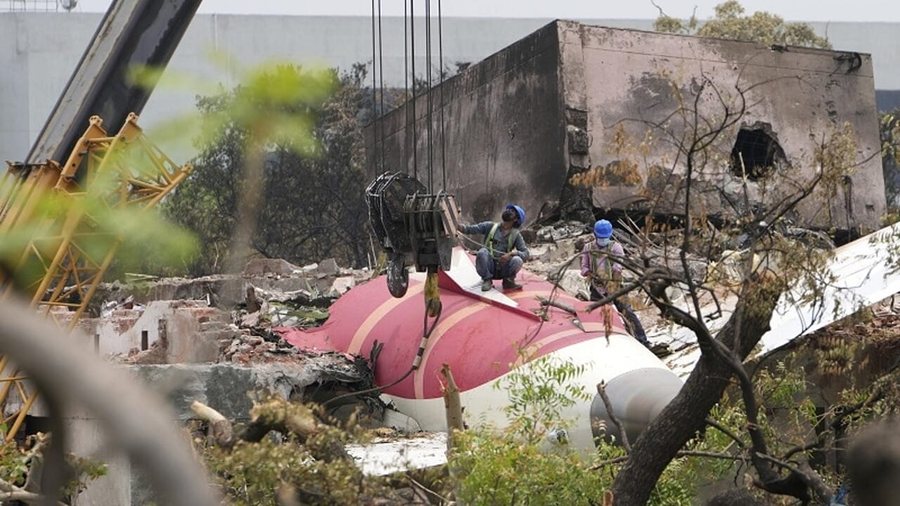
Investigators have revealed a chilling moment in the preliminary investigation into the crash of Air India Flight 171, which killed 260 people in June.
Just seconds after takeoff, both fuel control switches on the 12-year-old Boeing 787 Dreamliner suddenly moved to the "block" position, leaving the engines without fuel and causing a total loss of power. Switching to "block" is an action usually done only after landing.
The cockpit voice recording captures one of the crew members asking the other why he "locked the keys," while the person replies that he did not do such an action. The recording does not clarify who said what. At the time of takeoff, the co-pilot was flying the plane, while the captain was monitoring it.
The switches returned to their normal position during the flight, activating the automatic engine restart. At the time of the crash, one engine was regaining thrust while the other had restarted but had not yet recovered power.
Air India Flight 171 stayed in the air for less than 40 seconds before crashing into a populated neighborhood in the western Indian city of Ahmedabad, marking one of India's strangest aviation disasters.
Investigators are examining the wreckage and cockpit voice recorders to figure out what went wrong shortly after takeoff. The Air India flight climbed to 2,000 feet (625 meters) in clear weather before losing its location data 50 seconds later, according to Flightradar24. The 15-page report on Saturday provides early information.
The investigation, led by Indian authorities with experts from Boeing, General Electric, Air India, Indian regulators and participants from the US and the UK, raises several questions.
Investigators say the fuel switches with locking levers are designed to prevent accidental activation; they must be pulled up to unlock before they can be turned on, a safety feature that dates back to the 1950s. Built to exacting standards, they are highly reliable. Protective brackets further protect them from accidental knocks.
"It would be almost impossible to activate both switches with a single movement of one hand, and that makes an accidental deployment impossible," a Canada-based air accident investigator, who wished to remain anonymous, told the BBC.
This is what makes the Air India case stand out. /Adapted from the BBC Pamphlet/








Lini një Përgjigje