


 Shkruar nga Pamfleti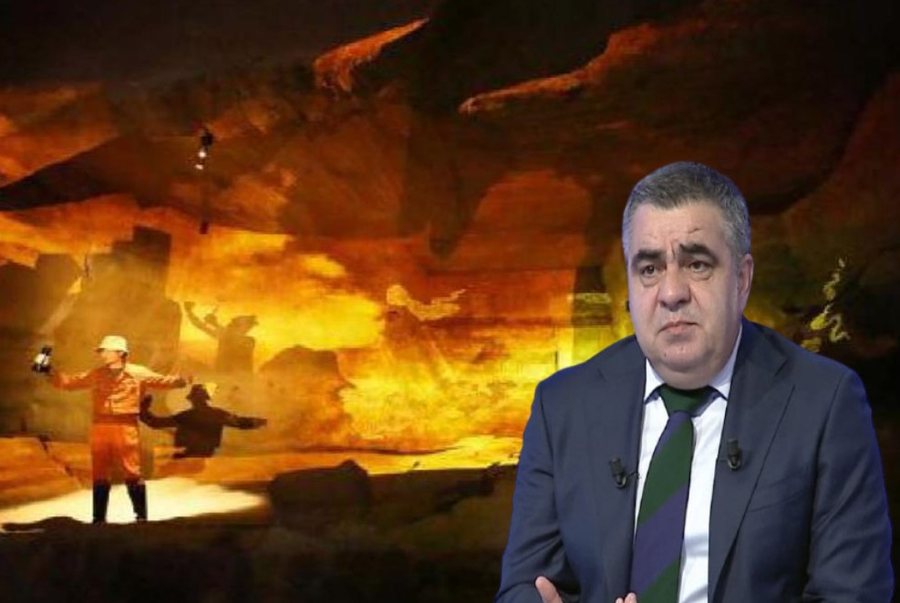
Auron Tare calls Gonxhen's bluff, how the minister deceived him with the restoration project...
Blendi Gonxha's exploits are endless. Although he has done nothing for culture to date, the minister has been called out on his bluff once he tried.
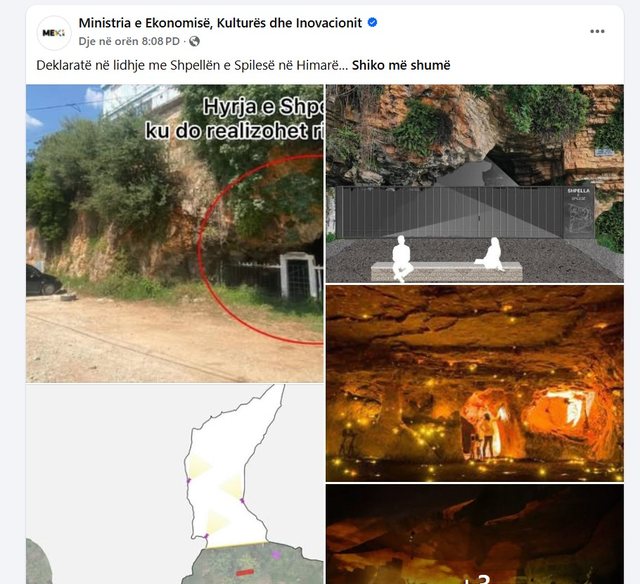
After Auron Tare's denunciation of the concreting of the Spille cave in Himara, the Ministry of Economy and Culture reacted by rejecting the accusations and publishing some photos as part of the restoration "project". But just a day later, the deception was revealed: the published photos do not belong to Albania at all, but to a cave in the Huashan province of China.
Aurto Tare himself has called the minister's bluff, providing irrefutable evidence that the images were taken from a 10-year-old Chinese project, where ancient mythologies were interpreted for cultural tourism with the help of artificial intelligence. " In today's technological world, a child only needs 5 minutes to understand that these images were generated from a Chinese cave. It took me 10 minutes to find their source ," Tare quipped.
" Is there a Chinese project related to the Spille Cave in Himara? Is there a connection between the legend of Polyphemus and the Buddha of Huashan? ", asks Tare, making fun of the entire ministry.
The scandal shows the level of institutional irresponsibility in the protection of Albanian cultural heritage, a unique monument, linked to Homeric legends, risks turning into a caricature due to corruption and ignorance. Instead of calling in experts in archaeology and history, Gonxha chose to manipulate the public with foreign photos, mocking the citizens of Himara and all Albanians.
Auron Tara's post:
Friends of MEKI, let's be a little more serious and stop making fun of your taxpayers.
MEKI's reaction to my modest article on the actual state of the Spila Cave made me think that this institution was serious about intervening and saving this first-class monument from abandonment and surrounding vandalism. For this reason, I looked carefully at both the text and the 3 images that accompanied the text. Knowing that in Albania there are no real specialists in the interpretation of ancient mythology in modern Artificial Intelligence images, I was very surprised to see the photos from MEKI's alleged "project".
I was lucky enough to see, 10 years ago, in Singapore, as part of a UNESCO delegation, perhaps the first new AI project - the interpretation of ancient Chinese mythology, discovered in a unique cave somewhere in the deserts of China. It was a very ambitious project, where the University of Sydney, Peking and the Beijing State Opera had recreated all the images of the cave in Artificial Intelligence and used them for educational and cultural tourism. Therefore, the news that MEKI had a project for the Cave intrigued me.
But curiosity turned to disappointment and then to endless laughter.
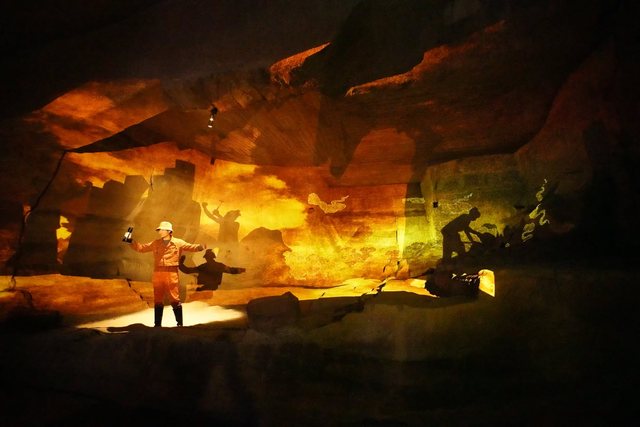
The first image of MEKI appears to be a person, most likely a Chinese man, with a projector in his hand creating light and shadow in the illuminated cave behind him.
In today's technological world, a child only needs 5 minutes and basic information to understand where and how these images were generated.
In fact, it took me a little over 10 minutes to realize that the images of the MEKI project come from a Chinese Cave, in the province of Huashan.
My question for the MEKI friends who make fun of the citizens is:
Is there a Chinese project related to the Spille Cave in Himara? Is there a connection between the interpretation of the legend of Polyphemus in Spille and the Buddha of Huashan?
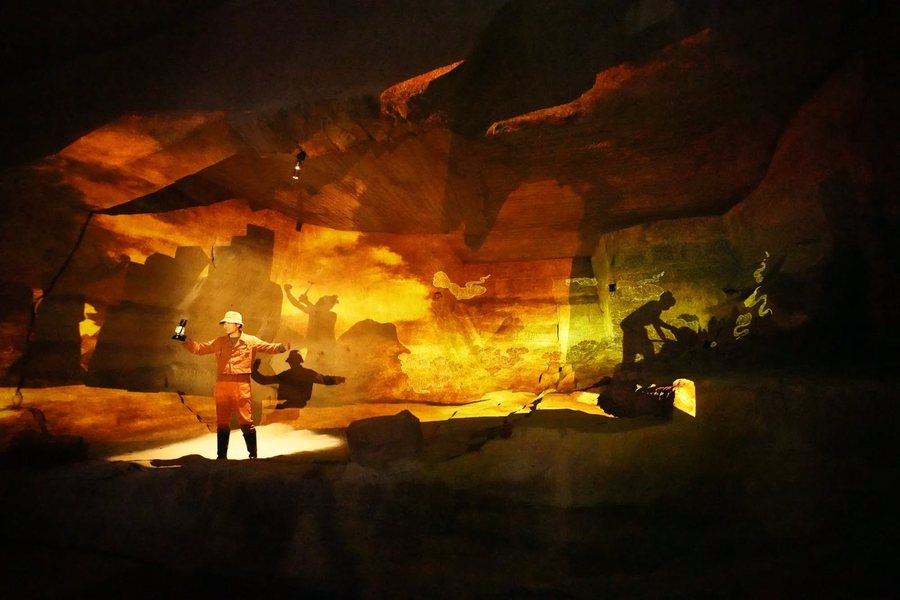
I believe that at least the citizens of Himara will laugh this evening when they sit down to drink coffee by the sea and read that our Ministry that covers culture uses images of caves in China for the Spille Cave, a cave that local myths connect to Homeric space?
Suggestion for the head of MEKI:
Gather a small group of archaeology and history specialists. Create a clear idea of what historical context can be used for the Spille Cave, based on archaeological discoveries.
This project requires real specialists who have implemented historical interpretation projects in caves, not electricians working on tenders. Look at the French models, which are to be admired, for example.
If you don't have the capacity for all of this, seek the help of UNESCO, which has on its roster a number of world-class experts who would dream of taking on a Homeric project.






Lini një Përgjigje