


 Shkruar nga Pamfleti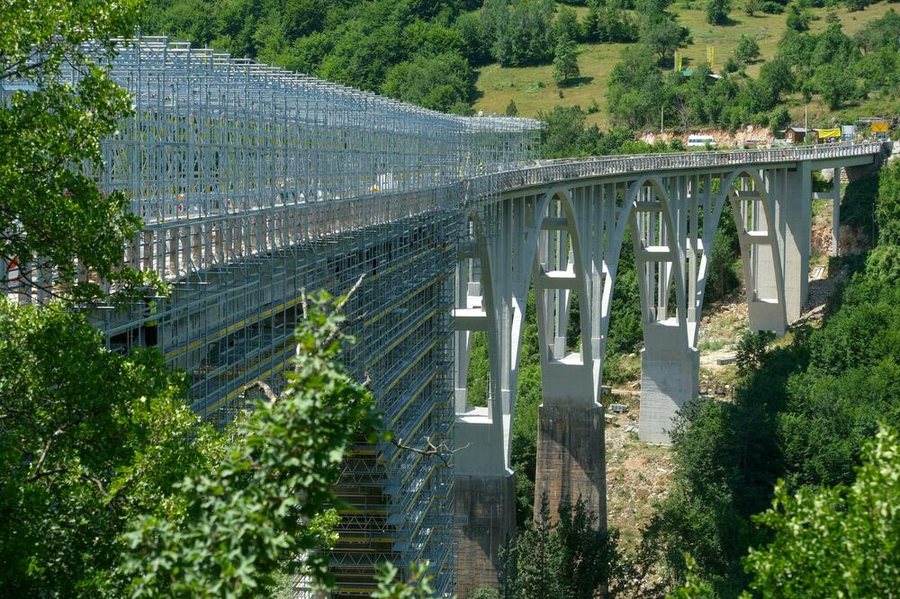
The 7.05 million euro investment aims to extend the life of the historic bridge for another 50 years; work is progressing ahead of schedule, but tourists, traffic and harsh climate are making it difficult for the construction site...
The famous Đurđević Tara Bridge, one of Montenegro's most famous monuments, is expected to appear fully restored in 2027. The project is financed by China with a donation of 7.05 million euros and is being implemented by the Chinese company "Shandong Luqiao Group", under the supervision of Montenegrin authorities.
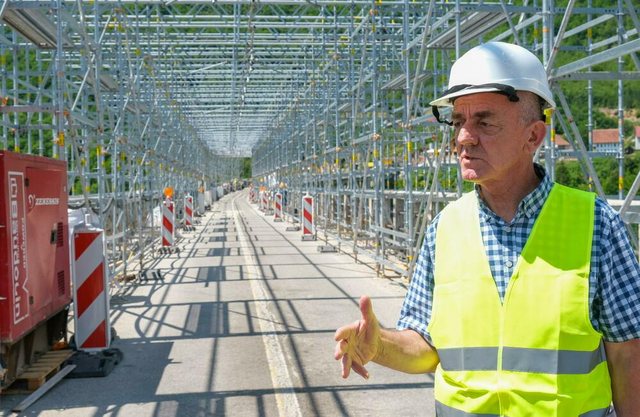
According to project leaders, about 60 percent of the works have been completed and the pace is several percentage points ahead of schedule. The main works are expected to be completed by the end of 2026, while the final use permit is expected to be obtained by July 2027.
The restoration includes the bridge and approximately one kilometer of access road. In order to continue the interventions on the passable part, the facility is expected to be completely closed for about two and a half months, with the aim of traffic returning by mid-October, depending on weather conditions.
Tourists on the piers and trucks beyond the stop
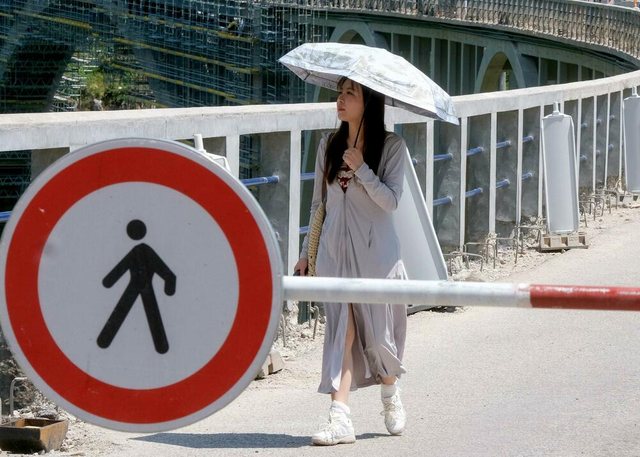
The difficulty is not only related to the architecture of the bridge, which rises about 170 meters above the canyon and is 365 meters long. The works have also been hindered by tourists who cross the barriers and climb the scaffolding to take pictures, as well as by truck drivers who have not respected traffic restrictions. The intervention of the police has also been requested to control the situation.
Engineers say that after restoration, the bridge could remain functional for about half a century. However, due to the weight of modern vehicles, restrictions are expected to be imposed on heavy transport, orienting the facility mainly towards light traffic and tourism.
Cultural restoration or infrastructural diplomacy?
Beyond the technical aspect, the project also has a diplomatic dimension. The agreement between China and Montenegro for the restoration was signed in 2018, while the donation contract in 2020. Beijing is thus investing not only in concrete and infrastructure, but also in a historical and touristic symbol of a country candidate for membership in the European Union.
For Montenegro, the restoration could bring in more visitors and revive local businesses, which have reported a decline in activity during the works. For China, it is another opportunity to strengthen its presence and image in the Balkans through investment diplomacy./ Pamphlet






Lini një Përgjigje