


 Shkruar nga Parag Khanna
Our obsession with defining the emerging global order hides the true complexity of our neo-medieval moment
It has become common to describe our era as post-Western or perhaps post-American. The problem is not necessarily that these terms are wrong. Rather, the problem is that they focus on what is being replaced, rather than on what is replacing it.
I have been guilty of this too. A few years ago, an editor of mine titled one of my books “The Future is Asian.” I was thrilled by this bold formulation. But there was a problem: “The present is Asian for most of humanity,” I told him.
One of the greatest difficulties in finding the right term for the world we live in is the fixation with order. Western international relations theory, along with the conventions of foreign policy analysis, have led everyone to search for the rules and institutions that define the emerging global order.
But nothing in the nature of history or geopolitics requires that there be a stable, defined order. Geopolitics is the deep science of the spatial dynamics of power, not a popularity contest to see who becomes secretary general of NATO or the United Nations.
Geopolitics spans multiple levels and domains, whether territorial, financial, or digital. There is ample evidence that today’s landscape is made up of highly heterogeneous regimes interacting in multiple ways, with no credible alternatives on the horizon to replace them. There are no powers that maintain the status quo and no meaningful institutions of global governance. In this world, notions like James Der Derian’s “heteropolarity” and Amitav Acharya’s “multiplex world” come closer to describing the complex global reality, avoiding the simplistic question of “who is number one?”
It is no coincidence that both of these scholars are supporters of the “Global IR” movement, which has its roots in the confrontation with the work of Oxford professor Hedley Bull. In his seminal 1977 work, “The Anarchic Society,” Bull argues for a “new Middle Ages,” with overlapping authorities and intersecting loyalties that transcend the Westphalian state system. Before the creation of the modern European state system, power on the continent was divided between feudal lords, kings, and the Pope, while the complex structure included duchies, principalities, and the Holy Roman Empire. In key areas such as the Baltic and North Sea regions, confederations of city-states such as the Hanseatic League set the rules of international trade more than any state or supranational authority.
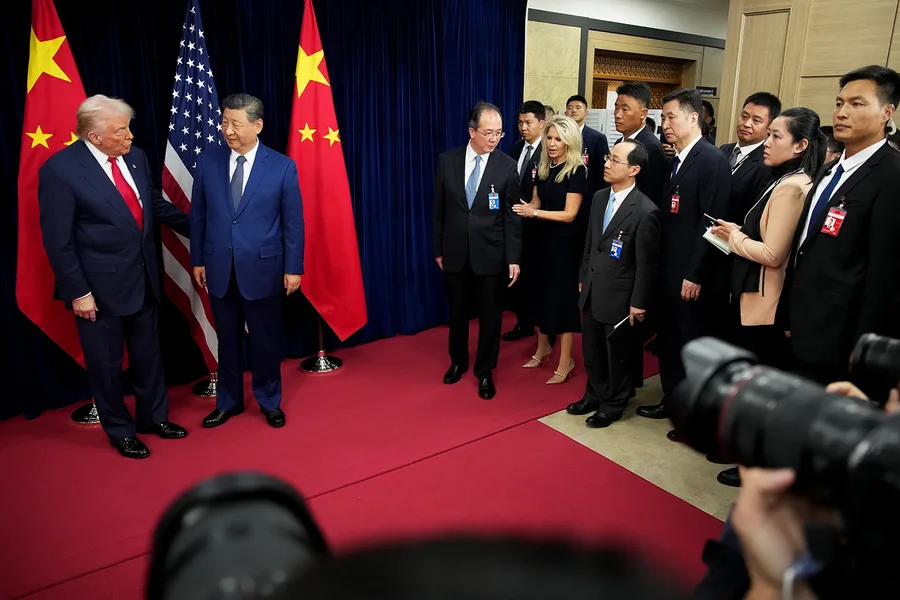
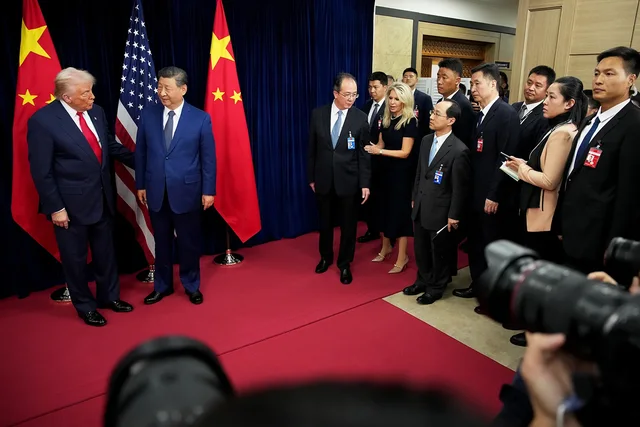
Even though we live in a world similar to the one described by Bull, with multi-level and multi-actor dynamics involving states, multinational corporations, and digital communities without territory, the dominant discourse continues to use simplified models, as if the world of 2050 could be explained as a choice between the United States and China. Instead, we need to acknowledge pluralism, reduce the role of universalist ideologies, and explore the connections between powers at sub-global levels.
Bull’s most famous student, Barry Buzan, has criticized his Eurocentrism and developed the concept of “regional security complexes.” A regional approach helps to understand the lack of a uniform global structure. The deeper one analyzes a region, the more generalizations about power hierarchies collapse and the more clearly the nonlinear nature of today’s world becomes apparent. Rather than focusing debates on the question “who becomes a superpower?”, attention should be focused on how and where influence is exerted.
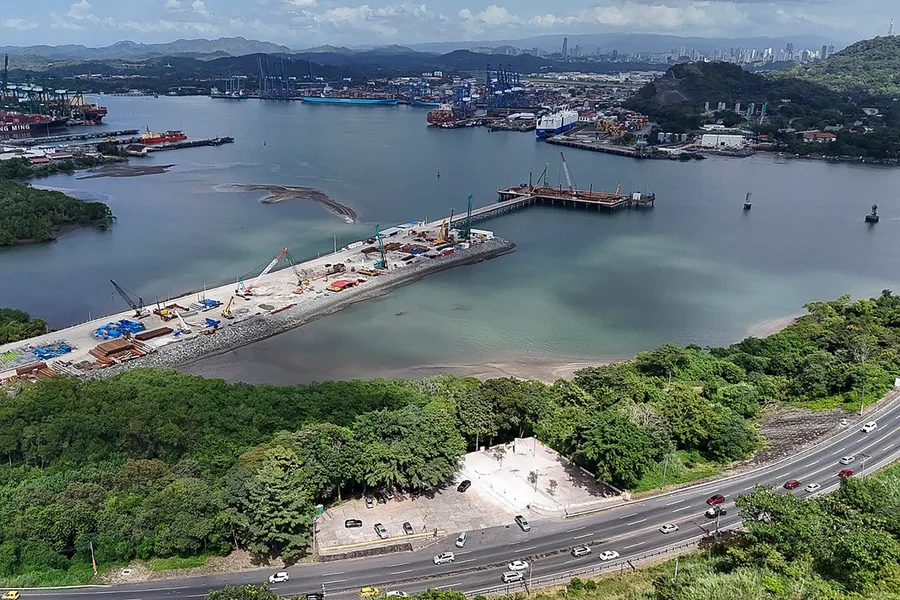
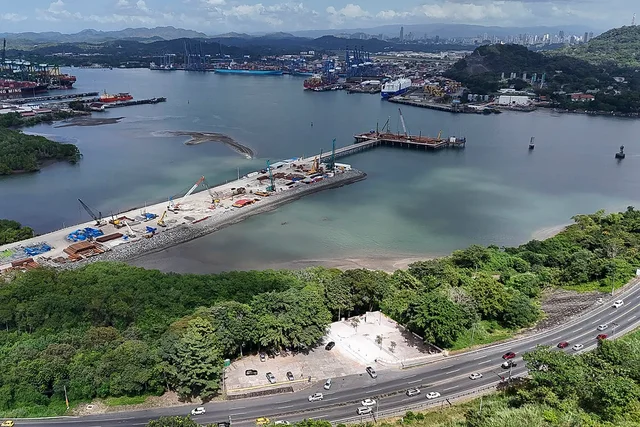
In Latin America, for example, China has significantly increased its influence through infrastructure investment and trade relations. However, the Trump administration's policies quickly changed this dynamic, restoring American influence in the hemisphere.
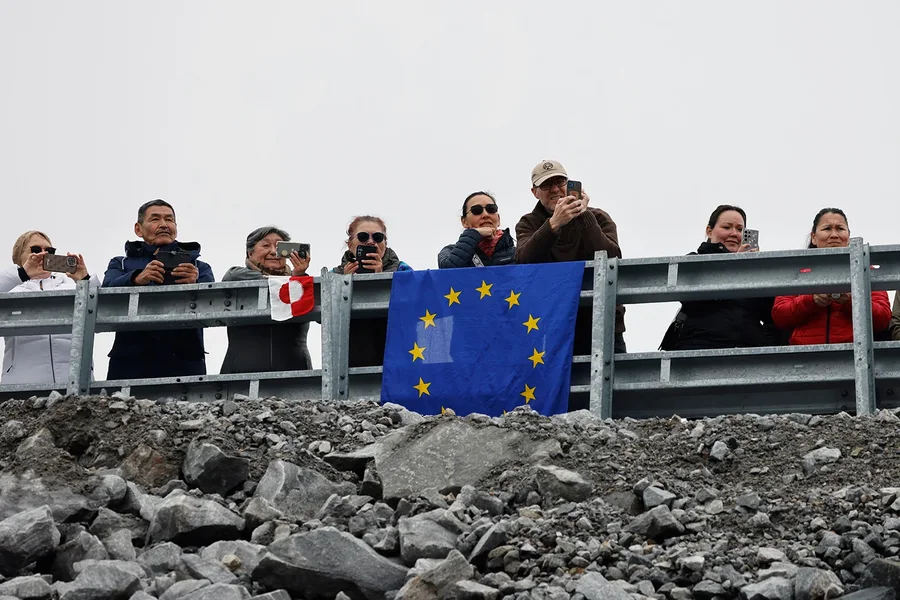
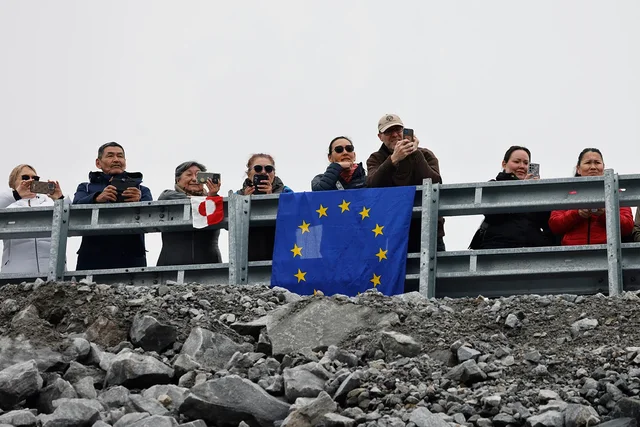
In Europe, the situation is different. After decades of hesitation, the European Union is taking steps to strengthen strategic autonomy, investing in defense, technology, and financial integration, with the aim of reducing dependence on the United States.
The Indo-Pacific region also shows a different dynamic, where India is increasing its naval and strategic influence, while maritime security is being organized more flexibly and collectively, not only under American leadership.
Meanwhile, the US remains a key player in building technological and economic alliances to limit China's influence, especially in advanced technology supply chains.
In some parts of the world, states are more powerful than ever, especially in Asia. At the same time, global cities like Singapore and the United Arab Emirates are attracting capital and talent, gaining influence beyond their territorial size.
The world is not moving toward a new, clear, unified order. Instead, it is evolving toward a complex, fragmented system, where power is dispersed and constantly shifting. This era, he argues, can be described as a “new Middle Ages” that has already begun. /Adapted from ForeignPolicy /


Lini një Përgjigje