


 Shkruar nga Denis Dyrnjaja
This is not a battle between a lawyer and a prosecutor. It is a blurry picture of what happens inside the justice system where principles often fall prey to instincts, interests, and fear.
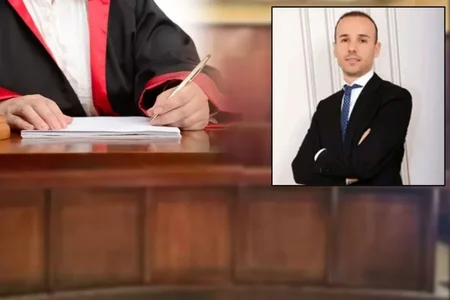
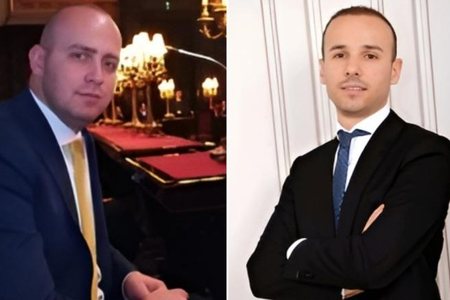
The arrest of lawyer Ulian Barjami in Elbasan is an event that has sparked numerous and strong reactions, not simply for the nature of the action, but for the consequences it produces on the institutional climate of the judicial process and on the role of the defense in the courtroom.
The passage cited as the reason for the lawyer's arrest seems to be this, "I will deal with you personally," which in fact borders on ambiguity. It can be interpreted as an emotional and hasty expression, but at the same time, the possibility cannot be ruled out that it is an implicit message, articulated on behalf of the defendant and indirectly addressed to the prosecutor, in a context where the parties to the legal proceedings (lawyer/prosecutor) have an unhealthy professional history and are often involved in relationships of distrust, unethical practices, and dubious and compromising compromises.
This happens when justice is prejudiced not only from the outside, that is, by the public, but also by those who represent it in the courtroom. And when bargaining is lacking, when someone refuses to enter into an “agreement,” tension rises. Tones become harsh even among professionals who, ideally, should restrain themselves, control their emotions, and stick to the legal argument.
Personally, I believe that the lawyer chose the wrong wording when he said "I will deal with you personally." When you hear or read it, it leaves a bad taste, almost vindictive, but in the context of a professional ego that seeks to protect the right that it believes is being violated, the expression takes on a different connotation, warning of legal confrontation for manipulation or violation of the law in procedures by the prosecutor against the defendant.
When analyzed coldly, the lawyer's stance does not seem to have had the intention of actually threatening the prosecution representative, but at a time like this, where society has not yet recovered from the shock of the murder of Judge Astrit Kalaja, every word, every tone, every gesture is analyzed with a magnifying glass and translated into institutional nervousness and consequently also hasty legal actions.
Direct reactions, such as the arrest of a lawyer for a questionable phrase, risk damaging the balance between the parties in the criminal process and transforming courtrooms into areas of control and fear, not of justice and fair confrontation but of a repressive role for the prosecution and the judge. And when the prosecution and the judge become parties, then human rights and their protection guaranteed in international conventions and the Albanian Constitution fall.
It is true that some lawyers are involved in dark circles that bring them closer to the criminal contingent or their clients beyond their status as legal defenders. So there is a kind of association between them, but this cannot turn into a stigma and prejudice for every lawyer who has chosen to practice the profession that the law allows him with correctness and honor. On the other hand, the opposite cannot be overlooked: many prosecutors have also been part of the bargains, where files are distorted, evidence "disappears" or criminal offenses are reclassified to produce unfair favors.
Therefore, this is not a battle between a lawyer and a prosecutor. It is a blurry picture of what happens inside the justice system where principles often fall prey to instincts, interests, and fear.
Justice, if it is to be such, must be above emotion, above status, above blackmail and above bargaining. And at its center, it must be placed not the fear of a heated sentence, but the guarantee that every citizen has the right to be defended impartially and equally, without the risk of his lawyer becoming a victim of the system.




UNË NUK E KUPTOJ , NË NJË SALLË GJYQI NË SHQIPERI ( KU. FLITET SHQIP) . DUHET NJË AVUKAT MBROJTËS , PËR TË MBROJT NJË SHQIPTAR NGA GJYQTARI SHQIPTAR.. KUSHË DINË ME I DHANË DREJTIM ..