


 Shkruar nga Mero Baze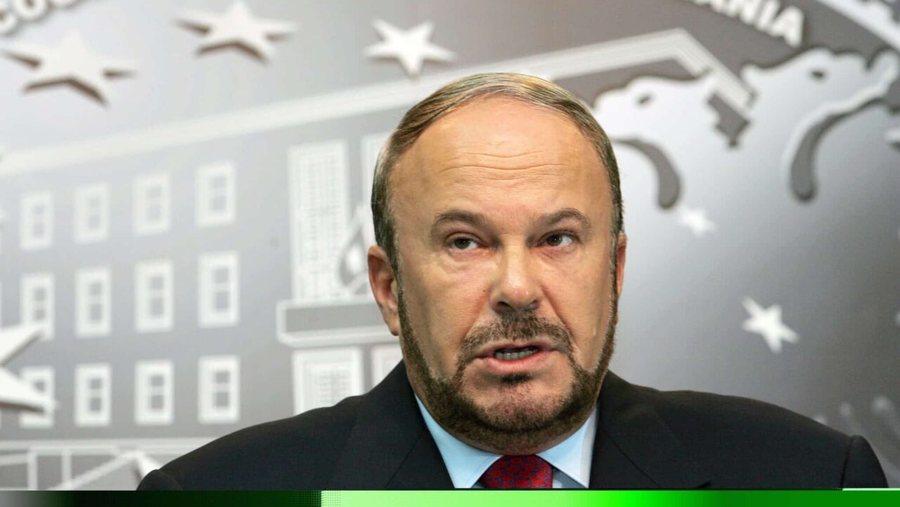
Even while imprisoned, Fatos Nano fought his political battles with his party, imposing change from prison.
The only big difference between Fatos Nano and every other Albanian politician is that unlike the others, he ran away.
He is the first transition politician to introduce the culture of escape into Albanian politics. From February 1991 to June 1991, he fled from two governments, paving the way for and giving votes to two other joint governments with the still untested DP: the Bufi–Pashko government and the caretaker government of Ylli Bufi–Vilson Ahmetaj.
So, within the first 15 months of pluralism, thanks to Fatos Nano, Albania changed five governments, including the last one of Adil Çarçani where Fatos Nano became Secretary General.
No politician of the past 35 years would do this and would not show this dimension of tolerance, overthrowing governments every three months without serious consequences either in terms of human lives or social conflicts.
Unlike the political culture that Nano introduced into Albanian politics in 1992, the DP, which took power in March 1992 and lost it in July 1992 in the local elections, responded to the decline in popular trust with the arrest of Fatos Nano.
So, if the former responded to the loss of popular support by overthrowing his own governments and building joint governments, Sali Berisha responded by arresting his opponent.
Even while imprisoned, Fatos Nano fought his political battles with his party, imposing change from prison.
In 1998, after the murder of Azem Hajdari, although he was accused as the perpetrator, he actually did not flee because he was guilty, but because he was responsible as Prime Minister of Albania for the murder of an opposition political actor.
So, he fled because he couldn't save Azem from Berisha, while Berisha killed four people in 2011 to stay in power as "the strong one who kills."
Even though he had the votes and support to be re-elected, he gave the government to Pandeli Majko and Ilir Meta, both prime ministers twice each, for five years, while Fatos Nano continued as party leader.
In 2002, when he returned as prime minister until 2005, he initiated several transformative reforms in the economy, but lost the battle with corruption in administration and governance, and thanks to overconfidence, he lost the 2005 elections.
After losing the elections, he had every chance to remain at the helm of the SP again. But he left. He left and did not appoint a successor.
The Socialist Party was taken over by an ambitious young man, Edi Rama, who grew up on his own two feet, and the Socialists deserved to accept him.
Fatos Nano retired from politics at a little over 52 years old, the same age Sali Berisha was in 1997 when the people overthrew him in an uprising.
From that day until today, Fatos Nano consciously left politics and never got involved in politics again.
From 1997 to the present, Sali Berisha has left and returned from power and the party, still remaining at the helm as its great hostage-taker.
Just make this comparison to understand what honor Fatos Nano did to the SP by leaving and letting it grow on its own, and what damage Sali Berisha did to the DP by not leaving and not letting it grow outside of his shadow.
Both left power at the age of 52, one in 1997 and the other in 2005.
Sali Berisha is turning eighty-something without ever leaving, while he is going to heaven just because he knew how to leave.
And this is the honor that socialists should never forget for Fatos Nano.
Neither does Albania, which still doesn't have a second like this to tell itself "enough" when it loses.





Lini një Përgjigje