


 Shkruar nga Denis Dyrnjaja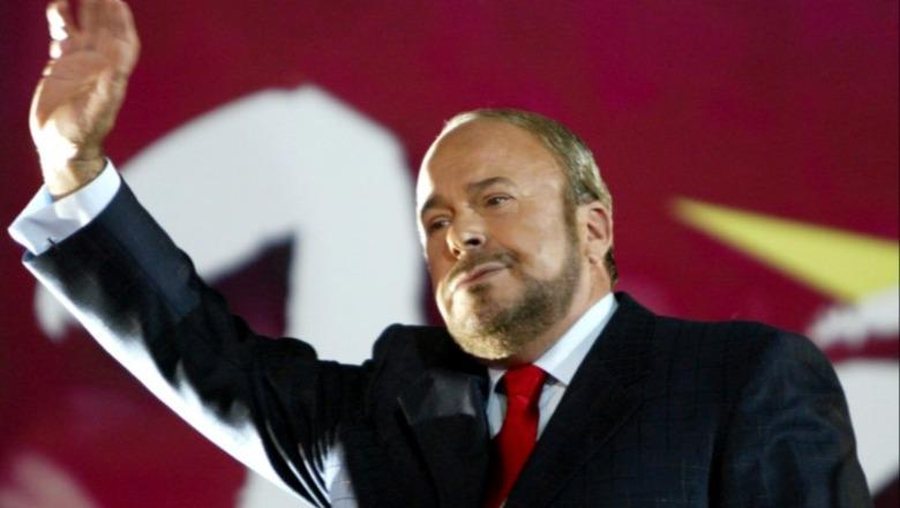
But the shadows that follow his figure are just as significant. Nano was often perceived as a leader locked in his own elitism, more a philosopher of power than a reformer and executor of it.
In the political history of post-communist Albania, few figures have sparked as much debate as Fatos Nano. Founder of the Socialist Party and several-time prime minister, he remains one of the architects of the political system we have today, a system that simultaneously carries the hopes and deformations of transition.
His career is a mixed mirror, with light that cannot be unseen and shadows that cannot be hidden.
Fatos Nano's brilliance lies in his ability to create a real political alternative to Sali Berisha's rule in the 1990s and 1997s. He was one of the few who brought a rational, liberal, and measured discourse to a polarized and emotionally charged political climate.
The transformation of the Labor Party into the Socialist Party was an important act for political life, an attempt to integrate the Albanian left closer to European models, and why this never happened then or today. Nano also brought an intellectual and urban spirit to politics, creating a contrast to the folklorism and harshness of politics of the early years of democracy.
But the shadows that follow his figure are just as significant. Nano was often perceived as a leader locked in his own elitism, more a philosopher of power than a reformer and executor of it. He was dogmatic, but not a worker in the sense of real commitment to practical/state engagement.
During his government, efforts at modernization were replaced by political compromises and clientelism. Instead of a clear project for the rule of law, internal party balances and bargaining for power prevailed. In this sense, Nano failed to free the Socialist Party from the logic of transition; on the contrary, he institutionalized it as part of a system where rotation occurred, but change did not.
Beyond the personal political nostalgia of those who knew him and the travelers and admirers who followed him and fanatically preserve him in their memory even today, his figure remains contradictory even today. A man with a deep intellectual formation, but often with distance from social reality, a leader who talked about reforms, but who rarely imposed them, a politician who knew how to manage crises, but often avoided them. In the end, his legacy is that of a politician who could survive, but not always transform. He is the most typical product of a transition that produced strong leaders, who created weak institutions.
Whether Fatos Nano will be remembered as the architect of the modern left or as a symbol of its lost idealism remains a matter of interpretation. But one thing is clear, the light/shadows in his career are not two separate pages, they are part of the same story that still influences Albanian politics today, in different forms, but in the same content.





Lini një Përgjigje