


 Shkruar nga Pamfleti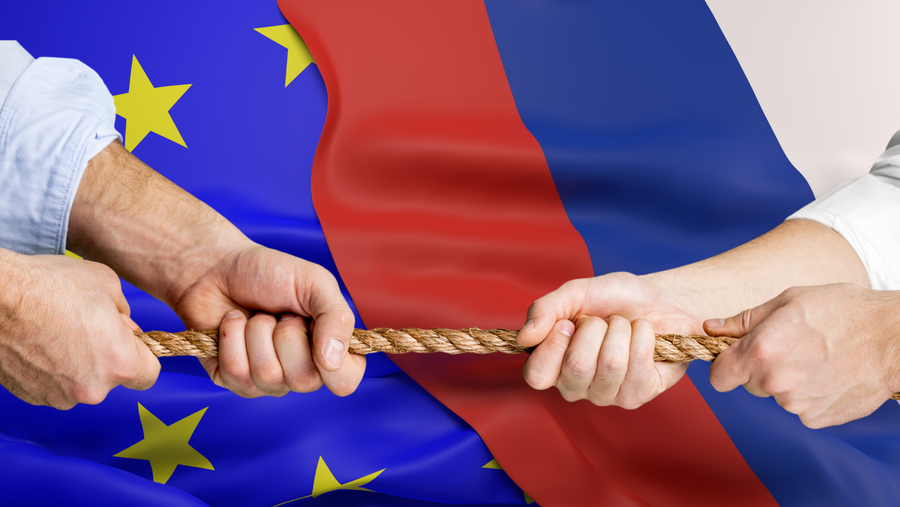
Peace leading to disaster: Moscow is planning the continent after Ukraine...
Do the real conditions, military or diplomatic, exist today for a just peace in Ukraine, a peace that restores the principles of international law? Most likely not.
Donald Trump is managing an already grave situation in an unclear and worrying way, which was built on the accumulated mistakes of the last two decades: Europe surrendered to Putin (with Angela Merkel at the helm), and three American presidents who failed to curb Russian aggression: Bush, Obama, and Biden.
If we accept this cold reality, then we must also accept that any ceasefire or temporary peace, if it happens, will require serious concessions to the aggressor. This means that Europe must prepare for the next phase: Putin’s plans after Ukraine. For if the Kremlin manages to get even half of what it wants, the message is clear, crime is rewarded, and Russia’s appetite for expansion will seek new targets. At this point, the question arises: how will Europe be protected?
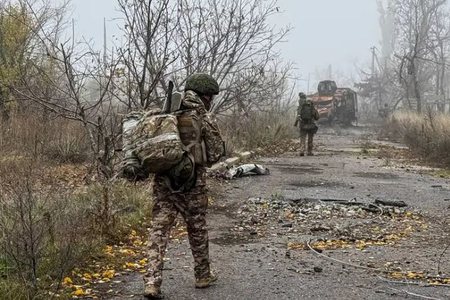
In the summer of 2025, NATO Secretary General Mark Rutte warned that Russia could be ready to use force against Europe within five years. He stressed that the West is not facing a hypothetical, but a “known future,” a real war scenario that today requires concrete planning. Moscow openly discusses it, Russian generals are preparing, and their doctrines are not limited to small or “special” operations, but include a large-scale, potentially continental war against NATO and its allies. Analysts Florence Gaub and Andrew Monaghan, in the study “How Russia sees the next war,” emphasize that Russia sees the conflict as a long-term process, where the state mobilizes all physical and spiritual resources to achieve strategic objectives.
On the other hand, the West has failed to read Putin before. The 2008 invasion of Georgia was downplayed by Bush, the 2014 annexation of Crimea was downplayed by Obama, while Biden, on the eve of the 2022 invasion, emphasized direct US-NATO non-intervention so much that his message was interpreted by the Kremlin as tolerance. Europe, especially Germany, continued to prop up the Russian economy and indirectly finance its military machine for years. Russia’s ability to withstand sanctions was also underestimated, and the illusion that Xi Jinping would play a stabilizing role was nurtured.
After a bad peace in Ukraine, Europe risks getting stuck in predetermined scenarios, such as the invasion of the Baltic states within 36-60 hours or massive drone attacks, forgetting that Russia is planning even broader options, including open conflict across the continent, even an Indo-Pacific dimension.
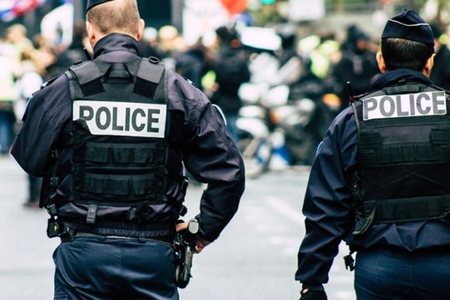
Meanwhile in Europe, even in countries with a military tradition, the topic of defense causes rejection and panic. The harsh political and public reaction in France, after the statement of General Fabien Mandon that the country must be ready to accept human losses and economic sacrifices, shows the gap between those who understand the reality of the danger and civil society that does not want to hear these words. The fact that the French government rushed to calm public opinion by insisting that “our children will not go to Ukraine” shows in itself the cultural crisis of Europe: a continent that has turned the army from an indispensable tool of security into an evil that must be minimized at all costs. This mentality is also seen in Germany, where Chancellor Merz is facing fierce resistance simply because he proposed the return of compulsory military service.
The French case reveals two major problems in Europe: the lack of synchrony between military elites and citizens, where the military understands the danger but the people do not want to accept it, and the dramatic delays in rebuilding the defense industry and mobilization capacities. It is human that Europeans do not want to think about human losses; but it is equally true that they protest endlessly about much less existential issues, such as the retirement age.
In this situation, the example of the Russian drone industry provides a practical lesson. Despite the failure of the initial war, Russia has rebuilt an aggressive and efficient technological structure. The Rubicon Center, a combat unit, an innovation start-up and a research laboratory, has united scientific research, industry and the army in a shortened chain where any new idea is immediately tested in the field. Automation and robotization are central pillars of the Russian strategy, which aims to reduce the role of humans on the front lines and increase the pace of war through autonomous systems.
Faced with this reality, the West needs an intelligent rearmament: more technology, less bureaucracy; more automated systems, less costly and slow structures of the Cold War era. Human resources are increasingly scarce, demography and culture do not help, so man must be less exposed in the field and machines more present.
If Russian doctrines foresee the use of force within five years, then the question is not whether Europe will have to defend itself, but whether it will manage to be prepared with sufficient means, with clear strategies and with the political will that is clearly lacking today. Without this breakthrough, any bad peace in Ukraine could very quickly turn into the beginning of a larger crisis that will affect the continent itself. / Adapted from “Pamphlet” by “Inside Over”


Kam pas nje maçok shume hileqar ne shtepi dikur. Kur grindej më ndonje maçok tjeter luante rrolin e qyrrsit e frikacakut e kur ai tjetri kujtonte se e vuri perpara e nuk e kishte mendjen maçoku I’m I poshter i vervitej ne pabesi dhe e fitonte betejen. Keta Europianet janë shume hileqare e luajne lojen e frikacakut e duan t’i nxjerrin geshtenjat me duart sllaveve të tjerë. Po që se duan të behen bashke e hane të gjalle rusin e me kullat e Kremlinit do kruajne mishrat e ruseve nga dhembet. Mos harroni se tre here I kane vajtur rusit ne dyert e Moskes nje nga nje Britannia, Franca, Gjermania. Mos harroni se Gjermania Po luftonte me tere boten kur i vajti deri afer Moskes. Po luhet nje loje e madhe e mjere ne bretbocat e vogla qe do na shkelin më kembe buajte e medhenj kur të perplasen.
Sa lule të bukura në fushë na kanë çelur.... Kanë shkuar edhe bashkë Perëndimi në dyert e Moskës në kohën e Leninit dhe kanë marrë hurin në bythë.. Nuk e ke idenë fare se çfarë thua,sepse nuk munden rusët në tokën e tyre o Arab! Europa është një bashkim nga frika,jo frika nga Rusia apo kushdo tjetër por frikë nga njëri tjetri.. Pastaj sa i takon kruarjes së mishit të rusëve nga dhëmbët mund të marrësh parasysh se një bombë atomike perëndimore në Moskë e ndez luftën,një bombë atomike ruse në Londër, Paris apo Berlin e shuan luftën. Kujton ti se do qëndronte dot në këmbë çdo qeveri në Europë pas kësaj!? Çfarë i ofron botës Europa sot? Ka dështuar