


 Shkruar nga Cesare Martinetti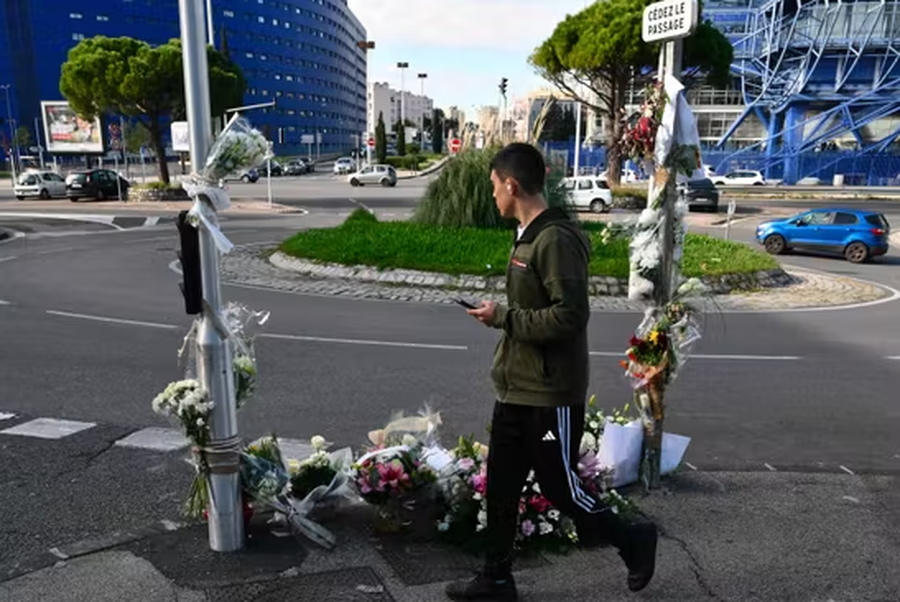
A young man's book that exposes the drug mafia in Marseille is shaking France. Two brothers killed, the second for revenge. President Macron accuses the bourgeoisie of feeding Algerian gangs. The dealer, the drug distributor, has become the answer where the state has withdrawn, where public medicine no longer exists, where the social structure of associations has been progressively dismantled...
See Marseille and then die! You can die of magic, of the dazzling beauty of the sea and the light that emanates from the Vieux Port (Old Port). But you can also die of drugs, because here is the largest drug market in Europe: there is cocaine for work, for a night out, cannabis for relaxation, MDMA for sex and benzodiazepines to cope with everyday life.
You can die from bullets, both targeted and blank. Police stations in the neighborhoods are closed, drug traffickers, very young in age, have replaced the agents who managed the traffic, dominated by bosses, almost all of Algerian origin, who cultivate dreams of glory by calling themselves Vito Corleone or Pablo Escobar.
The Marseille criminal clan is bringing about what is called the “Mexicanization” of France’s second largest city. President Emmanuel Macron is declaring drug trafficking a national emergency, and at the same time is attacking the “bourgeoisie of the city center,” that is, the elite of the city centers (who are supposed to be the heart of his electorate): “We cannot have a real debate on the fight against drug trafficking if we forget that the drug market thrives because there are people who buy and use it…”.
A protest march was held last Saturday. It started from the site of the latest murder, Rond-Point Claude Darcy, in the city center. It was there, on November 13, at 2:30 p.m., that 20-year-old Medi Kesaçi was killed with 6 bullets in the back and chest.
He had no criminal record, absolutely nothing. In fact, he was applying to join the police force. A hitman killed him from the passenger seat of a scooter. It was a professional act. Not a single bullet was fired blankly, every bullet found at the scene corresponded to a hole in the body of poor Medi.
And yet, it was a seemingly banal murder, given the daily life of Marseille, where until 2023, similar attacks were carried out at least once a week. In these two years or so, it is said that the war between the two strongest clans has ended in favor of the DZ Mafia led by the Algerian Medi Laribi, the boss of the northern neighborhoods, and also known by the nickname "Tik".
But there is nothing banal about the murder of young Kesaçi, because his 22-year-old brother, Amin Kesaçi, published an extraordinary book on October 2 titled "Marseille essuie des larmes" (Marseille, dry the tears), with the subtitle: Living and dying in the land of the drug mafia.
A passionate and vociferous denunciation from a committed young man who has suffered greatly from the lack of security in Marseille: in 2020, his older brother, Brahim, to whom the book is dedicated, was murdered. Amin was only 17 at the time, and had grown up like his siblings in the Frais-Vallon neighborhood.
His family is Algerian, his father Oran, his mother Wasila, married by marriage as is still customary in this community. Theirs is a family bond favored by the special relationship between France and its most emblematic colony.
The family has two other daughters, the eldest a career soldier. They are good, hardworking people. Their father has worked all his life in construction, while their mother runs a restaurant alone. The children attended high school in another, quieter area.
The only "black sheep" was Brahimi, problematic since he was a teenager, arrested several times by the police. The retreat from life as a drug trafficker continued until the already written epilogue: a settling of scores, with his body burned in an abandoned car.
In the wild world of Marseille, there is a practice called “barbeque”. Brahimi was 22 years old, the same age as Amini is today. But he and his mother refuse to accept the fate of such families, accustomed to bowing their heads, in a state of mind where pain is mixed with shame and of course with fear.
Amin founded an association to give voice to the invisible victims of this massacre. The association, called "Conscience", is based in an abandoned school in Frais-Vallon, the neighborhood where they live, and is gradually bringing together the "orphaned" mothers of their children.
The story of these last 5 years alternates between pain and commitment. But they move forward. In other cities across France, "antennae" are being activated on this movement, because drug trafficking is an unstoppable "parasite", a disaster, an epidemic for which there is no vaccine.
Amin's book immediately caused a stir. It is a powerful indictment that reflects the admirable determination of this young man. On YouTube, there are even images of a respectful meeting between Amin and President Macron during a visit to Marseille 5 years ago.
After Mediu's murder, the president called Amin. But we are back to the usual formalities of protocol, meetings of ministers, undersecretaries, prefects and sub-prefects. The anger is towards the bourgeoisie and their children, who line up in the evenings to get supplies from drug dealers.
A business worth 500,000 euros a day, according to the calculations of another recently published book, Inside DZ Mafia, by veteran Marseille crime journalist Jean-Michel Verne. Meanwhile, the grim reality of the neighborhoods remains, as described by Amin: For 40 years, public services have been dismantled in the name of budget savings, welfare has been transformed into a product to be sold, social ties have become a cost and listening to citizens a luxury.
The most vulnerable are left to their fate, and in this vacuum, drugs are widespread: they calm, they give energy, they distract, they allow anyone to face everyday life. The dealer, the drug distributor, has become the answer where the state has withdrawn, where public medicine no longer exists, where the social structure of associations has been progressively dismantled. Drug trafficking is profitable because the world has become unlivable.
Just 40 days after the publication of his book, the Marseille mafia responded to Amin by killing his younger and innocent brother, the one who, among other things, was not that involved in what Amin was doing. In an interview that can also be found on YouTube, Mediu had expressed what now seems like a dramatic prophecy: “Marseille is made of blood!” But Amin does not back down. “They will not be able to shut my mouth!” he wrote in an article in “Le Monde”./ Prepared by Pamfleti



Lini një Përgjigje