


 Shkruar nga Pamfleti
These countries rely on a mixture of laws, customs, court decisions, and established conventions rather than a single codified document...
When we think of constitutions, we usually imagine a formal, written document that outlines a country's legal principles and rights. However, some countries have an "unwritten constitution."
These countries rely on a mixture of laws, customs, court decisions, and conventions set forth instead of a single codified document. Here are 10 nations that use an unwritten or partially written constitution:
1. Great Britain
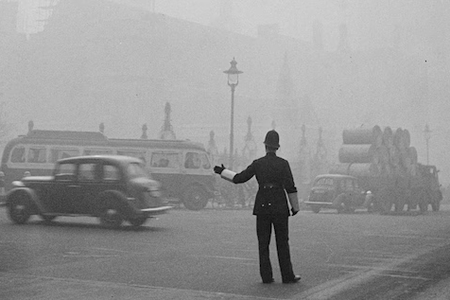
The United Kingdom is known for its unwritten constitution. Instead of a single formal document, its constitution is based on statutes, common law, and conventions, as well as key historical documents such as the Magna Carta and the 1689 Bill of Rights.
Parliament has a central role in the system, allowing for changes to be made through new laws or reforms. Unlike countries that had revolutions or crises that led to
a written constitution, Britain never faced a moment that required it. This approach also supports flexibility, as the British government structure is designed to adapt to circumstances, rather than follow strict rules.
2. Israel
Israel uses a set of basic laws passed by the Knesset (its parliament), which serve as a constitution. Rather than a codified document, these laws define the governmental structure, citizens' rights, and judicial procedures. Israel's Basic Laws can be amended or added to, allowing its constitution to remain dynamic and adaptable.
3. New Zealand
The functioning of New Zealand is based on the Constitution Act 1986, the Treaty of Waitangi, customary law and various conventions. This framework provides flexibility and allows for adaptation to political and social changes over time. Judicial reviews also play an important role in the interpretation of constitutional norms.
4. Saudi Arabia
Saudi Arabia's legal system is based primarily on Islamic Sharia law, which, along with royal decrees, underpins its governance. While the country has some codified laws, it does not have a formal written constitution. The Basic Law of Government serves as a guiding document, confirming the central role of the monarchy and setting out the general principles of governance.
5. Canada
Canada has a “partially unwritten” constitution. The main documents are the Constitution Acts of 1867 and 1982. However, many conventions, particularly regarding the roles of the prime minister and cabinet, are unwritten. Canadian law also recognizes historical customs, court decisions, and practices from Britain. This makes its constitutional framework even more flexible.
6. Oman
Like Saudi Arabia, Oman's legal system is based on Islamic Sharia law. Oman has a Basic Statute, which defines governance and succession, but does not have a fully codified constitution. Instead, royal decrees from the Sultan are an important part of the country's governing framework.
7. San Marino
San Marino, one of the smallest republics in the world, does not have a single written constitution. Its system of government dates back to 1600, with unwritten customs, traditional practices, and statutes passed down through the centuries. The Declaration of the Rights of the Citizen acts as a reference, while customary practices dictate governance.
8. Kuwait
Kuwait has a national constitution adopted in 1962. However, some aspects of its governance and law are based on unwritten traditions and practices influenced by Islamic law and monarchy. This dual system allows for flexibility, as these unwritten norms operate alongside the formal constitution, particularly in political processes and governance.
9. Libya
Libya's legal system includes customary law, Islamic principles, and various national laws, but it lacks a written constitution. Although a draft constitution has been proposed, many laws and governance practices are still based on unwritten traditions and norms. This is especially true for local governance and tribal affiliations.
10. Jordan
The country has a written constitution, but many aspects of governance and decision-making are still influenced by unwritten customs, including tribal and royal traditions. The Jordanian king retains considerable power, and some constitutional practices are guided by tradition and unwritten rules, leading to a semi-flexible approach to governance./ Adapted from "Pamphlet" by "Vanguardngr"






Lini një Përgjigje