


 Shkruar nga Duncan Weldon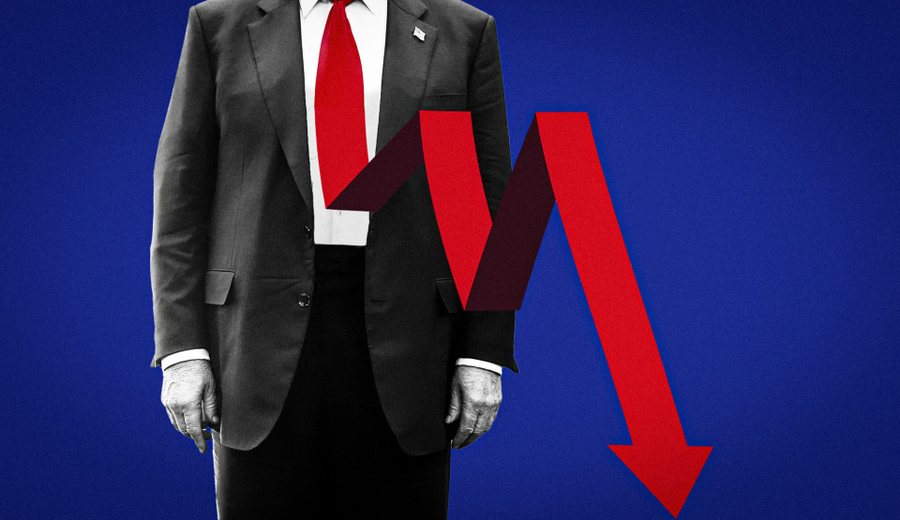
After the 2008 crisis, it took a global effort to get the world economy back on track. But if another catastrophe were to occur, with Trump in power, cooperation would be much more difficult.
Central banks often speak in code, especially when dealing with potentially sensitive issues that affect policy. But it didn't take any special skills in "cryptography" to understand the warnings in the European Central Bank's (ECB) latest Financial Stability Report (FSR).
The monetary authority at the heart of the Eurozone warned that the health of the financial system is “being affected by geopolitical stress and energy supply disruptions.” Or, more simply, by US President Donald Trump’s chosen war in the Middle East.
And the ECB didn’t stop there. It added that these trends are “being reinforced by ongoing uncertainty around global trade and international cooperation.” Once again, this was like a neon arrow aimed from the White House.
Rarely, if ever, have the actions of a single man had such a profound impact on the global economy. The closure of the Strait of Hormuz has severely shaken global energy markets, and these shocks will continue even after the strait reopens.
As the ECB report makes clear, the immediate effect will be higher inflation and lower economic growth. Added to this are significantly higher interest rates.
None of this is good news for the economy, but does it also pose a risk to the stability of the entire financial system?
The ECB worries that it will. A major concern is that investors - or at least those in the stock market - are being too complacent in the face of real risks stemming from the war. Energy prices, although below recent peaks, remain about a third higher than at the end of February.
Around the world, expectations of higher inflation have pushed down bond prices and raised their yields (or interest rates). This makes borrowing more expensive for individuals, businesses, and governments.
Yet stock prices continue to reach new highs. Perhaps, as the ECB suggests, a little too high. The longer the Straits remain closed, the greater the risk that owners of these stocks will reconsider their optimistic assumptions and start selling.
If that happens, stock markets could fall sharply. But while stock markets get the most attention — and President Trump and his officials are always ready to celebrate new records — it is debt markets that are giving the ECB the most sleepless nights.
In particular, her alarm focuses on the outlook for the US private equity market. Private equity, where non-bank investment funds lend to companies as an alternative to traditional banks, was a small sector two decades ago but has grown explosively since the 2007-2009 financial crisis, particularly in the US.
This somewhat obscure market is now valued at between $2-3 trillion and, before the US and Israel launched their bombing campaign, was at the center of investor concerns for 2026.
Several high-profile bankruptcies in late 2025 led Jamie Dimon, the longtime CEO of JP Morgan, to warn: "When you see one cockroach somewhere, there are probably others around!"
Fears that even more private credit could prove problematic were compounded by new concerns that advances in artificial intelligence could undermine the business model of many software companies, which had been big beneficiaries of private credit in recent years.
This prompted a wave of investors trying to withdraw their funds in the first quarter of this year. In response, many of these funds activated “lock-up” procedures, limiting withdrawals to 5 percent of the fund’s value per year.
By slowing economic growth and increasing costs, the US-Iran war is likely to hit the profitability of companies outside the energy sector, while simultaneously raising the cost of borrowing.
This could expose more of the “cockroaches” mentioned by Dimon and lead to bankruptcies or defaults by companies that have borrowed from private credit funds. The ECB thinks this would be more problematic for US markets than for European ones.
But she is not at all calm about the situation in Europe either. In European debt markets, the biggest problem is government borrowing. With high levels of public debt, the need for a fiscal response to the energy price shock could significantly increase borrowing costs for governments.
If a real financial shock were to occur - whether from stock markets, private credit or public debt - a clear lesson from the 2007-2009 crisis is that global cooperation is essential to weather it.
But, as the ECB warns, the Trump White House, with its unstable tariff policies, harsh rhetoric, and tendency to enter into conflicts with traditional allies, makes such cooperation much more difficult.
If a new global economic crisis breaks out, its management will be much more complicated./ Adapted from "Pamphlet" by "The New World"



Lini një Përgjigje