


 Shkruar nga Pamfleti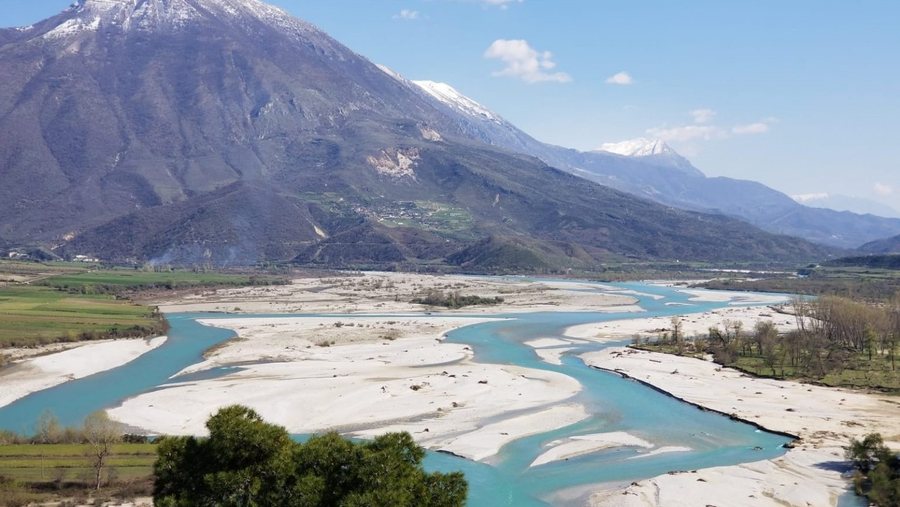
Near the town of Selenica, on the banks of the Vjosa River, residents used to go to the beach until a decade ago. Not anymore! The pebbled riverbed is now covered with a thick layer of clay with bitumen residue and has been transformed into an industrial landfill.
The Vjosa River, known as “the last wild river in Europe,” was declared a National Park two years ago, following a years-long international campaign that brought together local activists and Hollywood actors. Although the level of legal protection has increased, its course continues to be threatened by pollution.
"All these minerals are highly loaded with chemicals, that is, chemical substances that deteriorate water quality ," Olsi Nika told BIRN.
"There are substances that are harmful to flora and fauna, but there are also other substances called components that persist and do not decompose," he added, explaining that "they not only pollute the flora and fauna there, but through food webs they reach our tables, our tissues."
The scenes on the ground are dramatic, while environmental protection institutions speak of the quality within the norms of rivers that continue to be polluted.
However, in a written response, the National Environmental Agency told BIRN that, based on the annual environmental report, river waters are assessed to be below the limits set in national standards and do not present pollution.
"Regarding the total alpha and beta radioactivity values of the waters of the Shkumbin, Drin and Vjosa rivers, they are assessed to be below the values set in national standards and do not represent pollution," writes the NEA.
Rivers in Albania constitute one of the country's most important natural resources, with a dense network of streams descending from mountainous areas to the coastal lowlands. Unlike the rest of Europe, many of Albania's rivers still retain wild segments, creating rare natural habitats and ecosystems.
However, they are under constant pressure from mining activities, industrial waste, hydrotechnical interventions, and poor waste management, making their preservation a significant environmental challenge in Albania.
Similar to the Vjosa, the Fan River winds through valleys and mountain gorges and reaches the town of Fushë-Arrëz in crystal clear water. It is there that it joins the red stream that comes from the mining area and its flow changes color from pollution.
River pollution is not always a consequence of active mining, but also of old inherited mineral deposits.
Në Kukës, pranë urës së Leshnicës, pluhuri mineral dhe mbetjet krijojnë një cikël të përhershëm ndotjeje që përfundon në lumin Drin. Situatë e ngjashme është edhe në Librazhd, ku mbetjet e vjetra minerare buzë Shkumbinit, pas çdo shiu, përfundojnë në shtratin e lumit.
Ekspertët ngrenë dyshime mbi metodologjinë e institucioneve për matjen e ndotjes së lumenjve.
“Nëse AKM thotë p.sh. se Vjosa ose Fani është me një cilësi të mirë të ujit apo shumë të mirë, i referohet gjithë gjatësisë së Vjosës apo të Fanit. Por këto ndotje janë pikësore, të cilat shndërrohen në difuze, në të shpërndara në disa qindra metra apo deri në katër kilometra dhe pastaj uji vetëpastrohet", shpjegoi Nika.
Drejtuesi i Eco Albania këmbëngul se dëmi që shkakton ndotja nis pikësëpari te komunitetet që jetojnë pranë zonave ku ushtrojnë aktivitetin kompanitë minerare.
“Zinxhiri është i thjeshtë: mbetjet apo kimikatet apo mbetjet e dëmshme depozitohen në ujë, nga uji fillojnë te filtratorët që janë të parët, pra nga algat, nga makroinvertebrorët mbi të cilët ushqehen peshqit, shpendët dhe pastaj me të cilët ushqehemi edhe ne", tha Nika.
“Ky është problemi kryesor i ndotësve: jo vetëm që dëmtojnë zonën, habitatet, atë pjesën ku shkarkohen, por përbëjnë një rrezikshmëri të lartë për shëndetin e njeriut, fillimisht të komunitetit të zonave afër tyre që shfrytëzojnë këto burime natyrore", theksoi ai.
Agjencia Kombëtare e Mjedisit sqaron se grupet e saj të inspektimit kanë marrë masa administrative, duke vendosur gjoba dhe duke kërkuar pezullim aktiviteti për disa kompani minerare, përfshirë ato në Selenicë dhe Fushë-Arrëz.
“Ndotja e mjedisit nuk pret. Pra nuk pret një vendim të AKM apo institucioneve të tjera ligjzbatuese, të cilat jo vetëm t’u pezullojnë dhe t’u heqin licencat; pra duhet patjetër të ndërhyjnë me një forcë të madhe për sa i përket veprimtarisë së këtyre kompanive ndotëse të mjedisit", thotë eksperti mjedisor Edi Tuka.
Të njëjtin shqetësim ngre edhe eksperti i mjedisit Olsi Nika, i cili thekson se sanksionet duhet të jenë më të larta në mënyrë që të ndikojnë realisht në sjelljen e kompanive minerare.
“Një milion lekë të vjetra gjobë për kompani që gjeneron disa milionë euro në ditë nuk është fare problem,” tha ai.
Mungesa e një reagimi vendimtar nga institucionet përgjegjëse për ndalimin e ndotjes ka prodhuar apati dhe heshtje në komunitetet e prekura.
“Në rast se komuniteti nuk ka në krah institucionet që zbatojnë ligjin, por i ka përballë – dhe përballë të keqes që është ndotja mjedisore, normalisht komuniteti e humb forcën dhe arsyen për të vazhduar në kauzën për mbrojtjen e mjedisit", tha Tuka.
Në mungesë të kësaj mbështetjeje nga institucionet, komunitetet e prekura nga ndotja duket se nuk kanë rrugë tjetër veçse të heshtin dhe të përpiqen të bëjnë kompromiset e vogla, aq sa iu ofron kompania ndotëse.
"They can withstand both the pressure of the money they can receive from companies, and the pressure of the 'strongmen' who represent or protect the interests of these companies if they see a reaction from the state. But when they see no reaction from the state, it is easier for them to compromise," said Nika.
While authorities insist that official monitoring shows waters within norms and that administrative measures have been taken against companies, footage from the ground shows that rivers remain exposed to ongoing pollution, while the impact on natural habitats and the health of residents is difficult to ignore.
Environmental experts are critical not only of the KTA, but also of law enforcement agencies. According to Mihallaq Qirjo, executive director of REC Albania, the number of criminal offenses related to environmental crime that are prosecuted by the police is very low, only 17% of all criminal offenses affecting land, water and air.
"If we go to the prosecutor's office, the number drops significantly: the average is 0.4% of all offenses handled by the prosecution are in this criminal offense that affects the air, water and land ," he said, adding that in most cases, investigations are suspended due to the absence of perpetrators of the crime, or dismissed due to the lack of evidence collected in the field.
"In court, we have not found any cases of conviction due to pollution of water sources," explained Qirjo, adding that this situation stems from the 'lack of human and technical capacities to investigate environmental crime in depth'./ Reporter.al




Lini një Përgjigje