


 Shkruar nga Pamfleti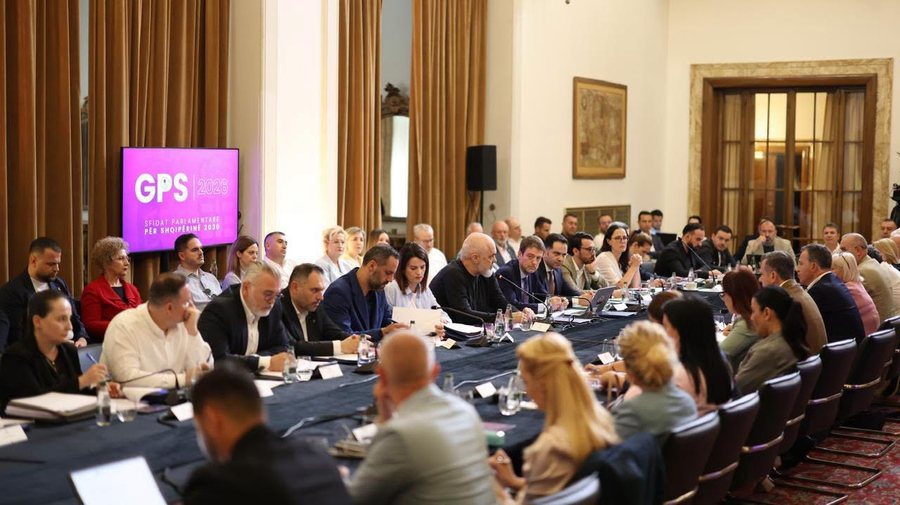
Pas urdhrit të Ramës për më shumë aktivitet në rrjetet sociale, socialistët kalojnë nga sulmi ndaj protestuesve te sulmi ndaj medias amerikane
Kur Edi Rama mblodhi deputetët dhe ministrat në Pallatin e Brigadave, mes shqetësimeve kryesore nuk ishte vetëm protesta që prej 24 ditësh zhvillohet para Kryeministrisë, por edhe jehona që ajo po merrte në rrjetet sociale.
Kryeministri u ankua hapur se Partia Socialiste ishte keq me “algoritmin”, ndërsa kërkoi nga deputetët, ministrat dhe strukturat e partisë më shumë angazhim publik për t’iu kundërvënë protestës.
Pas kësaj erdhi sulmi i koordinuar ndaj Dritan Goxhajt. Sot duket se ka nisur faza e dytë. Në shënjestër këtë herë ka përfunduar CNN.
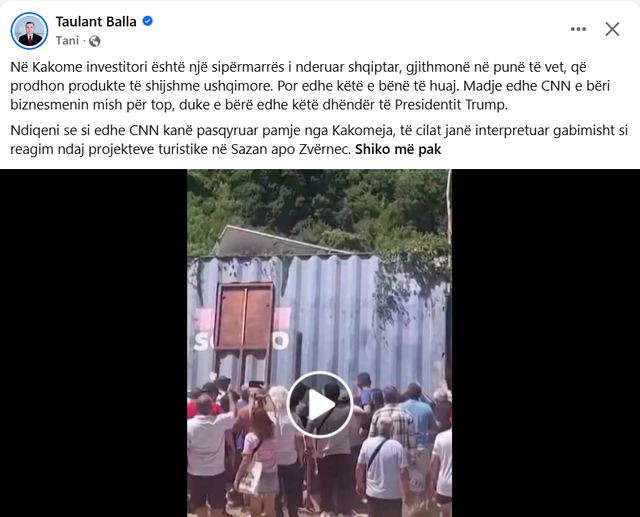
Gjiganti amerikan i medias publikoi pamje nga protesta e zhvilluar në Kakome, ku qytetarët rrëzuan një portë dhe mur rrethues që bllokonte hyrjen në plazh. Në raportimin e saj, CNN e lidhi ngjarjen me protestat kundër investimeve të Jared Kushner në Shqipëri.
Në fakt, protesta e Kakomes nuk kishte lidhje me Zvërnecin apo me investimet e Kushnerit dhe në këtë pikë CNN duket se ka gabuar.
Por ajo që bie në sy është reagimi i menjëhershëm dhe pothuajse uniform i disa eksponentëve socialistë, të cilët nuk janë mjaftuar të korrigjojnë pasaktësinë, por kanë kaluar në ofensivë kundër protestuesve dhe kundër atyre që, sipas tyre, po dëmtojnë imazhin e Shqipërisë jashtë vendit.

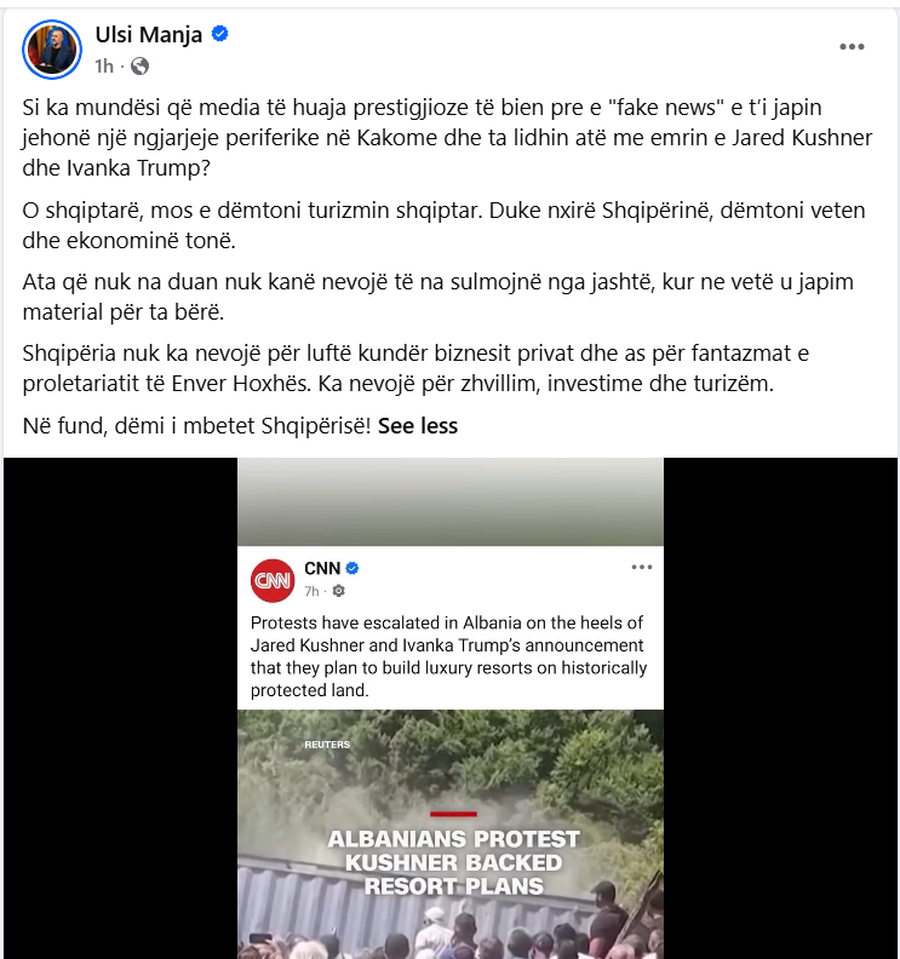
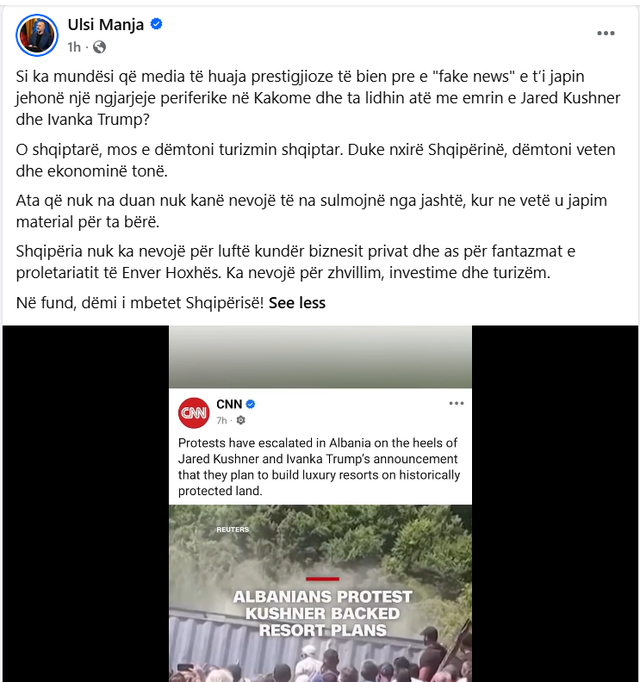
Një nga reagimet më të forta ka ardhur nga deputeti Ulsi Manja: “Si ka mundësi që media të huaja prestigjioze të bien pre e ‘fake news’ e t’i japin jehonë një ngjarjeje periferike në Kakome dhe ta lidhin atë me emrin e Jared Kushner dhe Ivanka Trump? O shqiptarë, mos e dëmtoni turizmin shqiptar. Duke nxirë Shqipërinë, dëmtoni veten dhe ekonominë tonë.
Ata që nuk na duan nuk kanë nevojë të na sulmojnë nga jashtë, kur ne vetë u japim material për ta bërë. Shqipëria nuk ka nevojë për luftë kundër biznesit privat dhe as për fantazmat e proletariatit të Enver Hoxhës. Ka nevojë për zhvillim, investime dhe turizëm. Në fund, dëmi i mbetet Shqipërisë!”.
Reagime të ngjashme kanë ardhur edhe nga eksponentë të tjerë të mazhorancës, duke krijuar përshtypjen se pas alarmit të Ramës për “algoritmin”, Partia Socialiste ka kaluar në një fushatë të organizuar në rrjetet sociale.
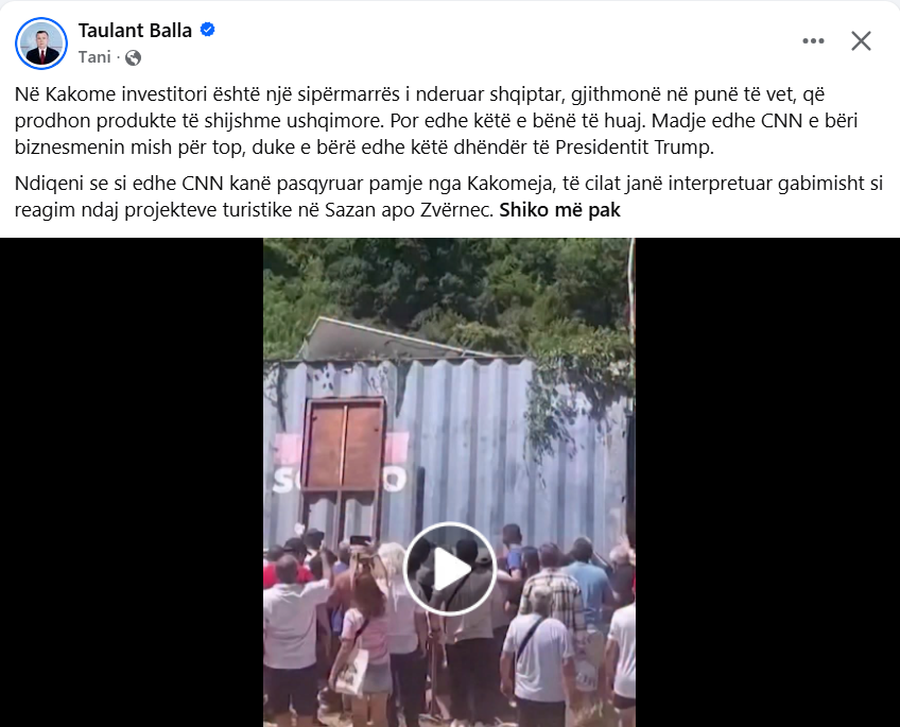
Nëse dje objektivi ishte Dritan Goxhaj, sot duket se objektivi është CNN. Kjo tregon se protesta po prodhon efekt politik dhe se shqetësimi i mazhorancës nuk lidhet më vetëm me njerëzit që dalin në shesh, por edhe me faktin se jehona e tyre po kalon kufijtë e Shqipërisë.
Ndaj edhe “lufta e algoritmit”, e shpallur fillimisht brenda mureve të Pallatit të Brigadave, duket se po zgjerohet çdo ditë: nga protestuesit, te analistët, te Dritan Goxhaj dhe tani te një nga mediat më të mëdha në botë. /Pamfleti


The Prime Minister, Private Income, and the Question of Public Trust A prime minister is entitled to have a life beyond politics. He may have written books, produced art, sold paintings, received royalties, or earned income from work done before entering office. None of that is, in itself, illegitimate. But when the person in question holds the highest executive office in the country, large private income is no longer a purely private matter. It becomes a matter of public trust. According to the 2025 declaration of private interests, Prime Minister Edi Rama reported around 3.4 million Albanian lek (approximately €32,000 or $35,000) in salary from his official position, and more than 10.9 million lek in other income (approximately €103,000 or $112,000). In simple terms, his other income was more than three times higher than the salary paid to him by the state. That is where the public question begins. The issue is not merely whether the money is legal. The deeper issue is whether such income creates a vulnerability. Who paid it? For what? Under what conditions? At what price? And could any of those people, companies, or networks have an interest in government decisions? If a private citizen sells a painting, it is a private transaction. If a prime minister sells a painting, it is no longer that simple. The buyer may not be buying only the artwork. He may also be buying proximity, access, gratitude, recognition, or the appearance of influence. Even if none of that happens, the possibility itself is enough to raise concern. A senior public official must not only avoid being captured by private interests. He must also avoid appearing capturable. He must not only stay outside a formal conflict of interest. He must also remove the circumstances that could reasonably create suspicion in the eyes of the public. That is why declaring the amount is not enough. Citizens do not need only to know how much money was received. They have a right to know where it came from, who paid it, how the value was determined, whether the transaction was transparent, and whether the buyer has any connection to public contracts, construction permits, strategic investments, public land, tax decisions, or government policy. This is not an accusation. It is a demand for clarity. In a country where the government decides on land, construction, public assets, taxes, concessions, permits, and strategic projects, the private income of the prime minister cannot be treated as a minor personal detail. It goes to the heart of democratic accountability. A prime minister may say that the money came from art, books, or royalties. Very well. Then the answer should be complete. Who bought the works? At what price? Through what channel? Was the valuation independent? Were the buyers people with no interest in government decisions? Public trust is not protected by saying, “trust me.” It is protected by transparency. The salary of a prime minister is paid by the citizens. When his largest income comes from elsewhere, citizens are entitled to ask a simple and legitimate question: who has the greater financial weight in his life — the public he serves, or the private sources that pay him far more than the state? In a democracy, power must not only declare its wealth. It must prove that it is not dependent on it.