


 Shkruar nga Pamfleti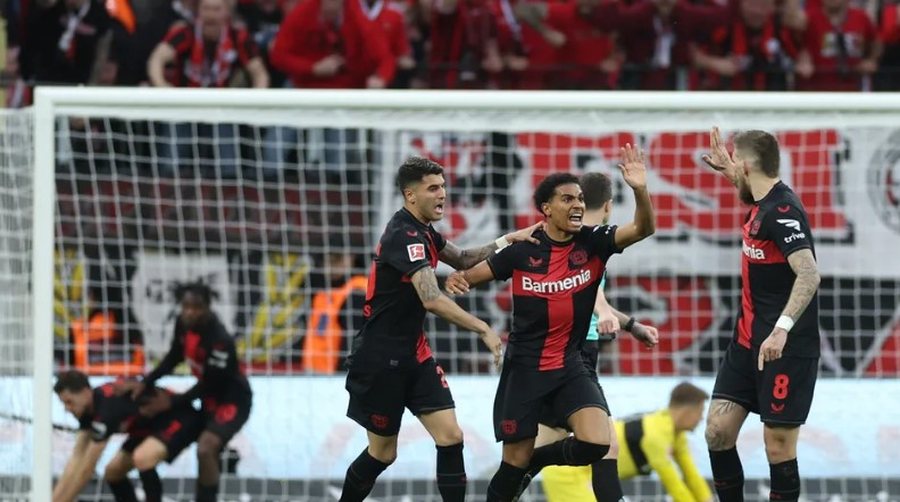
The software collects data through cameras, sensors, and GPS that can accurately track the physical and mental state of players. AI can be very useful not only from an athletic preparation point of view, but also from a technical and sporting one.
Artificial Intelligence is also revolutionizing football, accelerating data analysis and supporting coaches in preventing player injuries. The collaboration between IBM and German team Bayer Leverkusen is just the latest example.
Data collection and analysis is taking on an increasingly central role in top-level football. And in this sense, Artificial Intelligence in football can play a fundamental role. An example of this is the new solution of the German football club Bayer Leverkusen and IBM, one of the leading IT companies in the world.
The collaboration between the two has produced a technology that, thanks to automatic image recognition by AI, makes all those studies that previously required lengthy manual analysis much faster and simpler, creating more time for other things and optimizing the work of analysts, observers and decision-makers, who can then dedicate themselves to more specific and professional processes.
IBM and professional football
IBM has made its “watsonx.ia Studio” technologies available, which enables the creation and adaptation of specific AI models. The “watsonx.ai Runtime” platform reliably integrates AI processes into current work processes.
This allows for faster and more accurate analysis of all match data, as well as player performance. The results of these studies, and all the material in general, can be archived and retrieved in various IBM cloud services. “This platform promotes a data-driven future for professional football, while at the same time making club processes more efficient ,” says Hardi Groger, chief engineer and technical director for IBM’s data software.
AI analytical capabilities
The ability to utilize these solutions guarantees not only optimized data processing, time savings and error reduction, but also the ability to utilize intelligent recognition of various events in the match, without the need for manual selection.
Other major advantages include the flexibility and scalability of the service, as it can be expanded and adapted to the needs of the club. This support benefits both coaches and their staff, as well as those responsible for planning the day-to-day operations of a top-level football team.
The effectiveness of this technology is also confirmed by the manager of Bayer Leverkusen. Mortiz Loks, head of Sports Technologies at the German club, considers himself and his club "pioneers in the use of digital solutions to expand the possibilities of professional football."
He adds that thanks to IBM, the team's analytical capabilities have increased significantly, so such collaborations are key moments on the path towards a future-oriented digitalization of football based on data on key processes.
In other clubs, Artificial Intelligence helps prevent injuries to football players
In addition to Bayer Leverkusen, many top-tier clubs have begun to integrate the use of artificial intelligence technologies to improve the performance of their players. Real Madrid, Manchester City, Bayern Munich, Palmeiras and Flamengo have invested heavily in developing a system capable of preventing injuries.
Using software that analyzes players' physical condition and warns them of increased risk of injury, these clubs monitor their players' health every day, allowing them to stop training earlier and adapt training load or field usage to their specific condition, thus preventing injuries.
The software collects data through cameras, sensors, and GPS that can accurately track the physical and mental state of players. AI can be very useful not only from an athletic preparation point of view, but also from a technical and sporting one.
For example, Liverpool have been using a technology called Tactic AI for several seasons, which is able to predict the outcomes of certain game situations, such as corner kicks. This allows managers to act in advance and identify the best solutions to score a goal.
Through a comparative study of player statistics and skills, Tactic AI suggests which player should receive a pass or attempt a cross to increase their chances of scoring. This is facilitated by the fact that corner kicks, like free kicks and throw-ins, are codified game situations,
Therefore, they are perfectly suited for this type of technology. Then there is the case of Arsenal and their coach, Mikel Arteta, who has publicly admitted to using Artificial Intelligence to prepare matches.
Will AI do the training?
Artificial Intelligence will deal not only with managing specific game situations, but also with finding and determining the best tactical solutions, or with placing players on the field, depending on the opponent and the match.
So by evaluating what is being done and how it can be improved, as the current Arsenal coach, Mikel Arteta, admitted to the media. So, sporting and technological excellence can come together and collaborate to improve the performance of a high-level football team, not only by improving the quality of work and play, but also by strengthening the connection between players, coaches, clubs and internal IT components./ Pamphlet




Lini një Përgjigje