


 Shkruar nga Bernardo Álvarez-Villar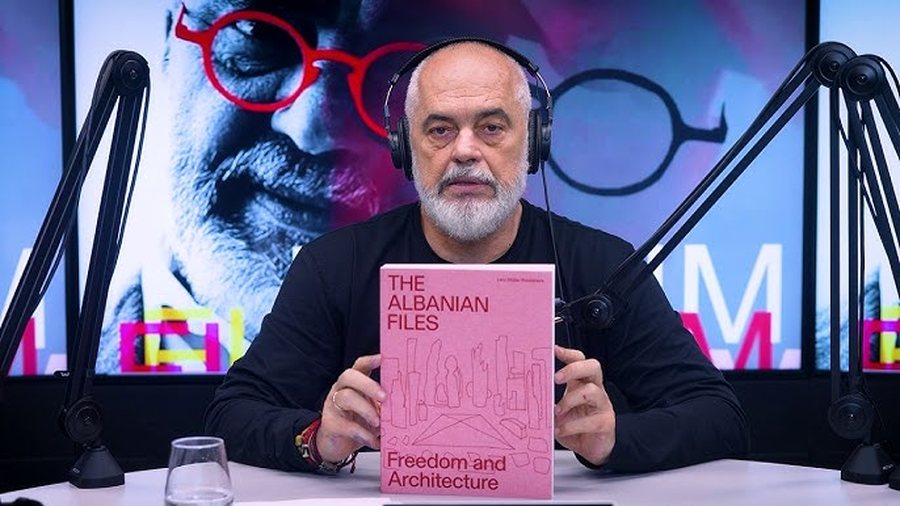
International media: How Edi Rama transformed architecture into an instrument of power
History sometimes takes unexpected turns. Albanian Prime Minister Edi Rama wrote the foreword to a book believing it would be an assessment of his government's role in the country's urban modernization.
Quite the opposite happened: "The Albanian Files" has become one of the symbols of the massive protests against the Albanian government. Some of the protesters, who during the nightly marches in Tirana carry banners with the book's cover, have sent a copy to the Prosecutor's Office, claiming that it contains evidence of possible corruption in hundreds of construction projects.
" A book cannot choose how it will be read once it is published ," says Anneke Abhelakh, the book's editor and curator of the Albanian pavilion at the 2025 Venice Architecture Biennale.
" Its content has not changed, but the historical moment in which it is interpreted has changed. The very material that was presented as evidence of the transformation has today become part of the public debate about the lack of transparency and the way this transformation was managed ," she adds.
The nearly 800 pages of The Albanian Files document, in the editor's words, "20 years of architectural transformation in Albania." More than 60 architects from around the world were invited to reflect on their experience working in Albania through interviews, essays, photographs, and maps.
" All these elements create a portrait of a period in which architecture was closely linked to Albania's changing identity. The book is often described as a book about architecture, but for me it is more accurately a book about the relationships through which architecture is produced ," says Abhelakh.
One of the examples included in the book is the account of architect Sam Chermayeff, who tells how he was hired to design the 44-story "Sun Moon Star" tower in Tirana outside the usual tendering and administration procedures. According to him, everything was agreed upon through informal dinners and phone conversations with Edi Rama and other members of the government, who, presumably, then facilitated access to public land.
Anger at this type of informal and non-transparent governance is one of the reasons that thousands of people take to the streets of Tirana every evening to protest against multi-billion dollar projects planned in sensitive coastal areas.
Protestat nisën si kundërshtim ndaj ndërtimit të një resorti luksoz në ishullin e Sazanit, një projekt ku është i përfshirë Jared Kushner, dhëndri i Donald Trump. "Por kjo ishte vetëm pika që derdhi gotën", thotë DebatikCenter, "sepse pakënaqësia e publikut për mënyrën se si po organizohet planifikimi urban në Shqipëri, si edhe për menaxhimin e bumit të turizmit në vend, është grumbulluar prej vitesh."
Për këta aktivistë artistikë, objektivi i vërtetë i protestave është "kapitalizmi ultra-grabitqar" i mundësuar nga shteti: "Trumpët e mishërojnë veçanërisht mirë këtë model, edhe pse nuk janë të vetmit që e mbështesin."
Bollëk për kë?
Akuzat për marrëdhënie të dyshimta të disa bashkëpunëtorëve të ngushtë të kryeministrit Edi Rama dhe për përfshirjen e bosëve të krimit në tregun në lulëzim të pasurive të paluajtshme në Shqipëri nuk janë të reja. Menjëherë pas nisjes së protestave, rrjeti aktivist Progressive International i çoi më tej këto akuza, duke publikuar dokumente të rrjedhura nga gjykatat dhe policia shqiptare, të cilat, sipas tij, zbulojnë një rrjet korrupsioni, trafiku droge dhe pastrimi parash, me Ramën në qendër.
Sipas raportit, dokumentet tregojnë se Këshilli Kombëtar i Territorit (KKT), i drejtuar nga vetë Rama, ka miratuar në mënyrë sistematike leje ndërtimi në bregdetin Adriatik dhe në Tiranë për kompani të lidhura me pastrimin e parave. Mes tyre veçohet një kompleks turistik luksoz në zonën e mbrojtur të Zvërnecit, i lidhur gjithashtu me Jared Kushner, i ndërtuar mbi toka të përfituara përmes titujve të pronësisë të falsifikuar, që pretendohet se datojnë nga periudha osmane.
Mekanizmi i kësaj skeme mbështetet te figura ligjore e "investitorit strategjik", e krijuar nga qeveria për të përshpejtuar miratimin e projekteve që konsiderohen me rëndësi të veçantë. Ligji i jep shtetit të drejtën të shpronësojë prona private për këto projekte sipas gjykimit të tij, pa u lënë pronarëve mundësi ankimi ligjor.
Prokuroria e Posaçme Kundër Korrupsionit dhe Krimit të Organizuar (SPAK), të cilën Rama e ka akuzuar se po godet aleatët e tij politikë, ka urdhëruar tashmë 20 arrestime dhe ka sekuestruar pasuri me vlerë mbi 100 milionë euro. Sipas raportimeve mediatike, këto masa lidhen me bosë të trafikut të drogës dhe zyrtarë politikë të përfshirë në dhënien e tokave me koncesion.
" This is a government of oligarchs and organized crime against the Albanian people ," says renowned writer and intellectual Fatos Lubonja, a critic of the ruling Socialist Party. According to him, since Rama came to power, "the government, the oligarchs, their media and organized crime" have gradually taken control of "almost every institution." According to Lubonja, the boom in large construction projects is a reflection of this situation. The Albanian Files, he says, shows that Rama personally selects the renowned architects who engage in these projects.
" The resistance of activists opposing this type of development weakened. Since then, skyscrapers and tourist resorts have increasingly occupied public spaces and protected areas ," he adds.
For this reason, urban planning issues have become central to the political conflict in Albania.
" For me, architecture in Albania is the visual expression of the disasters that globalization as a homogenizing force, combined with neoliberalism , can produce," declares the dissident, who spent many years as a political prisoner during the communist dictatorship of Enver Hoxha.
When Anneke Abhelakh began working on The Albanian Files, she says, "I was surprised by how present architecture was in everyday public life. It's not a topic just for experts, but part of the political debate and conversations about the future of the country."
In her conversations with architects, “architecture was never just discussed as architecture. It became a way of talking about identity, development, public space, tourism, heritage, investment and democracy,” she says. “The recent protests make this even more apparent. The debate is no longer just about specific projects, but about questions of who shapes public space, who benefits from development and whose voice is heard when a country imagines its future,” she adds.
According to DebatikCenter, it is difficult to overestimate the importance that architecture and urban planning have had in the Albanian public debate over the last decade.
"The Albanian government has tried to promote the slogan of a 'landscape of abundance', but abundance for whom?" the collective asks. "Who, exactly, is expected to reap the fruits of what is so often described as Europe's last Eden?" / Adapted from ' Transition '


Lini një Përgjigje