


 Shkruar nga Wendy Jones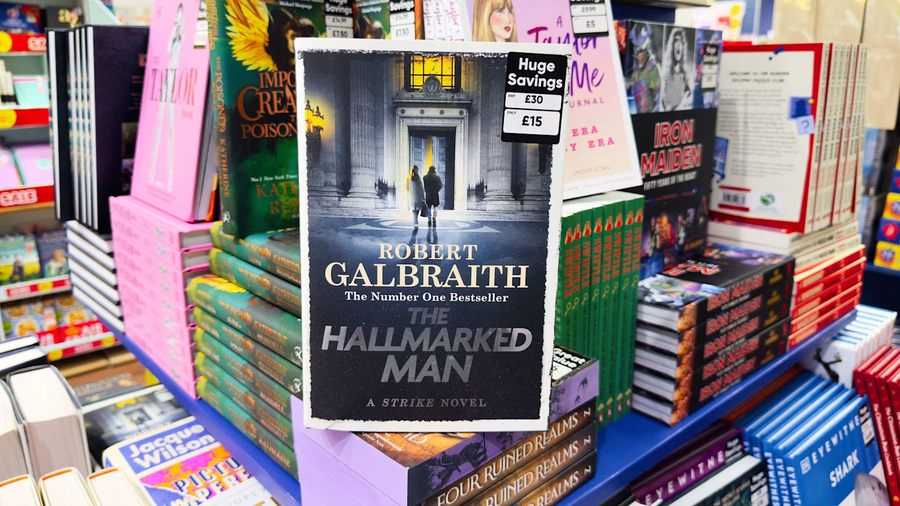
Femicide sells books...
In the same week that politician Ann Widdecombe was brutally murdered in her home, seven of the ten novels on The Sunday Times bestseller list centred on the murder of a woman, while another featured a female protagonist who was severely tortured. Robert Galbraith's The Hallmarked Man and Claire Douglas's The Family Friend each feature two female characters murdered.
Let's look at the numbers. Of the 115,705 copies of novels sold that week, 86,760 were books that, in one way or another, centered on the murder of women.
Incidentally, this figure is close to the UN estimate that around 83,000 women are intentionally killed by men worldwide each year, in acts of femicide.
That week's bestseller list includes a host of "creative" ways to commit murder: poisoned gingerbread cookies, a fatal beating, a car bomb, beheading, and pushing off a cliff at a known suicide spot.
It's true that " The Impossible Fortune ," the latest novel in Richard Osman's "The Thursday Murder Club" crime series , which has sold more than 430,000 copies to date, features a female character who accidentally loses her life through her own actions. So it's not a femicide in the strict sense, but it's still a novel that uses a woman's death as a trigger for the plot.
What is shocking about this picture, beyond the fact itself, is that we are used to it. Our age seems particularly obsessed with this theme. Shakespeare wrote some 37 plays with more than 1,000 characters. Of these, about 155 are women, or 16 percent, and only five are killed by men. Two of them, Desdemona and Emilia, are characters in the play "Othello." Charles Dickens also created about 1,000 characters and only one main heroine is killed by a man.
Why does violence against women in popular literature go almost unnoticed? Just imagine another scenario. What if next week’s bestseller list were dominated by ten novels focused on the same topic, such as artificial intelligence, climate change, or American politics? We would likely immediately notice this trend, ask why it exists, and discuss it at length. However, another theme recurs week after week and is rarely discussed. If nine of the ten best-selling novels centered on the murder of black men, an equally unacceptable scenario, we would much more readily recognize this disturbing trend in the literature we consume.
A common counterargument is that many of these novels are written by women. That's true. Seven of the ten authors on that week's bestseller list were women, including Robert Galbraith, the pen name of JK Rowling.
Also, most of their readers are women. About 80 percent of novels in the United Kingdom, the United States, and Canada are bought by women. It stands to reason that if women write and read these books, then they must like them. On the other hand, each murder offers powerful narrative elements: blood, weapons, secrets, police investigations, justice, punishment, and, in many cases, sexual tension. It is not difficult to understand why publishers continue to invest in such novels when they sell so well.
However, the issue is more complex. As Margaret Atwood has put it: "Men are afraid that women will laugh at them; women are afraid that men will kill them." The need to confront, even through fiction, their greatest fears may be one reason why so many women read novels of this kind. It is not simply a matter of easy pleasure or self-deprecation. The question that arises is what impact the constant presence of violence against women in contemporary literature has on women's sense of security.
It is not being suggested that equality can be achieved by killing more men in literature; that would just be a race to an even worse end. Nor is it intended to find a culprit. Rather, the idea is that, if we continue to be repelled by novels in which women are killed, we should stop and ask ourselves why this subject appeals so strongly to us and what this says about our society./ Adapted from "Pamphlet" by "FinancialTimes"






Lini një Përgjigje