


 Shkruar nga Pamfleti
In economic terms, low productivity limits the potential for sustainable growth in wages and incomes. The difference of over 10 thousand euros per employee compared to countries in the region signals a gap in the efficiency of capital and labor use...
The structure of the economies in the Western Balkans is clearly defining differences in labor productivity, with Albania resulting in the lowest level of output value per employee in the region. Data processed by the Vienna Institute for International Economic Studies (WiiW) for 2024 show that the gap with neighboring countries remains considerable.
Montenegro and Serbia top the rankings, with 47,050 and 46,260 euros per employee respectively, corresponding to 57% and 56% of the European Union average. This positioning is directly related to the structure of their economies. Montenegro benefits from a stronger orientation towards higher value-added services, while Serbia has built a broader manufacturing base supported by foreign direct investment and integration into industrial chains.
At an intermediate level are Kosovo and North Macedonia. Kosovo reaches 44,970 euros per employee, or 55% of the EU average, driven by the expansion of the information technology and contracted services sector. North Macedonia registers 43,810 euros per employee, around 53% of the EU average, reflecting the effects of free economic zones that have attracted exporting industries, particularly in the automotive sector.
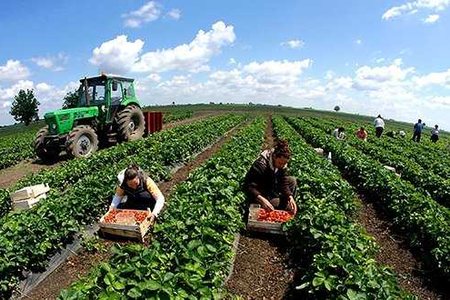
At the bottom of the ranking are Bosnia and Herzegovina and Albania. Bosnia will register 35,950 euros per employee, while Albania will register 34,580 euros in 2024, or only 42% of the EU average. This low level of productivity is linked to the high weight of sectors with limited added value, such as agriculture and tailoring, as well as to the relatively low level of technology and automation in the economy. So it seems that the government's failed policy is to blame.
In economic terms, low productivity limits the potential for sustainable wage and income growth. The difference of over 10 thousand euros per employee compared to the countries of the region signals a gap in the efficiency of capital and labor use. Without a shift towards more capital- and knowledge-intensive sectors, the process of convergence with the European Union remains slow.
WiiW data suggest that productivity growth requires policies geared towards innovation, vocational education, and improving the investment climate. In the absence of these factors, economies based on low-value-added activities tend to remain at lower levels of development.
In this context, Democratic Party MP Jorida Tabaku interprets the data as an indicator of structural weaknesses in Albania's economic model. She emphasizes that the level of 34,580 euros per employee reflects an economy that, according to her, does not generate enough added value and lags behind other countries in the region.
According to Tabaku, the difference with its neighbors is related to the economy's orientation towards construction and real estate, instead of the manufacturing and technological sectors. This is a political interpretation of the data, which underlines the connection between the structure of investments and the level of productivity.
“ The report argues that low productivity is associated with lower wages and labor migration, especially of young people and professionals. From an economic point of view, this is a well-known mechanism: when the economy does not increase the value per worker, the wage gap with other markets encourages the migration of human capital. Every Albanian working today produces over 10 thousand euros less per year than his neighbors. This inefficiency is not a coincidence but the consequence of a flawed economic model. An economy that relies on construction and real estate, not on production.
An economy that does not invest in technology and innovation. An economy that does not reward work, but connection. And we see the consequences every day. Wages remain the lowest in the region. Young people and professionals leave. Regions are emptied. Albania is left behind. A country with low productivity does not become poor overnight. It is emptied little by little: of young people, of professionals, of the middle class and of the belief that honest work leads to progress. This is today's Albania , "says Tabaku.
In conclusion, the WiiW report highlights a structural problem for Albania: limited capacity to generate value for employees. This factor directly affects well-being, competitiveness and the pace of convergence with the economic standards of the European Union. / Pamphlet






Lini një Përgjigje