


 Shkruar nga Pamfleti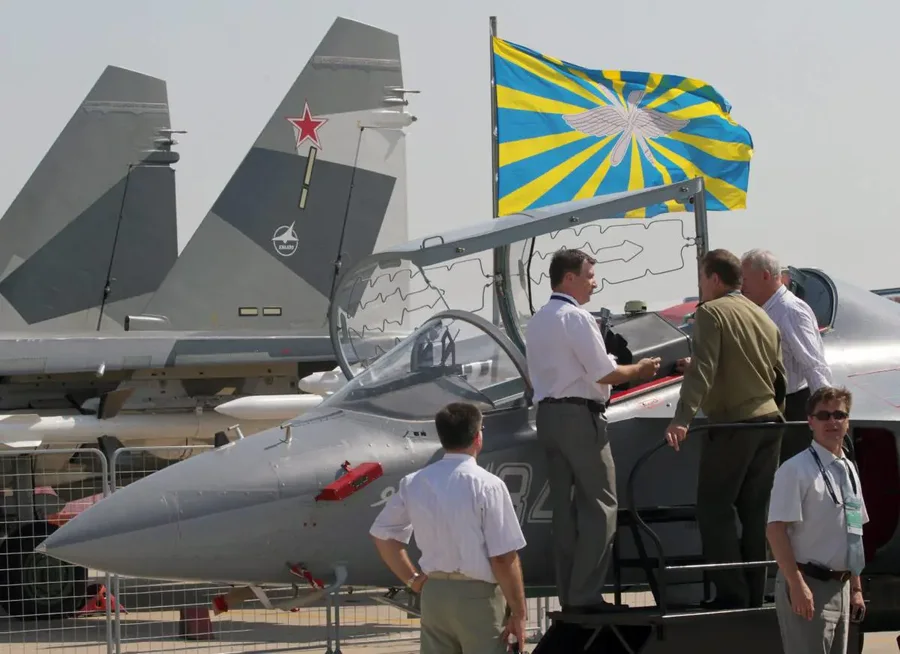
Russia is testing the Yak-130M, an evolution of the famous trainer aircraft. Advanced radar, new sensors and strike capabilities make this aircraft a hybrid platform for training and light combat...
The Russian Federation recently announced the official start of the testing phase of the new Yak-130M, a significantly improved variant of the advanced Yak-130 trainer. The aircraft, built at the Irkutsk production site under the supervision of the United Aircraft Corporation and the state-owned Rostec corporation, is currently undergoing ground and flight tests. Alongside this first aircraft, two others are being assembled, demonstrating the desire to accelerate the program and translate it into concrete operational capabilities.
The project was born with the aim of developing an aircraft that has already been widely tested and deployed internationally, transforming it into a platform capable of performing not only training functions, but also light combat missions.
Originally conceived to train pilots for fourth- and fifth-generation fighter jets, the Yak-130 has found use in many foreign air forces as an effective and cost-effective solution for the transition to operational flying. With the Yak-130M, Moscow aims to strengthen this concept, combining its training role with a renewed combat capability, suitable for operating even in degraded environments and complex weather conditions.
What do we know about the technological advancement of the Yak-130M?
The analysis shows that the Yak-130 upgrade is more than just a technical improvement. The new aircraft represents a structural transformation of the original aircraft, while maintaining its essential characteristics, such as the two-seat tandem configuration and the twin-engine airframe. The most important innovation lies in the complete renovation of the avionics systems and mission sensors, which push the aircraft into a new operational dimension.
The aircraft now integrates a next-generation multifunctional radar, designed to track and engage targets even in adverse weather conditions, along with a sophisticated optical-laser targeting system for precision missions both day and night. These are complemented by an advanced defense complex, capable of ensuring survivability in low-threat scenarios, and an improved communications system, ensuring real-time tactical interoperability and connectivity.
These capabilities make this technology suitable for the use of modern guided weapons, both air-to-air and air-to-surface, with satellite or laser guidance options. The result is a flexible aircraft, suitable for performing close air support, tactical intervention and point defense missions, while maintaining its advanced training capabilities. In this sense, the model represents a direct response to similar Western solutions, such as the Italian-made M-346FA or the South Korean FA-50, while potentially offering a more economical proposition in terms of acquisition and operating costs.
Global ambitions
For some analysts, the revival of the Yak-130 with this new variant has a significance that goes beyond a simple technical improvement. It is a strategic move aimed at simultaneously meeting domestic needs and opportunities in international markets. The aircraft will contribute to strengthening the Russian Aerospace Forces’ training chain, providing an advanced platform that more faithfully reproduces the avionics systems and operational dynamics of next-generation fighters. At the same time, its versatility allows it to be used in real-world operational scenarios, such as the protection of critical infrastructure, advanced bases or in air operations in peripheral theaters, reducing wear and tear on more expensive combat platforms.
Internationally, the aircraft could represent a means for Moscow to penetrate emerging aviation markets, particularly in regions where defense budgets are limited, but there remains a need for reliable, multirole aircraft capable of operating in complex conditions. The Asia-Pacific, Africa, and the Middle East are strategic areas for the aircraft's future commercialization, in order to counter growing competition from similar projects promoted by European and Asian industries.
Experts believe that the success of the program will depend largely on the results of the ongoing testing campaign. Validation of the radar performance, the reliability of the weapons system integration and the overall efficiency of the avionics are the key points that will determine the future of the armament. /Adapted from Il Giornale/








Lini një Përgjigje